Former CAR President Bozize on Trial for Crimes Against Humanity
A UN-backed court in the Central African Republic has begun the trial in absentia of former president Francois Bozize for crimes against humanity. The charges include murder, enforced disappearances, torture, and rape committed by his security forces. Bozize, who has been in exile since 2023, faces the Special Criminal Court in Bangui.
In a significant development for international justice, a United Nations-backed court in the Central African Republic (CAR) has commenced the trial of former president Francois Bozize on charges of crimes against humanity. Bozize, who has been in exile in Guinea-Bissau since 2023, is being tried in absentia by the Special Criminal Court (SCC) in the capital, Bangui. The charges against him are grave, encompassing summary executions, enforced disappearances, torture, and rape, all allegedly committed by his security forces during his tenure.
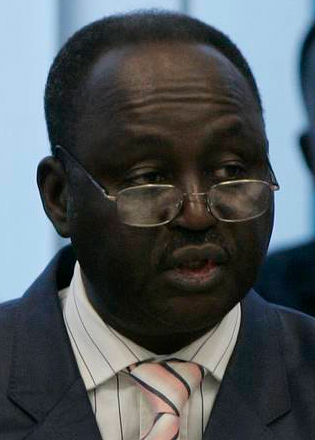
The SCC, a hybrid court composed of both CAR and international judges, issued an international arrest warrant for Bozize in 2024 following an investigation into atrocities at a civilian prison and a military training center in Bossembele. The court found that there was "serious and consistent evidence" linking Bozize to these acts, holding him criminally liable as a hierarchical superior and military leader. Three of his former senior officers—Eugene Barret Ngaikosset, Vianney Semndiro, and Firmin Junior Danboy—are currently in pretrial detention in the CAR, facing related charges.
Bozize originally seized power in a 2003 coup but was overthrown in 2013 by the Seleka rebel coalition. His subsequent efforts to regain power by forming the Anti-balaka militias, dominated by Christians and animists, plunged the country into a brutal civil war. The conflict, which has devastated one of the world's poorest nations, was further exacerbated when Bozize later led the Coalition of Patriots for Change rebel alliance, threatening the government of President Faustin-Archange Touadera. The situation stabilized only after Russia deployed Wagner Group paramilitaries to support the government. Bozize eventually fled into exile, first to Chad and then to Guinea-Bissau, which does not allow extradition.
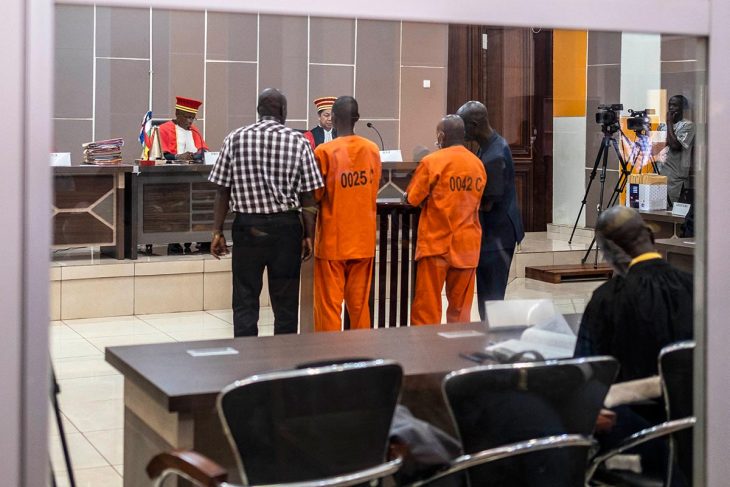
This trial represents a crucial step in the CAR's ongoing struggle for accountability following decades of armed conflict and political instability since its independence from France in 1960. The international community, as well as human rights organizations, will be closely observing the proceedings as a test of the hybrid court's ability to deliver justice for victims of grave human rights violations.
The case underscores the complexities of prosecuting a former head of state who remains beyond the court's physical reach, raising important questions about the limits of international law and the pursuit of justice across borders. The trial's outcome, though symbolic, could have lasting implications for the region's commitment to ending impunity for crimes against humanity.