Read on France 24
US-Iran Peace Deal: Strait of Hormuz to Reopen Without Tolls, Vance Confirms
US Vice President JD Vance announced that the Strait of Hormuz will reopen without tolls under a peace deal with Iran, while emphasizing that Tehran must fulfill its commitments before receiving economic benefits. The agreement, set to be signed on Friday, includes a $300 billion private investment fund and could unlock reconstruction funding. However, key details remain to be negotiated, and lawmakers have expressed concerns about the lack of transparency.
The recent announcement by US Vice President JD Vance that ships will pass through the Strait of Hormuz without tolls under the peace deal with Iran marks a significant breakthrough. This development, part of a broader memorandum of understanding (MoU) between the US and Iran, is expected to be formally signed at the Bürgenstock resort in Switzerland on Friday. Vance’s statement underscores the potential for economic stabilization, but he also issued a clear caveat: Iran must meet its commitments before benefiting from the economic incentives outlined in the agreement.
Key Terms of the Interim Deal
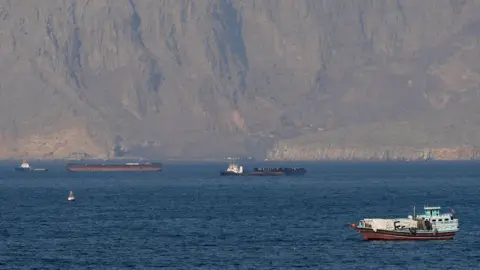
The interim agreement, negotiated with mediation from Pakistan and Qatar, includes several pivotal components. One of the most critical is the reopening of the Strait of Hormuz, a vital waterway for global oil transportation. According to Vance, the US-Iran MoU ensures that ships will no longer face tolls, a move that could significantly lower energy costs and stabilize markets. Additionally, the US will allow Iran to immediately sell oil and fuel, a concession that has already contributed to a drop in oil prices to around $80 per barrel, the lowest since March 2026.
Another noteworthy element is the creation of a $300 billion private investment fund, of which more than half has already been committed by companies from the US, Gulf Arab states, Asia, South America, and Africa. This fund is designed to incentivize both sides to conclude a final agreement, focusing on energy, logistics, manufacturing, and transport.
Economic Implications and Energy Markets
The reopening of the Strait of Hormuz without tolls has immediate and far-reaching economic implications. At the G7 summit, President Donald Trump linked this development to the ability to reimpose sanctions on Russian oil, stating that as oil flows through the strait, the US can now increase pressure on Moscow. The International Energy Agency (IEA) has also highlighted that the conflict served as a "stark wake-up call" for energy security, particularly for Southeast Asia, which is heavily reliant on oil and gas from the region.
The IEA report warns that without diversification, Southeast Asia’s energy import bill could triple to $245 billion by 2035. However, the peace deal is already spurring change, with rising sales of electric vehicles, renewed interest in nuclear power, and a boom in rooftop solar installations.
Reactions and Negotiation Challenges
While the interim deal has been praised by Pope Leo as a step toward ending the war, significant challenges remain. Iran’s top negotiator, Mohammad Baqer Qalibaf, has insisted that Israel must withdraw from "occupied areas" in Lebanon, a condition Israel has already rejected. Furthermore, China’s Foreign Minister Wang Yi has warned that the next phase of negotiations will be "more difficult," emphasizing that the current consensus is "far from the final destination."

US lawmakers have also expressed frustration over the lack of transparency. Senate Democratic Leader Chuck Schumer called for a classified briefing for Congress's "Gang of Eight," stating that the Trump administration has not released details of the agreement. Vance’s insistence that Iran must meet its commitments before receiving economic benefits aligns with this cautious approach, as many details remain to be worked out in subsequent talks.
Conclusion
The US-Iran peace deal represents a major diplomatic achievement with the potential to reshape global energy markets and regional stability. The reopening of the Strait of Hormuz without tolls is a cornerstone of this agreement, but its success hinges on Iran’s compliance and the resolution of outstanding issues, such as Israel’s presence in Lebanon and Iran’s nuclear program. As Vance made clear, economic benefits for Tehran are conditional on meeting its obligations. With the formal signing scheduled for Friday, the world will be watching closely to see whether this interim deal can pave the way for a lasting peace.