Read on PBS News
Pope Leo XIV's Historic Address to Spanish Parliament Marks a New Era of Church-State Relations
In a landmark moment for both the Catholic Church and Spain, Pope Leo XIV became the first pontiff to address the Spanish Parliament, receiving a seven-minute standing ovation from lawmakers. The speech, which touched on migrant rights, international law, and the ethical use of artificial intelligence, signals a significant shift in the acceptance of the Church in a largely secular nation. This article analyzes the key themes of the Pope's address, the historical context of his visit, and the implications for Spain's political landscape. The Pope's call for moral renewal and respect for human dignity resonated deeply, bridging historic divides and suggesting a new chapter in the relationship between the Vatican and the Spanish state.
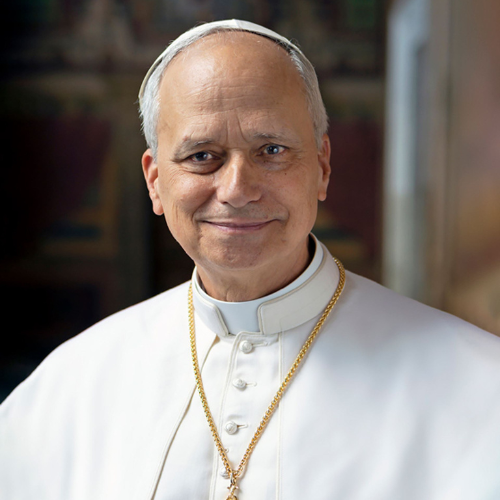
In a historic moment that underscores a profound shift in Spain's socio-political landscape, Pope Leo XIV addressed the Spanish Parliament, Las Cortes Generales, on Monday. The American pontiff became the first pope to speak to the nation's lawmakers, receiving a remarkable seven-minute standing ovation, complete with chants of "Viva el Papa!" This event signals a new level of acceptance for the Catholic Church in a country that has grown increasingly secular since the end of the Franco dictatorship.
A Historic Invitation and a Warm Reception
The invitation for Pope Leo to address the Spanish Parliament is a significant departure from recent history. For decades, the Catholic Church's close association with General Francisco Franco's regime created a deep chasm between religious institutions and the democratic state. As noted in the Associated Press report, this level of political acceptance would have been "unthinkable even a few years ago." The bipartisan standing ovation, which lasted an unprecedented seven minutes, demonstrated a broad consensus of respect for the Pope's message and his role as a moral leader.
The Papal Message: A Call for Moral Renewal
At the heart of Pope Leo's address was a powerful call for a "moral renewal" in public life. He urged lawmakers to prioritize the inherent dignity of all people, especially the most vulnerable, including migrants, the unborn, and the poor. "The moral greatness of a nation is manifested, above all, in its capacity to accompany, protect and love those lives that are most fragile," the Pope stated. This message struck a chord with a political class often mired in polarization, as the Pope explicitly warned that "political pluralism should not degenerate into the constant disparagement of one's adversary."
Key Themes: Migration, Peace, and Ethics
Pope Leo's speech was not solely a spiritual exhortation; it engaged directly with pressing global and national issues. He dedicated significant portions of his address to the rights of migrants, the ethics of warfare, and the responsible development of artificial intelligence.
Defending the Dignity of Migrants
Drawing a parallel to the policies of Prime Minister Pedro Sánchez's government, which has bucked European trends by legalizing hundreds of thousands of immigrants, the Pope called for a respectful and integrated approach. He demanded a "twofold demand for social justice: to offer safe and legal pathways, a respectful welcome and real opportunities for integration; and, at the same time, to promote the right to remain in one's own land." This nuanced stance supports both humanitarian welcome and the creation of conditions that prevent forced migration, a position that aligns with the Spanish government's recent initiatives.
A Plea for Peace and Disarmament
Delivering his address as geopolitical tensions flared between Israel and Iran, the Pope renewed his call for dialogue and "diplomatic courage." He expressed deep concern over the global trend of rearmament, particularly in Europe following the war in Ukraine. "It is therefore a cause for concern that, in various parts of the world — and in Europe as well — rearmament is once again being presented as an almost inevitable response to the fragility of the international situation," he warned. He also used the platform to reiterate his demand for "rigorous ethical oversight" of autonomous weapons systems, arguing that "decisions regarding life and death are never left to automated systems."

Historical Context and Acknowledgment of Past Wrongs
In a moment of profound historical reflection, Pope Leo referenced the 16th-century Spanish intellectual tradition of the School of Salamanca, which gave rise to concepts of international law. He acknowledged that "society and the church herself did not always live up to these insights," specifically citing the Church's role in the trans-Atlantic slave trade and colonial conquest. This echoed his earlier apology for the Holy See's role in legitimizing slavery, demonstrating a commitment to confronting historical injustices.
Political Implications for Spain
The Pope's visit comes at a politically delicate time for Prime Minister Sánchez, whose government has been weakened by corruption scandals and an inability to pass legislation. The Pope's implicit criticism of political polarization was seen as a direct commentary on Spain's current climate. The alignment between the progressive, atheist Prime Minister and the conservative Pope on issues like migration and opposition to the Trump administration highlights a unique convergence. As sociology professor Rafael Ruiz Andrés noted, by "placing issues of justice at the center of their public discourse," Popes Francis and now Leo have narrowed the gap between the Vatican and progressive governments.
Conclusion
Pope Leo XIV's address to the Spanish Parliament was far more than a ceremonial event; it was a testament to the evolving role of the Catholic Church in a modern, secular democracy. By receiving a prolonged ovation, Spain's lawmakers signaled a willingness to engage with moral and ethical guidance from a religious leader, setting aside decades of historical friction. The Pope's message, rooted in human dignity, social justice, and global peace, provided a unifying framework that transcended political divisions. This historic speech may well mark a new, more collaborative chapter in the relationship between the Vatican and Spain, one where moral authority is welcomed as a constructive force in public debate.