Read on bbc.com
Canada Formally Requests 16-Year Renewal of USMCA Trade Pact Amid Ongoing Negotiations
Canada has formally requested a 16-year renewal of the United States-Mexico-Canada Agreement (USMCA), as the July 2025 deadline to renegotiate the pact approaches. Canada-US Trade Minister Dominic LeBlanc sent a formal notice to his North American counterparts, calling the agreement 'highly beneficial' for all three nations. The request comes as LeBlanc visits Washington to meet US Trade Representative Jamieson Greer, while parallel discussions focus on sectoral tariffs and market access. The US has cited several trade irritants, including Canadian provincial bans on American alcohol and access to Canada's dairy market. Meanwhile, Mexico has also signaled its intention to extend the pact for the same duration. Key sticking points include US demands for higher American content in North American-made vehicles and coordinated external tariffs on other countries. The renewal request sets the stage for critical negotiations ahead of the July deadline, with implications for North American economic integration, supply chains, and bilateral relations.
Canada has formally requested a 16-year renewal of the North American free trade agreement with the United States and Mexico, known as the USMCA, as the July deadline to renegotiate the pact approaches. In a formal notice sent to his North American counterparts, Canada-US Trade Minister Dominic LeBlanc called the agreement "highly beneficial" to all three countries, arguing that the pact gives North American nations a competitive global advantage. LeBlanc is currently in Washington to meet US Trade Representative Jamieson Greer, signaling Canada's commitment to advancing the negotiations. While Mexico concluded a round of formal bilateral talks with the US earlier this week, Canada's negotiations have lagged behind, partly due to Canada's retaliatory tariffs on US goods. In the notice letter, LeBlanc acknowledged that there are areas where the pact can be improved, stating that Canada is "willing to consider any proposal that can be beneficial to all three nations' long-term prosperity." He also emphasized that "in parallel, discussions with the United States on addressing sectoral tariffs will be essential" for a comprehensive agreement.
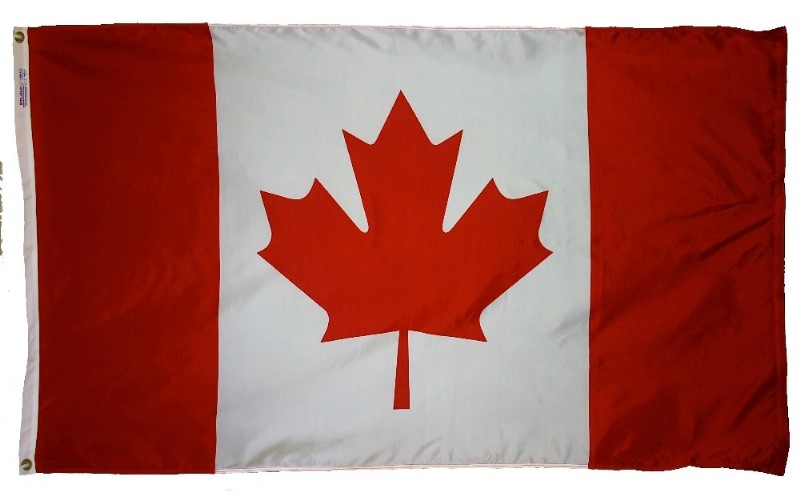
Key Issues in the USMCA Renewal Talks
The USMCA renewal negotiations face several critical issues that must be resolved before the July 2025 deadline. Prime Minister Mark Carney has expressed his desire to have sector-specific tariffs imposed by the Trump administration on Canadian steel, aluminum, automobiles, and lumber removed or lowered. These tariffs have been a major irritant in Canada-US trade relations, prompting retaliatory measures from Canadian provinces, including the removal of American alcohol from shelves. Greer has indicated that Canada may have to accept some form of US levies, while Carney has argued that a stronger Canadian economy would support growth in the US. "Canada Strong will help make America great again," Carney said in a speech in New York, highlighting the interconnected nature of the two economies.
US Demands on Market Access and Vehicle Content
The US has cited multiple trade irritants with Canada, including the decision by most provinces to remove American alcohol from shelves due to tariffs imposed by President Donald Trump. Washington also seeks greater access to Canadian markets for American businesses, particularly in the dairy sector, where Canada maintains strict control over production quotas and imports to support local farmers. Last week, Greer said that talks will also focus on increasing the percentage of US content in North American-made cars, as well as coordinating external tariffs on other countries with Canada and Mexico. According to Reuters, the US has asked that vehicles made in North America contain at least 50% American-made content. Carney countered that cars made in Canada already contain around that amount of US content on average, suggesting that this demand may be more about political signaling than actual economic necessity.
Mexico's Position and the Renewal Timeline
Mexico has also announced its call for a renewal of the multilateral trade pact. Economy Minister Marcelo Ebrard stated, "Mexico's intention and position is that the treaty should be extended," adding that the treaty will remain in effect for many more years, but Mexico would like it extended to 16 years. This aligns with Canada's formal request and suggests a unified front among the two USMCA partners. However, the US has not yet publicly committed to the renewal duration, and the upcoming negotiations will determine whether the pact can be extended by the July deadline. If Canada, the US, and Mexico do not agree to extend the USMCA by July 1, 2025, the pact would have to be renewed annually until 2036, creating ongoing uncertainty for businesses and investors in all three countries.

Domestic Pressure and Economic Context
Domestic pressure is building on Prime Minister Carney to reach a deal with the US, with Conservative opposition MPs citing Canada's lagging economic growth and high youth unemployment rate. Conservative MP Jasraj Singh Hallan called Carney a "grand illusionist" who has failed to deliver on his promise of growing Canada's economy, questioning the government's plan for the negotiations. Carney acknowledged that the economy is experiencing "some weakness," but said his government is working on building "a stronger, more resilient, and more independent Canadian economy." Greer has blamed the slower pace of Canada-US negotiations on Canada's decision to retaliate against the US for its tariffs, contrasting it with Mexico's more conciliatory approach. "Two countries in the world retaliated against us: The People's Republic of China and Canada," Greer told reporters, adding that "it's hard to see necessarily where that ends." President Donald Trump has not commented recently on US-Canada trade talks, but on Monday he revived his "51st state" rhetoric against Canada in a Truth Social post, sharing a link to a news article about its lagging economy.
Implications for North American Trade
The USMCA renewal talks have significant implications for North American economic integration, supply chains, and bilateral relations. The outcome will affect industries ranging from automotive and steel to agriculture and dairy. A successful renewal would provide long-term certainty for businesses and investors, while a failure to agree could lead to annual renegotiations and continued trade tensions. Canada's formal request for a 16-year renewal signals its commitment to a stable and predictable trade environment, but the path to an agreement remains uncertain as key issues like tariffs, market access, and vehicle content rules must be resolved. The upcoming weeks will be critical in determining the future of North American trade and the economic relationship between the US, Canada, and Mexico.