The Taliban-Russia Security Pact: A Strategic Misstep for Afghanistan
The recent Memorandum of Understanding (MoU) on security cooperation signed between the Taliban and Russia has sparked debate over its implications for Afghanistan's future. While the Taliban may view the agreement as a means to bolster international standing, the pact is unlikely to advance Afghanistan's long-term national interests. Instead, it risks entangling the country in regional power rivalries without delivering meaningful economic or military support. This article examines the pitfalls of the agreement, the limitations of strategic partnerships with major powers, and the urgent need for domestic legitimacy in Afghanistan. It argues that true stability and international recognition will come not from security deals but from building a representative, accountable political system that enjoys the confidence of the Afghan people.
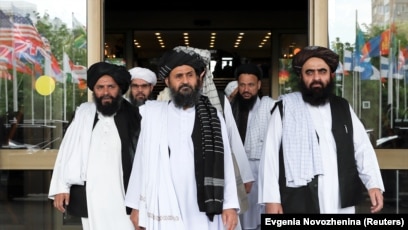
The recently signed Memorandum of Understanding (MoU) on security cooperation between the Taliban and Russia, finalized on May 27, 2026, has generated considerable discussion, yet its contents remain undisclosed. This agreement raises important questions about its implications for Afghanistan’s future security, foreign policy, and international standing. From a legal perspective, agreements concluded by a government that lacks broad domestic legitimacy and formal international recognition face inherent limitations in terms of legal and political acceptance. More importantly, at the strategic level, this arrangement may not necessarily advance Afghanistan’s long-term national interests. Instead, it risks drawing the country further into regional and global power rivalries, as highlighted in an analysis by Shahmahmood Miakhel on Al Jazeera.
The Pitfalls of the Memorandum of Understanding
Every country has the sovereign right to establish relations and cooperate with other states. However, Afghanistan’s current geopolitical circumstances require particular caution. Major powers rarely enter strategic partnerships primarily to advance Afghan interests; rather, they do so to pursue their own national priorities. Russia, at present, neither appears willing nor able to provide Afghanistan with the level of economic, military, or political support that would normally characterise a strategic partnership. This raises a fundamental question: if Russia is being presented as a strategic partner, what strategic opportunity or threat is driving such a relationship?

Drivers of the Engagement
The growing engagement between Russia and the Taliban appears to be driven by immediate security and political considerations rather than by a deep strategic partnership. For Russia—and to a significant extent China—the primary concerns in Afghanistan are preventing extremist groups from using Afghan territory to threaten their interests and reducing the flow of narcotics across the region. Beyond that, neither country currently has major economic investments in Afghanistan that would justify a long-term strategic commitment. Historical experience is also instructive. Following the withdrawal of Soviet forces from Afghanistan and the collapse of the Soviet Union, Russia did not provide substantial military or economic support to successive Afghan governments.
Limited Tangible Benefits
Under these circumstances, expectations that a security MoU with Russia would translate into substantial military assistance may prove unrealistic. Much of the military equipment inherited from the former Afghan government consisted of a mix of US- and Russian-made systems. The United States is unlikely to provide maintenance support or spare parts, so US-made equipment may not be salvageable. At the same time, much of the remaining Soviet-era or Russian-made equipment is either obsolete or no longer operational. In practical terms, the agreement may produce limited tangible benefits while increasing the risk of Afghanistan becoming further entangled in regional geopolitical competition.
Geopolitical Risks and Domestic Legitimacy
Afghanistan cannot realistically maintain equivalent strategic relationships with countries whose interests directly conflict with one another. It is difficult to envision Afghanistan simultaneously pursuing the same strategic understanding with India and Pakistan, Russia and Ukraine, or the US, China, and Iran. As a relatively weak and vulnerable state operating within a highly competitive geopolitical environment, Afghanistan risks becoming a casualty of great power competition rather than a beneficiary of international cooperation.

The Need for Domestic Legitimacy
The Taliban may view agreements, such as the MoU with Russia, as a means of strengthening its international standing, but such efforts are unlikely to resolve the underlying challenge of legitimacy. International legitimacy begins with domestic legitimacy. Governments that lack broad public acceptance, political inclusion, and representative institutions face significant obstacles in obtaining meaningful international recognition. Even when recognition is granted, its value is limited if it is not rooted in domestic consent and political legitimacy. The reality is that most countries are unlikely to formally recognise the Taliban government unless there is a significant shift in the position of the US and other major Western powers. While Russia and China have expanded their engagement with the Taliban, neither has succeeded in securing the removal of Taliban leaders from United Nations sanctions lists.
Conclusion: A Path Forward for Afghanistan
For Afghanistan today, the priority should not be strategic alignment with competing global powers. The more urgent challenge is addressing domestic political shortcomings and building genuine legitimacy at home. The guiding principle of any Afghan government should be straightforward: Afghanistan should not pose a threat to other countries, and regional and global powers should refrain from turning Afghanistan into a theatre of geopolitical competition. Rather than serving as a battleground for competing interests, Afghanistan should aspire to become a platform for regional connectivity, trade, and cooperation. Achieving that vision requires a legitimate, representative, and law-based political system. Without transparent governance, political inclusion, and public accountability, foreign powers are likely to engage Afghanistan primarily through short-term geopolitical calculations and security-driven relationships rather than through genuine long-term partnerships. Ultimately, Afghanistan’s future stability and international standing will depend less on security memoranda with major powers and more on the creation of a political order that enjoys the confidence and support of its own people.