First Ship Navigates Strait of Hormuz Under New US-Iran Ceasefire
The first commercial vessel has transited the Strait of Hormuz with Iran's explicit permission following the implementation of a two-week truce between the United States and Iran, according to Iranian media reports. The semi-official Mehr News Agency confirmed the passage, which was also tracked by maritime services, marking a tentative de-escalation in a critical global shipping chokepoint. This development follows statements from US President Donald Trump and Iranian Foreign Minister Seyed Abbas Araghchi outlining the ceasefire's conditions, which hinge on the safe reopening of the strait and a halt to offensive operations.
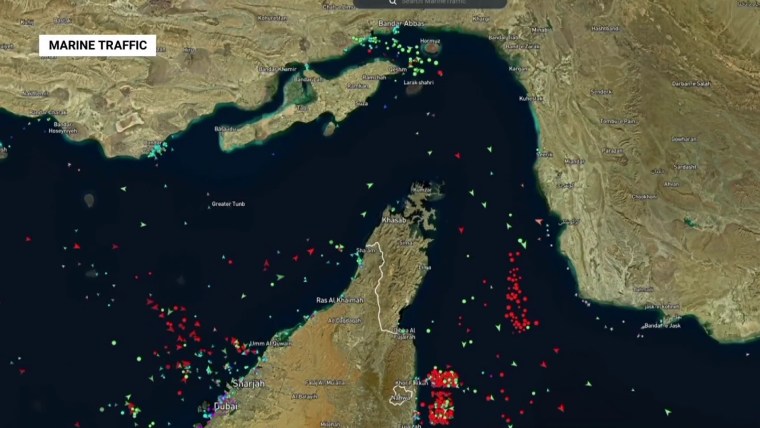
The strategic Strait of Hormuz, a narrow maritime passage between the Persian Gulf and the Gulf of Oman, witnessed a significant diplomatic and logistical milestone in early April 2026. According to a report from Iran's semi-official Mehr News Agency, the first ship passed through the vital waterway with Iran's "permission" after a US-Iran truce took effect. This event, corroborated by ship-tracking service MarineTraffic, signals a fragile but crucial step toward stabilizing one of the world's most important oil transit routes, which had been threatened by escalating military tensions.

The Ceasefire Agreement and Its Conditions
The vessel's passage was directly tied to a temporary ceasefire announced by US President Donald Trump. On Tuesday, April 7, 2026, President Trump stated he had agreed to "suspend the bombing and attack of Iran for a period of two weeks." However, this decision was explicitly "subject to" Iran agreeing to the complete, immediate, and safe reopening of the Strait of Hormuz. This condition underscores the strait's paramount importance to global energy security, as approximately one-fifth of the world's oil passes through it.
In response, Iranian Foreign Minister Seyed Abbas Araghchi outlined Tehran's position. He stated that Iran would ensure safe passage through the strait during the two-week ceasefire in coordination with its armed forces. Crucially, Araghchi added that Tehran would halt "defensive operations" if attacks against it stop. This exchange, as reported by CGTN, frames the truce as a conditional, reciprocal arrangement focused on a specific geopolitical pressure point rather than a comprehensive peace deal.

Immediate Impact on Maritime Traffic
The immediate resumption of vessel movements, as tracked by MarineTraffic on social media platform X, demonstrates the tangible effect of the diplomatic understanding. The requirement for Iran's "permission" highlights Tehran's continued assertion of authority and operational control over the strait, a stance rooted in its geographic position. For global shipping companies and energy markets, this development offers a brief window of predictability, though its longevity remains entirely dependent on the adherence to the ceasefire terms by all parties involved.
Regional Reactions and Complications
The ceasefire did not encompass all regional conflicts. In a notable complication, the office of Israeli Prime Minister Benjamin Netanyahu stated that while Israel would comply with the US-Iran truce, it would continue its military attacks in Lebanon. This indicates that the agreement is narrowly focused on the US-Iran confrontation and the Strait of Hormuz, and does not represent a broader regional de-escalation. The situation remains fluid, with the potential for actions in other theaters to indirectly impact the fragile understanding over the vital waterway.
Conclusion: A Precarious Pause
The passage of the first ship under the new ceasefire terms is a positive but precarious development. It temporarily alleviates the immediate risk to global shipping in a chokepoint crucial to the world economy. However, the two-week timeframe and the conditional nature of the agreement, as detailed in the initial reports, suggest this is a pause for diplomacy rather than a permanent solution. The world will be watching closely to see if this confidence-building measure can be extended or lead to more substantive talks, or if it will dissolve once the deadline passes, potentially reigniting tensions in the strategically indispensable Strait of Hormuz.