Read on France 24
Bulgaria's Eighth Election in Five Years: Radev's Coalition Leads Amid Political Crisis
Bulgaria held its eighth general election in five years on April 19, 2026, with exit polls showing former President Rumen Radev's center-left coalition leading with 39% of the vote. The snap election follows the collapse of Boyko Borissov's government amid massive anti-corruption protests, highlighting a prolonged political deadlock in the EU and NATO member state. While Radev's anti-oligarchic message resonated, the fragmented results suggest continued challenges in forming a stable government.
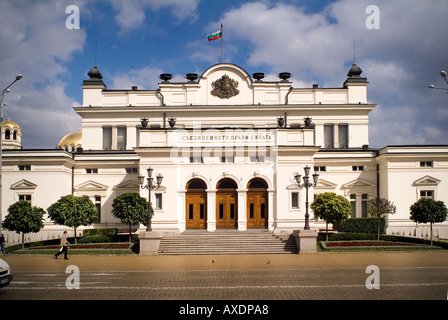
Bulgarian voters returned to the polls on Sunday, April 19, 2026, for the country's eighth parliamentary election in just five years, a stark indicator of a deep and persistent political crisis. The snap vote was triggered by the resignation of a conservative-led government following nationwide protests in December 2025, where hundreds of thousands, primarily young people, demanded judicial independence and an end to systemic corruption. This election cycle represents a potential turning point, with former President Rumen Radev's Progressive Bulgaria coalition projected to emerge victorious, signaling a public desire for change from the established political order.
Election Results and Political Fragmentation
According to exit polls conducted by the Trend research group, Rumen Radev's Progressive Bulgaria secured approximately 39.2% of the vote. The center-right GERB party, led by longtime political figure Boyko Borissov, trailed significantly with an estimated 15.1%. Despite this substantial lead, Radev's coalition is unlikely to secure an outright majority in the 240-seat parliament, setting the stage for complex coalition negotiations. The exit poll suggested that up to six parties could surpass the 4% threshold required to enter the National Assembly, pointing to a highly fragmented legislature. Voter turnout was reported at a modest 43.4%, reflecting a degree of public fatigue with the repeated electoral cycles.
Rumen Radev: The Anti-Corruption Candidate
Rumen Radev, a 62-year-old former fighter pilot and air force commander, resigned from the mostly ceremonial presidency in January 2026 to lead the charge for prime minister. He has successfully positioned himself as a staunch opponent of what he calls Bulgaria's "oligarchic model of governance." At campaign rallies, he vowed to "remove the corrupt, oligarchic model from political power," a message that resonated with protesters and citizens weary of corruption scandals. As reported by France 24, Radev stated after voting, "Bulgaria now has a historic chance to change the alleged oligarchic model of governance."
Geopolitical Stance and Governing Challenges
Radev's potential premiership introduces geopolitical uncertainties for the European Union and NATO. While he has officially denounced Russia's invasion of Ukraine, he has consistently opposed sending military aid to Kyiv and has advocated for reopening dialogue with Moscow. Analysts note his campaign was deliberately vague on foreign policy, leaving him open to cooperation with various parties. Mario Bikarski, a senior analyst at Verisk Maplecroft, noted that this ambiguity provides flexibility but also risk. Radev has indicated reluctance to formally ally with the openly pro-Russian Revival party, but his broader stance marks a shift from the pro-European consensus previously associated with GERB.
The Road Ahead for Bulgaria
The immediate challenge for the likely victor is forming a functional government. Radev acknowledged the difficulty, stating, "We will do our best to prevent having to go to the polls again. It would be a disaster for Bulgaria." The nation of 6.5 million has been trapped in a cycle of weak, short-lived governments since 2021, with none surviving a full year. The new administration will need to address the core demands of the protest movement—judicial reform and anti-corruption measures—while navigating Bulgaria's commitments as a member of the EU, NATO, the eurozone, and the Schengen Area. Success or failure will determine whether this eighth election finally breaks the cycle of political instability or merely continues it.