Read on France 24
Strait of Hormuz Reopens Amid Fragile Ceasefire as Trump Signals Potential Iran Deal
In a significant geopolitical development, Iran announced the reopening of the critical Strait of Hormuz to commercial shipping for the duration of the Israel-Lebanon ceasefire. The move prompted optimistic social media posts from US President Donald Trump suggesting a peace deal with Iran could be reached "soon." However, Iranian officials immediately tempered expectations, emphasizing that serious differences remain unresolved. This article analyzes the strategic implications of the strait's reopening, the conflicting statements from Washington and Tehran, and the fragile diplomatic landscape surrounding ongoing negotiations.
The geopolitical landscape of the Middle East witnessed a pivotal shift as Iran announced the conditional reopening of the Strait of Hormuz, a vital global oil chokepoint. This decision, tied directly to a US-brokered ceasefire between Israel and Lebanon, was swiftly followed by optimistic pronouncements from US President Donald Trump regarding a potential peace agreement with Tehran. However, the path forward remains fraught with uncertainty, as official statements from both capitals reveal a significant gap between public optimism and the complex realities of negotiation.
Iran's Conditional Reopening of a Vital Waterway
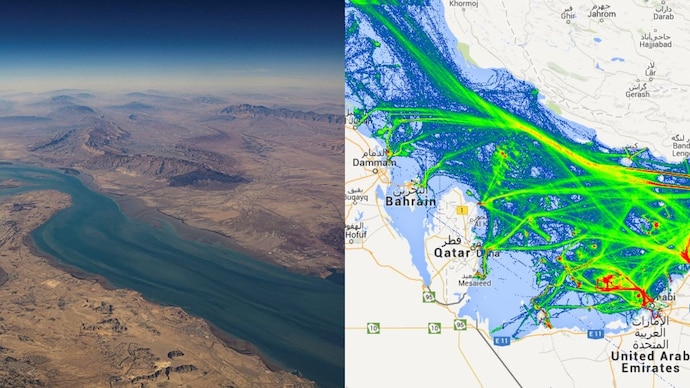
On Friday, Iranian Foreign Minister Abbas Araghchi declared the Strait of Hormuz open to all commercial vessels for the remainder of the 10-day truce agreed between Israel and Lebanon. The ceasefire, which began on Thursday, aims to halt fighting between Israeli forces and the Iran-backed Hezbollah group. Araghchi stated on social media platform X that "the passage for all commercial vessels through Strait of Hormuz is declared completely open for the remaining period of ceasefire." This move represents a strategic de-escalation, directly linking maritime access to the progress of regional diplomacy.
However, the reopening came with immediate caveats. A senior Iranian military official clarified that military vessels remain banned from the waterway. Furthermore, a senior Iranian official indicated that ships could only pass under coordination with Iran's Islamic Revolutionary Guard Corps, introducing a layer of operational control. The announcement triggered a cautious response from the global shipping industry, with companies stating they would require clarifications on risks, including the potential threat of mines, before resuming normal transit through the Gulf's entry point.

Conflicting Narratives from Washington and Tehran
The diplomatic atmosphere was immediately characterized by contrasting messages. Shortly after Iran's announcement, President Trump posted on his Truth Social platform, proclaiming, "IRAN HAS JUST ANNOUNCED THAT THE STRAIT OF IRAN (sic) IS FULLY OPEN AND READY FOR PASSAGE." He further suggested to Reuters that talks could continue over the weekend and expressed belief that a deal to end the conflict would come "soon." This public optimism, however, was not mirrored in substantive policy shifts, as Trump simultaneously affirmed that a US maritime blockade of ships sailing to Iranian ports would remain until "our transaction with Iran is 100 percent complete."
Iran's response was sharp and corrective. Foreign Ministry spokesperson Esmaeil Baghaei warned that Tehran would take "necessary reciprocal measures" if the US blockade continued. More critically, a senior Iranian official told Reuters that no agreement had been reached and that "serious negotiations were required to overcome differences between the two sides." This disconnect highlights the fragile state of negotiations, where public posturing and private diplomacy are on starkly different tracks.
Sticking Points and Unresolved Issues
The core disagreements that have stalled previous talks remain largely unaddressed. Iran's nuclear program continues to be a primary obstacle. Tehran maintains its program is for civilian purposes only, while Washington has pressed for the removal of Iran's stockpile of highly enriched uranium. Baghaei explicitly denied a claim by Trump that the US would remove this uranium, stating, "Iran's enriched uranium is not going to be transferred anywhere... Transfer of Iran's enriched uranium to the US has never been raised in negotiations."
Other unresolved issues include the lifting of international sanctions on Iran and discussions around compensation for war damages. A senior Iranian official indicated hope that a preliminary agreement could be reached in the coming days, potentially extending the ceasefire to buy more time for negotiations. A Pakistani source involved in mediation suggested an upcoming meeting could yield an initial memorandum of understanding, followed by a comprehensive deal within 60 days, noting, "Both sides are agreeing in principle. And technical bits come later."

Regional and Global Implications
The conflict, which began with US-Israeli strikes on Iran on February 28, has had devastating regional consequences, reigniting the Israel-Hezbollah war in Lebanon. The fighting has claimed thousands of lives and, until now, effectively shut the Strait of Hormuz. This closure threatened the worst oil shock in history, as the strait typically facilitates the transit of one-fifth of the world's oil and liquefied natural gas. The mere announcement of a potential reopening caused immediate market reactions, with oil prices falling approximately 10 percent and global stocks jumping.
The situation in Lebanon remains tense despite the ceasefire. Reports indicated some Israeli violations, and a paramedic was killed in an Israeli drone strike in southern Lebanon. The conflict has taken a heavy civilian toll, with nearly 2,300 people killed in Lebanon according to its health ministry, including many women, children, and medical workers. The fragility of this ceasefire is a constant backdrop to the Iran-US diplomacy.
Conclusion: A Fragile Path Forward
The reopening of the Strait of Hormuz is a significant confidence-building measure, but it is a conditional and reversible one, explicitly tied to a temporary regional ceasefire. While President Trump's public statements project a trajectory toward a swift resolution, the detailed reports from Iranian officials and mediators paint a picture of a diplomatic process still in its early, contentious stages. Key issues like Iran's nuclear program, sanctions relief, and security guarantees remain unresolved. The coming days will be critical in determining whether this opening leads to substantive negotiations or becomes another chapter in a prolonged standoff. The world watches closely, as the flow of oil and the prospects for peace in the Middle East hang in the balance.