Read on France 24
France Heightens Paris Security Following Foiled Attack on US Bank
French authorities have significantly increased security measures across Paris in response to a foiled attack targeting a US bank and an elevated terrorist threat level. Police have reinforced protection at sensitive sites, including diplomatic and economic locations, while major US financial institutions like Citigroup have instructed staff in Paris and Frankfurt to work from home as a precautionary measure. This article details the security response, the context of rising international tensions, and the implications for businesses and public safety in the French capital.
In a decisive response to a heightened security environment, French authorities have implemented reinforced security protocols across Paris. This action follows the disruption of a planned attack on a US bank and comes amid official warnings of an elevated "terrorist threat" linked to rising international tensions. The coordinated security surge underscores the ongoing challenges faced by global capitals in protecting critical infrastructure and citizens in an unstable geopolitical climate.
Security Measures and Police Deployment
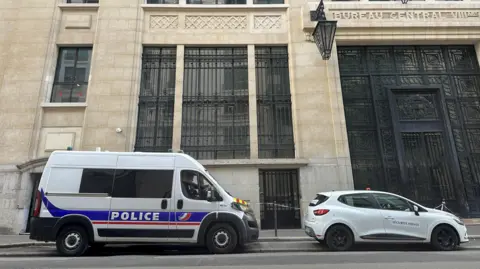
The Paris police authority has scaled up its presence at numerous sensitive locations throughout the city. According to their statement, this reinforcement focuses on protecting religious and cultural sites, diplomatic premises, and key economic interests, particularly those linked to entities perceived as potential targets. The move is a direct consequence of the foiled attack on Bank of America offices in Paris on March 28, 2026, which served as a catalyst for the broader security reassessment.
Surveillance and patrols have been notably increased around the offices of other major US financial institutions. For instance, police have been deployed outside the Paris offices of Goldman Sachs, located in the city's prestigious 8th arrondissement near the Champs-Élysées. This visible security posture is part of a wider effort to deter further threats and reassure both the public and the international business community operating in Paris.

Corporate Response and Precautionary Measures
Parallel to the state-led security enhancements, major corporations, particularly in the finance sector, have enacted their own precautionary protocols. Citigroup, a global banking giant, has asked its employees in Paris and Frankfurt to work from home. A company spokeswoman emphasized that employee safety is the top priority, stating the remote work directive is a "precautionary measure" in light of the recent events targeting a US financial institution.
This corporate response highlights how multinational businesses must dynamically adjust their operational security in response to local threat intelligence. The decision affects not just a single office but reflects a coordinated approach across European financial hubs, indicating the perceived seriousness of the threat landscape for US-linked economic interests abroad.
Context of Elevated Threat and International Tensions
The security ramp-up occurs against a backdrop of what authorities describe as "heightened international tensions." While the police statement did not specify the exact origin of these tensions, the reference to an elevated terrorist threat level suggests a nexus between geopolitical instability and domestic security planning. Such environments often necessitate preemptive and highly visible security operations to prevent incidents before they occur.
The foiled attack on Bank of America demonstrates that symbolic economic targets remain a focus for malicious actors. The swift police response to that incident and the subsequent broadening of protective measures illustrate a strategy aimed at creating layered defense—addressing both the specific threat that was neutralized and the general risk environment it revealed.

Implications for Paris and Future Outlook
The reinforced security presence across the Paris metropolitan area is likely to remain in place for the foreseeable future, contingent on the evolution of the threat assessment. For residents and visitors, this means encountering more frequent police patrols and security checks at landmarks and transport hubs. For the business community, it necessitates continued vigilance and potentially adaptive work policies.
This episode serves as a reminder of the persistent security challenges facing major European cities. It also showcases the mechanisms of cooperation between national law enforcement and private sector entities in mitigating risks. The priority for French authorities remains clear: to prevent any successful attack through deterrence, visibility, and intelligence-led policing, thereby safeguarding both national security and Paris's status as a global center for commerce and culture.