Read on PBS News
Analyzing the SAVE America Act: Trump's Voting Bill Ultimatum and Its Implications
President Trump's recent vow to block all legislation until the passage of the sweeping SAVE America Act has thrust election reform back into the national spotlight. This proposed bill would mandate proof of citizenship for voter registration and require photo ID for all voting methods, including mail-in ballots. While proponents argue it safeguards election integrity, critics warn it could disenfranchise millions of eligible voters, particularly older, low-income, and newly married Americans. This article examines the bill's key provisions, the evidence surrounding voter fraud, and the significant political and logistical hurdles it faces in Congress.
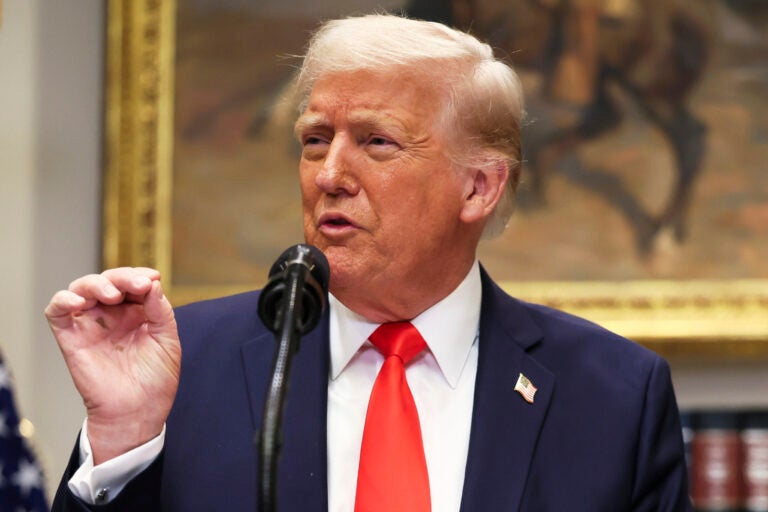
President Trump's declaration this week that he will not sign any legislation until Congress passes the sweeping SAVE America Act represents a significant political ultimatum, placing election reform at the forefront of the national agenda. The proposed Safeguard American Voter Eligibility (SAVE) Act aims to fundamentally reshape the voting process in the United States. This analysis delves into the bill's core provisions, the debate over its necessity, and the substantial challenges it faces on its path to becoming law.
Key Provisions of the SAVE America Act
The SAVE America Act, as detailed in a PBS NewsHour report, introduces two major nationwide requirements. First, it would mandate that all Americans provide proof of U.S. citizenship when registering to vote. Second, it would require all voters to show a government-issued photo identification when casting a ballot, whether in person or by mail. For absentee voting, individuals would need to submit a photocopy of their ID with their ballot.
Additional Federal Mandates
Beyond voter ID, the bill imposes other significant changes. It would require states to conduct frequent reviews of their voter rolls to identify and remove any noncitizens. Furthermore, it mandates that states share voter registration data with the federal government, a practice that most states have historically resisted but which has received backing from several federal judges.
The Debate Over Voter Fraud and Election Security
The central argument for the bill, as stated by President Trump, is to prevent noncitizens from voting. However, multiple studies and audits suggest the incidence of such fraud is minimal. A Department of Homeland Security study cited in the PBS report found that of 49.5 million voter registrations checked for the 2024 election, only about 10,000 cases (roughly 0.02%) were referred for further investigation regarding citizenship. A 2024 audit in Georgia of 8.2 million registered voters identified only 20 noncitizens who had registered.
Election experts argue the existing deterrents are strong. Rick Hasen of UCLA School of Law notes that a noncitizen who falsely claims citizenship on a voter registration form commits a felony punishable by deportation and jail time—a high-risk act for a single vote. David Becker of the Center for Election Innovation and Research stated, "We know our elections are more secure than ever... this administration has gone out hunting for fraud with all of the tools of the federal government over the last year, and they have found virtually none."
Potential for Voter Disenfranchisement
Critics of the SAVE America Act are deeply concerned that its requirements could create substantial barriers for eligible voters. The need for documents like passports or birth certificates could disproportionately affect certain groups. The Brennan Center for Justice estimates over 21 million Americans lack ready access to such documentation.
Impact on Specific Demographics
The requirements pose particular challenges for older Americans, low-income individuals, students, and those who have recently changed their names. A 2023 Pew survey found that over 80% of women change or hyphenate their names after marriage, meaning their identity documents may not align, requiring additional bureaucratic steps to register. Tammy Patrick, a voting rights advocate, summarized the concern: "I don't think there's anyone that wants ineligible voters to participate in our democracy, full stop. But what we do want to make sure is everyone who is eligible doesn't have obstacles that they have to overcome in order to participate."

Political Prospects and Public Opinion
The bill faces a steep climb in Congress. The PBS report indicates the Senate is poised to take up the bill where it is expected to fail. Public opinion on election security is divided. A recent PBS NewsHour/NPR/Marist poll shows 66% of Americans are confident their state or local government will run fair elections, though this is down from 76% in October 2024. On the specific issue of voter fraud, 33% of adults believe it is the biggest threat to safe elections, with Republicans expressing far more concern than Democrats.
The poll also touched on the controversial idea of using the National Guard at polling places—an idea the president has reportedly considered. While a slim majority of Americans oppose it, 46% support the idea, including 73% of Republicans. David Becker pointed out that such a move would be illegal under federal law (18 U.S.C. 592), which prohibits "troops or armed men" from appearing at voting locations.
Conclusion
President Trump's SAVE America Act ultimatum has set the stage for a major legislative battle over the future of American elections. While the bill seeks to address concerns about election integrity, evidence suggests the problem it aims to solve is exceedingly rare. The potential consequences—creating new hurdles for millions of eligible voters—are significant and widely debated. With the bill likely to fail in the Senate, the president's strategy appears more focused on defining a political narrative around election security than achieving immediate legislative success. The debate underscores the deep and persistent divisions in how Americans view the security and accessibility of their electoral system.