Read on PBS News
U.S.-Israeli War in Iran Enters 10th Day Amid Leadership Shift and Economic Fallout
The U.S.-Israeli military conflict with Iran has entered its tenth day, with no immediate signs of de-escalation. President Trump has characterized the war as 'very complete,' claiming operations are ahead of schedule, while the conflict triggers significant global economic repercussions, including surging oil prices. A major political development within Iran saw Mojtaba Khamenei named as the new Supreme Leader following his father's death, signaling a continuation of hard-line policies amidst the ongoing violence and international pressure.
The military confrontation between the United States, Israel, and Iran has intensified as it enters a critical tenth day, marking a period of sustained conflict with profound regional and global implications. Despite assertions from U.S. leadership about the operation's progress, the war shows no signs of abating, instead deepening geopolitical fissures and triggering immediate economic shockwaves. This analysis examines the current state of the conflict, its economic impact, and the significant internal political shift within Iran that has occurred amidst the turmoil.

Military Developments and Strategic Claims
The conflict has seen a series of targeted airstrikes and retaliatory measures. Israeli forces conducted strikes on key Iranian oil infrastructure in Tehran, resulting in massive fires and reported civilian casualties. In response, Iran has launched missile attacks into Central Israel, causing civilian deaths and injuries, and has targeted U.S. diplomatic and military assets in the region, including an attack on a base in Saudi Arabia that killed an American service member. Concurrently, U.S. and Israeli naval forces have engaged Iranian vessels in the Persian Gulf. President Donald Trump has publicly stated that the war is proceeding more rapidly than an initial four-to-five-week estimate, framing the campaign as essential for global security despite the escalating costs.
Global Economic Repercussions
The targeting of Iran's oil infrastructure has had an instantaneous effect on global markets. The price of oil experienced a sharp spike, briefly approaching $120 per barrel, raising immediate concerns about sustained inflation and hampered economic growth worldwide. International analysts, like German capital markets expert Tim Oechsner, have warned that prolonged conflict and high oil prices pose significant risks to the global economy. The U.S. administration has downplayed these concerns as a short-term necessity, a stance that continues to be met with apprehension by international observers and markets.
A New Supreme Leader in Wartime Iran
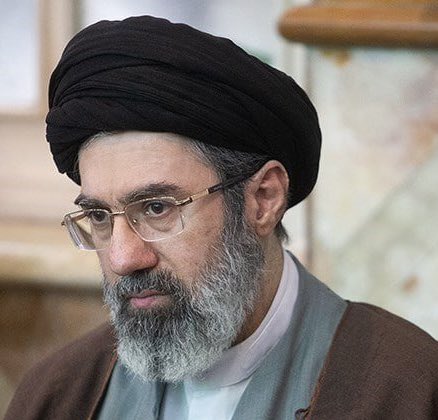
Amid the bombardment, Iran witnessed a pivotal political transition. Mojtaba Khamenei was formally named as the new Supreme Leader, succeeding his father, Ayatollah Ali Khamenei, who was killed in a strike ten days prior. This appointment, which consolidates power within the Khamenei family, marks a significant moment for the Islamic Republic, an entity that originally opposed hereditary rule. The 56-year-old Mojtaba Khamenei is closely aligned with the Islamic Revolutionary Guard Corps (IRGC) and is expected to maintain his father's hard-line stance against the U.S. and Israel. His rise, fueled by personal tragedy from the war, has galvanized pro-regime supporters and stands as a defiant response to external pressures regarding Iran's internal sovereignty.
Regional Security and Humanitarian Toll
The war's footprint is expanding across the Middle East, compelling the U.S. State Department to issue security alerts urging American citizens in Saudi Arabia to consider departing. The human cost is mounting on all sides, with civilian casualties reported in both Iran and Israel. In Tehran, families mourn loved ones lost in airstrikes, their grief a stark counterpoint to the political rallies celebrating the new leadership. The conflict has created a volatile security environment with potential for further miscalculation and escalation.
Analysis and Path Forward
The tenth day of the war presents a complex tableau: accelerated military operations, a shaken global economy, and a hardened political leadership in Tehran. The appointment of Mojtaba Khamenei suggests that diplomatic resolutions may become even more challenging, as the new leader's legitimacy is intertwined with resistance to external adversaries. The continued volatility in oil markets underscores the conflict's direct impact on worldwide economic stability. As military actions persist, the international community faces the urgent task of managing humanitarian crises, containing economic fallout, and navigating a diplomatic landscape reshaped by violence and succession.
In conclusion, the U.S.-Israeli war in Iran has evolved beyond a military engagement into a multifaceted crisis affecting global economics and regional political structures. The emergence of a new supreme leader from within the conflict ensures that Iran's strategic posture will remain confrontational. The coming days will be critical in determining whether the conflict de-escalates or deepens, with significant consequences for international security and the global economic order.