Read on Nature
Unlocking G Protein Selectivity: How NTSR1's Dynamic Intermediate States Guide Cellular Signaling
Groundbreaking research using time-resolved cryo-electron microscopy reveals how the neurotensin receptor 1 (NTSR1) achieves its remarkable promiscuity in G protein coupling. By capturing transient intermediate states along the GTP-induced activation pathway, scientists have discovered that G protein subtype selectivity depends not just on static nucleotide-free complexes but on dynamic, short-lived conformations stabilized by specific receptor loops. This work provides unprecedented insights into how GPCRs like NTSR1 can efficiently activate multiple signaling pathways, with implications for designing more precise therapeutic drugs targeting these crucial cellular receptors.
G-protein-coupled receptors (GPCRs) represent one of the largest and most important families of membrane proteins in the human body, serving as crucial mediators of cellular communication and drug targets for numerous therapeutic applications. Among these receptors, neurotensin receptor 1 (NTSR1) stands out for its remarkable promiscuity—its ability to efficiently activate multiple classes of G proteins, particularly Gαq/11 and Gαi/o families. Recent groundbreaking research published in Nature has employed time-resolved cryo-electron microscopy to capture previously invisible intermediate states along the G protein activation pathway, revealing how dynamic structural transitions rather than static complexes determine G protein subtype selectivity.

The Challenge of G Protein Selectivity
Despite hundreds of GPCR-G protein complex structures being solved, the fundamental question of how receptors select specific G protein partners has remained poorly understood. GPCRs detect diverse stimuli but typically couple to only four classes of G proteins (Gαi/o, Gαs, Gαq/11, and Gα12/13), each triggering distinct downstream signaling cascades. The neurotensin receptor 1 demonstrates unusual promiscuity, activating three G protein classes with a preference for Gαq/11 > Gαi/o ≫ Gα12/13. Understanding this selectivity is crucial for drug development, particularly for designing ligands with specific signaling profiles that could minimize side effects.
Capturing Transient Intermediate States
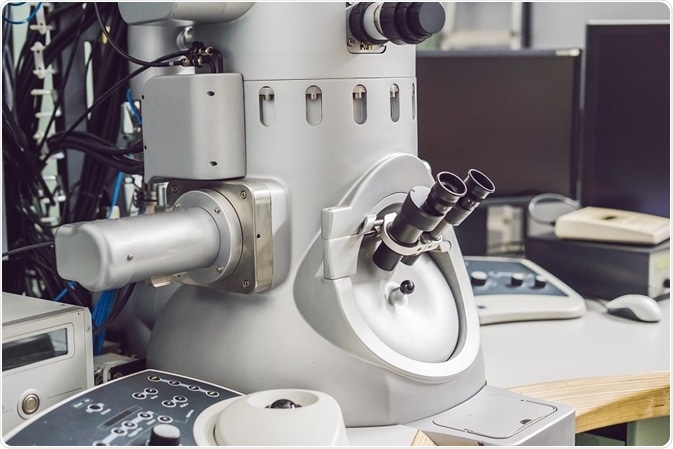
The research team employed time-resolved cryo-electron microscopy to visualize the GTP-induced activation of Gαi1βγ and Gα11βγ heterotrimers bound to NTSR1. This innovative approach allowed them to resolve ensembles of states along the G protein activation pathway, revealing differences in structures and their relative populations between Gαi1 and Gα11. The study identified that transient intermediate-state complexes along the G protein activation pathway play a crucial role in G protein selection that cannot be explained by nucleotide-free states alone.
Canonical and Non-Canonical Complex Orientations
Previous studies had revealed that the NTSR1–Gi1 complex exists in both canonical (C) and non-canonical (NC) orientations in nucleotide-free states. The canonical arrangement resembles other family A GPCR-G protein complexes, while the non-canonical orientation features the receptor rotated by approximately 45°. The new research demonstrates that both orientations are capable of binding GTP, challenging previous assumptions about their functional roles in the activation pathway.
Key Structural Determinants of Selectivity
Structural analysis revealed crucial roles for several receptor motifs in stabilizing observed intermediate states. Intracellular loop 2 (ICL2) and ICL3 emerged as particularly important for stabilizing intermediate states and influencing signaling preferences. In the NC-closed-GTP state with Gi1, ICL2 accounts for 75% of receptor-G protein contacts compared to only 6% in the NC-open-apo structure, highlighting its dynamic role in complex stabilization during activation.
Differential Behavior Between G Protein Families
The study revealed profound differences in how NTSR1 interacts with Gi1 versus G11 during GTP-induced activation. While NTSR1–Gi1 complexes transition through multiple stable intermediate states with both canonical and non-canonical orientations, NTSR1–G11 complexes show fewer resolvable intermediates once GTP is added. This difference in intermediate state stability correlates with significantly faster release of activated G11 from the receptor compared to Gi1.
Functional Implications for Cellular Signaling
Single-molecule fluorescence assays revealed that GTP-induced NTSR1–G protein complex dissociation occurs approximately 2.5 times faster for G11 compared to Gi1, with time constants of around 15 seconds versus 37 seconds respectively. This differential release rate likely contributes significantly to NTSR1's preference for Gq/11 signaling over Gi/o signaling, demonstrating how kinetic parameters rather than just binding affinity can determine signaling efficiency.
Comparison with Other GPCRs
When compared to the μ-opioid receptor (MOR), which couples primarily to Gi proteins, NTSR1 exhibits more stable intermediate states with active receptor conformations. Molecular dynamics simulations and sequence analysis suggest that differences in ICL2 sequences between receptors contribute to these distinct behaviors, with specific residues like F17434.51 in NTSR1 playing crucial roles in stabilizing intermediate complexes.
Implications for Drug Design and Therapeutic Development
These findings have significant implications for rational drug design targeting GPCRs. By understanding how specific receptor regions like ICL2 and ICL3 influence intermediate state stability and G protein selectivity, researchers can potentially design ligands with precise functional selectivity profiles. This could lead to drugs that activate desired signaling pathways while minimizing side effects associated with activation of other pathways.
The research also suggests avenues for developing allosteric modulators and intracellular compounds that could stabilize specific intermediate states to achieve therapeutic effects. As the study notes, "These insights will provide the necessary structures and dynamic information to guide the design of GPCR ligands with precise functional selectivity profiles, allosteric modulators and intracellular 'glue' compounds, and other next-generation molecules that will significantly facilitate the production of improved GPCR drugs."
Future Research Directions
The authors suggest several promising directions for future research, including visualization of NTSR1 interacting with GDP-bound G proteins during complex formation and nucleotide release. Combining time-resolved structural methods with biochemical and biophysical approaches like double electron–electron resonance (DEER) and single-molecule FRET could provide comprehensive understanding of the full signaling cycle. Such integrated approaches could eventually enable determination of complete free energy landscapes for GPCR signaling and how these landscapes are perturbed by different G protein partners and ligands.

Conclusion
This groundbreaking research fundamentally advances our understanding of how GPCRs achieve G protein subtype selectivity through dynamic intermediate states rather than static complexes. By capturing previously invisible transitions along the activation pathway, the study reveals how specific receptor motifs like ICL2 and ICL3 stabilize transient conformations that influence signaling kinetics and efficiency. These insights not only explain NTSR1's remarkable promiscuity but also provide a framework for understanding selectivity mechanisms across the GPCR family. As structural biology techniques continue to advance, capturing such dynamic processes will be crucial for developing next-generation therapeutics that precisely modulate cellular signaling pathways with minimal side effects.