Read on France 24
Lebanon's Precarious Position: Navigating the Hezbollah-Israel Conflict
Lebanon is caught in a devastating cycle of violence and political paralysis as the conflict between Israel and Hezbollah intensifies. With hundreds killed and three-quarters of a million people displaced, the nation faces an 'absurd' situation, according to Beirut-based journalist Iva Kovic-Chahine. The Lebanese government is under mounting international pressure to broker direct talks with Israel, yet it remains trapped by the fundamental demand for Hezbollah's disarmament. This analysis explores the complex dynamics on the ground, the profound humanitarian crisis, and the political deadlock that threatens to prolong the suffering of the Lebanese people.
Lebanon stands on a precipice, its stability shattered by a conflict not entirely of its government's making. The escalating hostilities between Israel and the Iran-backed militant group Hezbollah have plunged the country into a profound humanitarian and political crisis. With a staggering human cost already tallied, the Lebanese state finds itself navigating an impossible terrain between domestic factionalism, regional proxy warfare, and intense international pressure. The situation, as described by Iva Kovic-Chahine, head of the Beirut-based news outlet L’Orient Today, in an interview with FRANCE 24, is nothing short of "absurd," highlighting the deep-seated contradictions and challenges facing the nation.
The Human Toll of the Conflict
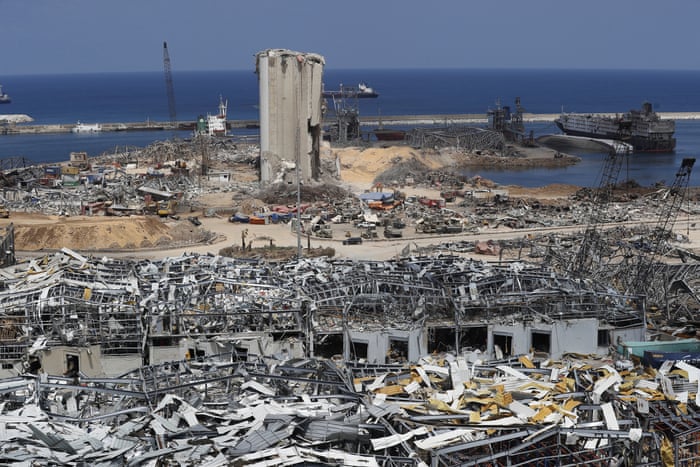
The most immediate and devastating impact of the fighting is the sheer scale of loss and displacement. According to reports, the conflict has resulted in 570 people killed and forced more than 750,000 individuals from their homes. This mass displacement represents a significant portion of Lebanon's population, straining the country's already fragile infrastructure and social services to a breaking point. The displacement crisis creates a cascade of secondary problems, including overcrowded shelters, a lack of basic necessities, and the disruption of education and livelihoods, embedding long-term trauma and economic hardship.
Political Paralysis and Public Sentiment
Within this context of widespread suffering, the Lebanese political landscape is characterized by paralysis. The government, a historically weak and fractious entity, is caught between competing forces. Kovic-Chahine notes that Hezbollah's decision to fire rockets into Israel—a move reportedly in protest of the killing of Iran's Ayatollah Ali Khamenei—sparked "intense rage" among many Lebanese citizens. This public anger stems from a fear that actions taken by Hezbollah, which operates as a state-within-a-state, could drag the entire country into a full-scale war for which it is utterly unprepared, repeating the devastating history of the 2006 Lebanon War.
The Vicious Circle of Negotiations and Disarmament
The core of the political impasse is what Kovic-Chahine identifies as a "vicious circle." On one hand, there is growing international and domestic pressure for the Lebanese government to enter into direct talks with Israel to negotiate a ceasefire and de-escalation. Such negotiations are seen as a pathway to ending the bloodshed and allowing displaced citizens to return home. On the other hand, any meaningful negotiation is inherently linked to the long-standing international demand, embodied in United Nations Security Council Resolution 1701, for Hezbollah's disarmament. Hezbollah's military power is a cornerstone of its political influence within Lebanon, making its disarmament a non-starter for the group and its supporters, thereby blocking the path to formal talks.
Regional Dimensions and Lebanon's Sovereignty
This conflict cannot be viewed in isolation from broader regional tensions. Hezbollah's role as a key proxy for Iran in its strategic competition with Israel and Saudi Arabia means that Lebanon's territory has become a battleground for external powers. This reality severely undermines Lebanese sovereignty and limits the government's agency. The state's inability to control the use of force within its own borders by Hezbollah is the central dilemma. Calls for the government to "rein in" Hezbollah ignore the complex power-sharing arrangement and the group's entrenched military and social infrastructure, which often surpasses that of the official state.

Pathways Forward and Conclusion
Finding a way out of this crisis requires navigating an extraordinarily narrow path. Potential pathways include bolstering Lebanese state institutions to gradually assert more authority, pursuing indirect mediation through third parties to establish temporary truces, and addressing the root causes of Hezbollah's popular support by tackling state corruption and providing economic opportunity. However, each option is fraught with difficulty. The immediate priority remains mitigating the humanitarian disaster and preventing a further slide into nationwide chaos. The "absurd" situation Lebanon faces is a stark reminder of how regional conflicts can eviscerate weaker states, leaving their populations hostage to the agendas of more powerful actors. The international community's role will be critical, but ultimately, a sustainable solution must emerge from within Lebanon, requiring political courage and compromise that has so far been in short supply.