The Structural Failure of the Israel-Hezbollah Ceasefire Mechanism
The November 2024 ceasefire between Israel and Hezbollah was structurally flawed from its inception, lacking enforcement power and clear violation adjudication processes. Despite formal agreements, Israeli military operations in Lebanon continued almost daily, with UNIFIL documenting over 10,000 airspace violations and 1,400 military activities inside Lebanese territory. The monitoring mechanism, chaired by the US and France, collapsed as hostilities resumed in March 2026, revealing a dangerous diplomatic vacuum and raising profound questions about sovereignty, international law, and regional stability.
The resumption of hostilities between Israel and Hezbollah in March 2026 confirmed what many analysts had long suspected: the ceasefire agreement brokered in November 2024 was structurally destined to fail. Designed as a temporary measure without addressing the underlying dynamics of confrontation, the agreement created a monitoring mechanism that lacked both the authority and the power to enforce its own terms. This analysis examines why the ceasefire was built on unstable foundations and how its collapse has led to renewed, potentially more devastating conflict.

The Flawed Architecture of the 2024 Ceasefire
The ceasefire agreement, brokered by the United States and France, formally aimed to end active hostilities but contained critical ambiguities that undermined its effectiveness from the outset. Most significantly, the agreement granted the Israeli military the authority to conduct operations whenever it perceived a potential threat to its security. This clause created a fundamental imbalance, allowing one party to unilaterally determine when violations were justified without independent verification mechanisms.
The monitoring mechanism established to oversee the agreement included representatives from the US, France, the Lebanese Armed Forces (LAF), the Israeli military, and the United Nations Interim Force in Lebanon (UNIFIL). However, this body lacked the authority to independently verify whether the threats cited by Israel were genuine or whether targeted locations were indeed Hezbollah positions. More critically, the mechanism failed to establish clear processes for verifying or adjudicating violations, making accountability virtually impossible from the beginning.
Systematic Violations and the Collapse of Monitoring
According to UNIFIL records, which served as the only systematic documentation of violations in line with UN Security Council Resolution 1701, Israeli military activities in Lebanon continued unabated despite the ceasefire. Between November 27, 2024, and the end of February 2026, UNIFIL documented more than 10,000 violations of Lebanese airspace and 1,400 military activities inside Lebanese territory. These operations resulted in approximately 400 deaths and more than 1,100 injuries in Lebanon.

The monitoring mechanism itself collapsed with the resumption of full-scale hostilities following the start of the US-Israeli war on Iran. During its final meeting at the end of February 2026, Israeli representatives did not attend, effectively marking the end of the framework intended to supervise ceasefire arrangements. This diplomatic breakdown occurred alongside continued Israeli military presence in Lebanese territory, with forces maintaining control of five positions near the villages of Labbouneh, Marwahin, Aitaroun, Hula, and Sarada, plus two buffer zones—despite agreement terms calling for withdrawal to allow LAF deployment.
Geographic Expansion and Strategic Objectives
The renewed conflict that erupted on March 2, 2026, has demonstrated even greater asymmetry and violence than previous confrontations, occurring in what analysts describe as a relative diplomatic vacuum. Unlike earlier phases when international diplomacy attempted to contain escalation, this new round has unfolded with minimal mediation efforts. The geographic scope of hostilities has expanded significantly, with air raids and attacks occurring across a broader range of locations in Lebanon, including areas previously considered relatively safe.
This expansion aligns with stated Israeli strategic objectives. Since the beginning of the broader confrontation in 2023, Israeli political and military leaders have repeatedly expressed intentions to create security buffer zones north of the Blue Line that would be largely free of civilian presence. The pattern of attacks observed since late 2024 suggests a sustained effort to produce precisely such a reality on the ground, with many villages near the Blue Line suffering extensive damage and several communities almost completely destroyed.
Humanitarian and Institutional Consequences
The humanitarian impact of continued hostilities has been severe, with attempts to restore local governance and services facing immediate setbacks. Whenever local authorities tried to re-establish administrative presence using temporary facilities such as prefabricated buildings or containers, those structures were frequently attacked, preventing the return of civilian life and the re-establishment of local institutions. The alleged use of white phosphorus along the Blue Line, coupled with repeated spraying of chemical pesticides reportedly aimed at preventing farmers from replanting their crops, suggests deliberate efforts to keep the area devoid of population and civilian infrastructure.
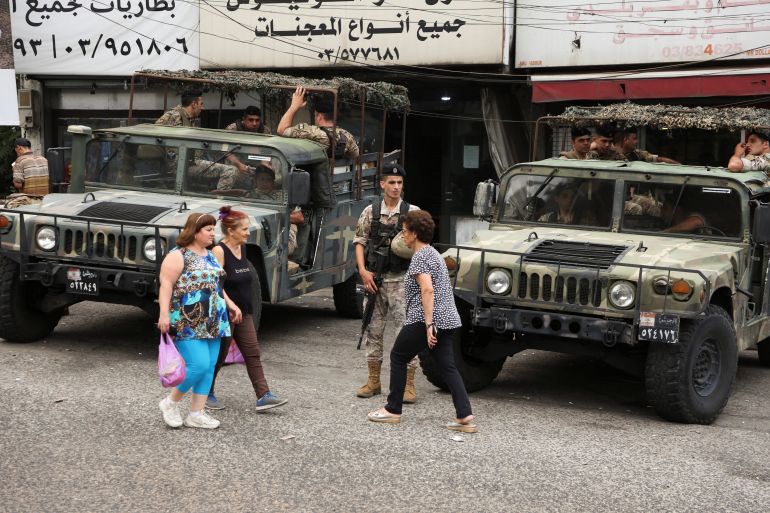
These practices have undermined the already severely damaged agricultural economy of southern Lebanon, with potentially long-term socioeconomic consequences. The LAF's efforts to reclaim areas in southern Lebanon, undertaken with considerable determination despite limited resources, were never matched by the level of international support that had been promised. A weakened and fragmented international community, often constrained by geopolitical alignments and the dominance of US and Israeli strategic priorities, proved unable to deliver sustained backing.
Regional Implications and Future Trajectories
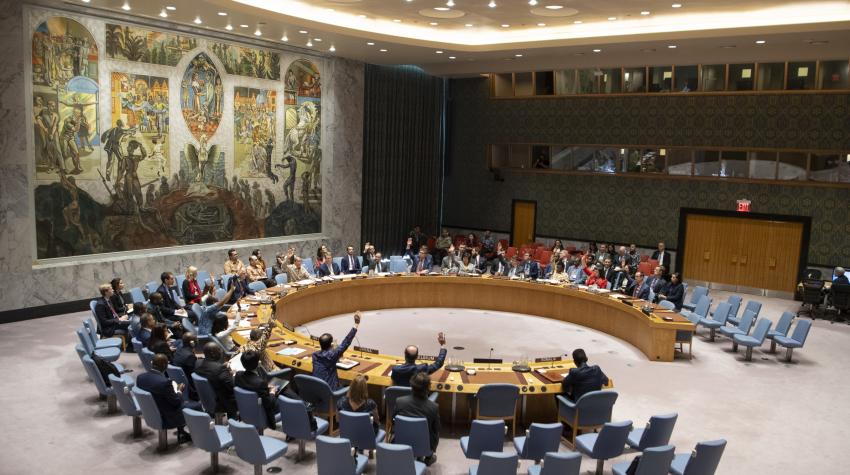
The current developments place significant strain on international law, particularly the principles of sovereignty and civilian protection. Yet the response from the international community has been strikingly muted, with diplomatic initiatives capable of mediating the conflict failing to materialize. The situation was further exacerbated by a controversial UN Security Council decision on August 31, 2025, which granted UNIFIL its last renewal and requested cessation of operations by the end of 2026 with final closure by 2027.
Should this decision remain in effect, southern Lebanon could soon find itself without any international presence capable of monitoring events, supporting civilians, and assisting the LAF in their redeployment. The implications of such an absence are profound, significantly increasing the risk of miscalculation and uncontrolled escalation. The latest developments have pushed Israel toward preparing for the possibility of a ground invasion of Lebanon, which would follow a historical pattern of Israeli military interventions in 1978, 1982, 2006, and 2024.
Conclusion: A Dangerous Convergence
The structural weaknesses of the 2024 ceasefire agreement have been laid bare by subsequent events. What was presented as a diplomatic achievement was in reality a temporary arrangement that failed to address fundamental power imbalances or establish meaningful enforcement mechanisms. The monitoring body's lack of authority to verify threats or adjudicate violations created conditions where one party could essentially determine the terms of its own compliance.
The current trajectory suggests a dangerous convergence of military escalation, institutional fragility, and diplomatic paralysis. Without renewed international engagement and credible mediation that addresses the structural flaws of previous agreements, the Israel-Lebanon frontier risks sliding into another prolonged and devastating phase of conflict. The failure of the ceasefire mechanism serves as a cautionary tale about the limitations of diplomatic arrangements that lack enforcement power and the catastrophic consequences when international monitoring systems collapse in the face of determined military action.