Read on France 24
Nagorno-Karabakh's Unresolved Crisis: A Betrayal of Displaced Armenians
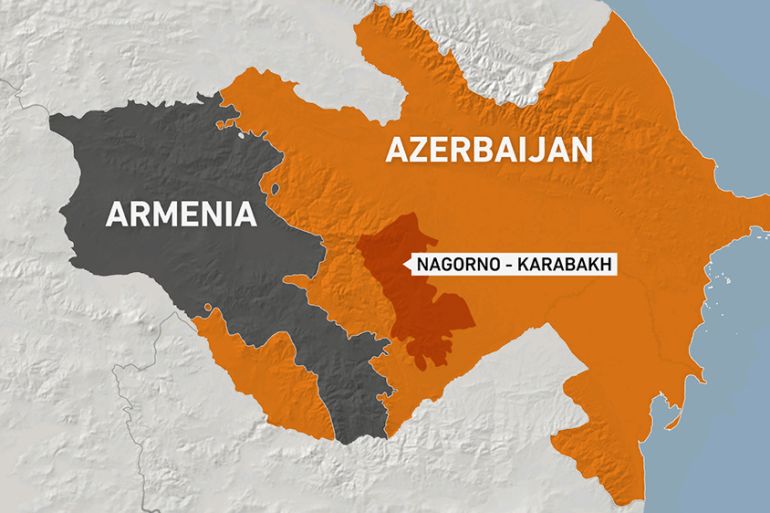
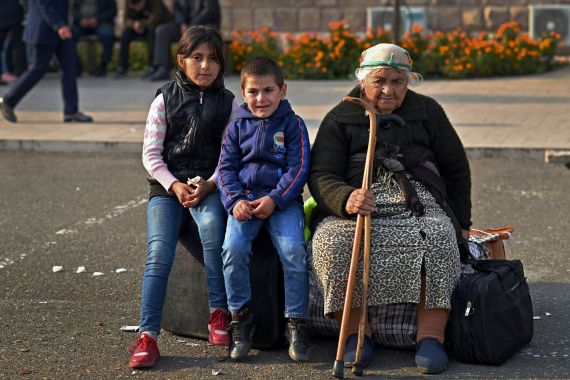
The 2025 Washington peace declaration between Armenia and Azerbaijan was hailed as a diplomatic breakthrough, but for the displaced Armenian population of Nagorno-Karabakh, it represents a profound betrayal. In an exclusive interview with FRANCE 24, former Nagorno-Karabakh minister Artak Beglaryan reveals how the agreement completely ignores the rights, security, and future of 150,000 people forcibly displaced from their homeland. This article examines the ongoing human rights crisis, the political failures that led to this situation, and why peace without justice remains an empty promise for Nagorno-Karabakh's Armenian community.
The signing of a peace declaration between Armenia and Azerbaijan in Washington in August 2025 was presented as a historic step toward regional stability. US President Donald Trump presided over the ceremony where Armenian Prime Minister Nikol Pashinyan and Azerbaijani President Ilham Aliyev put their signatures to a document intended to end decades of conflict. Yet for the Armenian population of Nagorno-Karabakh—nearly all of whom were forcibly displaced when Azerbaijan regained control of the region in 2023—this agreement offers little comfort and represents what former Nagorno-Karabakh state minister Artak Beglaryan describes as a profound political betrayal.
The Washington Declaration: Peace Without People
According to Beglaryan, who served as both state minister and human rights ombudsman for Nagorno-Karabakh, the Washington peace declaration contains a critical omission. "It's relatively good news," Beglaryan acknowledged in his interview with FRANCE 24, "but nothing was written in this declaration about Nagorno-Karabakh and the people of Nagorno-Karabakh." This absence is particularly striking given that the conflict's central issue has always been the status and rights of Nagorno-Karabakh's Armenian population. The declaration's silence on this matter suggests that diplomatic expediency has taken precedence over human rights and justice for those most affected by the conflict.
President Aliyev has publicly stated that "peace is achieved" with Armenia following the declaration's signing. However, this proclamation rings hollow for Beglaryan and the displaced community he represents. "The declaration says nothing about the rights, security or status of the 150,000 people of Nagorno-Karabakh," Beglaryan emphasized. "Nobody consulted us. [...] At least politically, yes, we have been betrayed by the Armenian authorities." This sense of betrayal stems from what displaced Armenians perceive as Yerevan's abandonment of their cause in pursuit of a broader peace agreement with Baku.

Armenian Government's Controversial Position
The response from Yerevan has further deepened the disillusionment among displaced Nagorno-Karabakh Armenians. Prime Minister Pashinyan has publicly expressed pride in the peace declaration's results and suggested that the displaced population should abandon hopes of returning to their homeland. Beglaryan finds this position both morally indefensible and politically irresponsible. "That is absurd," he stated. "Armenia was a party to the conflict and host to refugees, and should have done everything to protect our rights."
This tension highlights a fundamental conflict between state-level diplomacy and the protection of minority rights. While Pashinyan's government appears focused on securing Armenia's broader geopolitical position through normalized relations with Azerbaijan and Turkey, the specific concerns of Nagorno-Karabakh's Armenian community have been marginalized in the process. The result is a peace agreement that may serve state interests but fails to address the humanitarian catastrophe experienced by an entire population.
Ongoing Human Rights Violations and Accusations
Beyond the diplomatic shortcomings, Beglaryan points to continuing human rights abuses that undermine any genuine peace. President Aliyev has refused to grant clemency to imprisoned Nagorno-Karabakh separatist leaders, who have been sentenced to life imprisonment. Beglaryan's language becomes particularly forceful when discussing Azerbaijan's leadership, describing Aliyev as "a Nazi leader" whose regime has "committed crimes including crimes against humanity and genocide against our people."
These allegations extend to personal persecution, according to Beglaryan. Blind since a landmine accident, he claims Azerbaijani authorities sought to punish him specifically despite his non-combatant role. "I never fought. I only defended my people's rights. And yet we are punished for our very existence," he stated. This sentiment captures the essence of the Nagorno-Karabakh Armenian experience—a perception that their identity itself has become a punishable offense in the new geopolitical reality.
The Path Forward: Justice as a Prerequisite for Peace
The current situation presents a critical challenge for international diplomacy and human rights advocacy. A peace agreement that ignores the rights and security concerns of a displaced population risks creating only a superficial stability that masks underlying injustices. For genuine reconciliation to occur, several conditions must be met according to the perspective presented by Beglaryan and other Nagorno-Karabakh Armenian representatives.
First, any comprehensive peace must address the specific concerns of Nagorno-Karabakh's Armenian community regarding their rights, security, and potential return. Second, accountability mechanisms must be established for alleged human rights violations committed during and after the 2023 military operation. Third, the international community must ensure that diplomatic agreements do not sacrifice minority rights for the sake of state-level normalization. Without these elements, the Washington declaration represents not an end to conflict but merely another chapter in the long history of Nagorno-Karabakh's suffering.
The displacement of Nagorno-Karabakh's Armenian population represents one of the most significant humanitarian crises in the post-Soviet space. As diplomatic efforts continue between Armenia and Azerbaijan, the international community must ensure that human rights and justice remain central to the peace process. The alternative—a peace built on the forced displacement and political marginalization of an entire community—would represent not a diplomatic achievement but a moral failure with potentially destabilizing consequences for years to come.