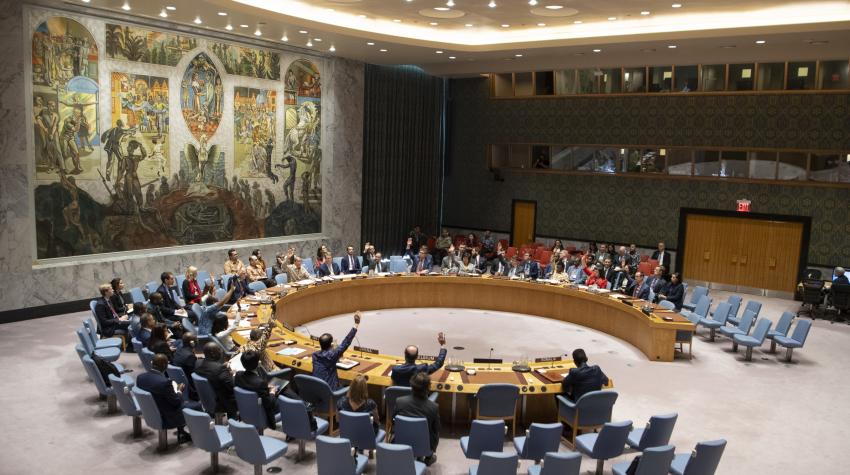
IEA Convenes Emergency Meeting as US-Israel War on Iran Roils Global Energy Markets
The International Energy Agency (IEA) held an extraordinary meeting of its 32 member states to assess the severe disruption to global oil markets caused by the ongoing US-Israel war on Iran. The conflict has effectively shut down the critical Strait of Hormuz, curtailed substantial oil production, and sent prices to their highest levels since mid-2022. IEA Executive Director Fatih Birol cited 'significant and growing risks for the market,' while member states, including the G7, are evaluating the potential release of emergency oil stocks to stabilize supply and mitigate the economic fallout.
The International Energy Agency (IEA) has taken the extraordinary step of convening an emergency meeting of its 32 member states, signaling deep concern over the escalating impact of the US-Israel war on Iran on global energy security. The conflict has plunged oil markets into a state of high volatility, threatening to trigger a broader economic crisis as critical shipping lanes are blocked and production is curtailed. This meeting underscores the international community's urgent need to coordinate a response to a situation that risks echoing the severe energy price shocks witnessed in recent years.

Market Turmoil and Supply Disruptions
Global oil markets are experiencing their most significant disruption since the 2022 energy crisis triggered by Russia's invasion of Ukraine. According to reports from Al Jazeera, oil prices surged this week to their highest levels since mid-2022. The primary driver of this volatility is the effective shutdown of the Strait of Hormuz, a narrow but vital Gulf waterway through which approximately one-fifth of the world's oil supply transits. This closure, a direct consequence of the war, has severed a major artery of global energy trade.
Compounding the shipping crisis is a substantial reduction in oil output from key producers in the region that have been targeted by retaliatory strikes. IEA Executive Director Fatih Birol explicitly warned that these combined factors are "creating significant and growing risks for the market." While benchmark prices retreated slightly below $90 a barrel late on Monday, the underlying uncertainty about the war's duration means the market remains on a knife's edge, vulnerable to further spikes.
The IEA's Coordinated Response
The emergency talks, held on Tuesday, were explicitly called to assess "the current security of supply and market conditions" and to inform a potential decision on deploying emergency oil stocks. The IEA's member countries collectively hold over 1.2 billion barrels of public emergency oil reserves, a strategic buffer designed for precisely this kind of crisis. The agency's role is to facilitate a coordinated release to prevent panic and smooth out supply shortages, avoiding a scenario where individual countries act in an uncoordinated manner that could exacerbate market instability.
Following the meeting, the IEA did not immediately announce any stock release, indicating a cautious, data-driven approach. Instead, the agency is preparing an in-depth analysis of the pros and cons of acting now, as requested by the Group of Seven (G7) nations. This analytical phase is crucial for determining the timing and volume of any intervention to maximize its calming effect on the markets.
International Diplomatic Maneuvering
The IEA meeting followed a call between G7 energy ministers, who stopped short of authorizing a stock release themselves, instead tasking the IEA with the assessment. This sequence highlights the complex diplomatic coordination required in a global crisis. European leaders, still scarred by the 2022 energy crisis, are particularly anxious. EU Energy Commissioner Dan Jorgensen confirmed the IEA's analytical mandate, while French Finance Minister Roland Lescure stated, "We have asked the IEA to elaborate scenarios for a potential oil stock release; we need to be ready to act at any moment."
The sentiment of solidarity was echoed by Italy's Energy Minister, Gilberto Pichetto Fratin, who noted countries' commitment to using stockpiled reserves to compensate for global supply shortages. Behind the scenes, EU leaders, including German Chancellor Friedrich Merz and Italian Prime Minister Giorgia Meloni, discussed the pressing issue of energy prices and competitiveness, agreeing that any measures taken must be "targeted, temporary, and well-coordinated."

Broader Economic Implications
The stakes extend far beyond the energy sector. As noted by Al Jazeera's Osama Bin Javaid, a prolonged conflict will have a cascading impact on the global economy. Soaring energy prices act as a tax on consumers and businesses, fueling inflation, reducing disposable income, and potentially slowing economic growth worldwide. The ripple effects could disrupt supply chains that are already fragile, leading to higher costs for goods and services across multiple industries. The current situation tests the resilience of the global economic system and the effectiveness of international energy security mechanisms established since the oil crises of the 1970s.
Conclusion: A Precarious Balancing Act
The IEA's emergency meeting is a clear indicator that the world is facing a severe energy security crisis triggered by geopolitical conflict. The agency and its member states are now engaged in a delicate balancing act: they must prepare to deploy strategic reserves to prevent economic damage without prematurely depleting a buffer that may be needed for a longer conflict. The coming days will be critical as the IEA finalizes its analysis. The decision on whether and when to tap into the 1.2 billion-barrel emergency stockpile will send a powerful signal to markets and could determine whether this episode becomes a manageable disruption or escalates into a full-blown global energy shock with profound economic consequences.