
Assessing the Feasibility and Risks of a US Ground Operation in Iran
As the US-Israeli war with Iran enters its second week, speculation mounts about the potential for American ground troop deployment. While US officials have not confirmed plans, they have not ruled out the possibility, citing objectives like securing nuclear material. Analysts suggest Iran's vast, mountainous terrain would make a large-scale invasion extremely difficult, but a small, precise special forces mission targeting specific nuclear facilities is conceivable. Such an operation would carry significant risks, likely triggering severe retaliation from Iran and its regional proxies, potentially escalating the conflict dramatically.
As the US-Israeli conflict with Iran extends into its twelfth day, military analysts and political observers are increasingly focused on one critical question: could American soldiers be deployed on Iranian soil? While the Biden administration has maintained that ground operations are "not part of the plan right now," officials have carefully avoided ruling out the possibility entirely. This strategic ambiguity reflects the complex military calculations involved in any potential ground mission against a nation with Iran's formidable geographical advantages and military capabilities.
The Political Context and Official Statements
The debate about potential ground deployment has intensified within Washington's political circles. Democratic Senator Richard Blumenthal emerged from a classified Senate Armed Services Committee briefing on the Iran war expressing profound dissatisfaction and concern. "I am most concerned about the threat to American lives of potentially deploying our sons and daughters on the ground in Iran," Blumenthal told reporters, adding that he had "more questions than answers" about US objectives in the conflict. This sentiment reflects broader Democratic criticism of the administration's war strategy and its justification for continuing hostilities.
Secretary of State Marco Rubio provided perhaps the clearest indication of why ground forces might be considered necessary, stating that the US needed to "physically secure nuclear material in Iran" and that "people are going to have to go and get it." This statement aligns with President Trump's initial justification for the war—to prevent Iran from developing nuclear weapons—though Tehran maintains its nuclear program is strictly for civilian purposes. The administration's mixed messaging reflects the tension between military objectives and political realities, particularly given that polls show most Americans oppose deploying US troops to Iran.
Military Challenges of Iranian Terrain
Iran presents unique geographical challenges that would complicate any ground operation. The country is approximately four times larger than Iraq and features extensive mountainous regions that would hinder large-scale troop movements and supply lines. Unlike the relatively flat desert terrain that characterized the Iraq invasion, Iran's rugged landscape would favor defensive operations and guerrilla warfare tactics. These natural barriers have historically made Iran difficult to conquer, contributing to its reputation as a "fortress state" in military planning circles.
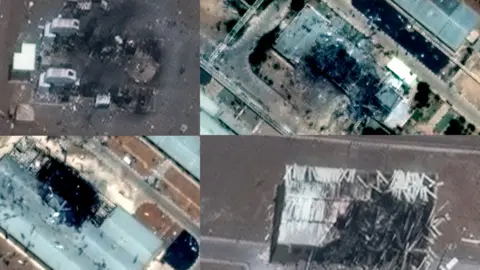
Military analysts emphasize that these geographical realities make a traditional large-scale invasion extremely difficult and costly. Instead, experts suggest any ground operation would likely be "limited, specialised operations involving small units targeting specific facilities," according to Thomas Bonnie James, a professor at Qatar's AFG College. Such operations would prioritize precision over scale, with specific objectives rather than territorial conquest. This approach would aim to minimize American casualties and reduce the political fallout from extended military engagement.
Potential Mission Parameters and Objectives
If a ground operation were authorized, it would likely follow a specific template designed for rapid execution with minimal exposure. Analysts suggest the mission would focus on Iran's most critical nuclear facilities: the Natanz Nuclear Facility, the Fordow Fuel Enrichment Plant, and the Isfahan Nuclear Technology Center. These sites represent the core of Iran's nuclear infrastructure and would be the primary targets for any operation aimed at securing nuclear materials.
The operation would likely begin with achieving air superiority and suppressing Iranian air defenses to allow safe passage for aircraft and support assets. Rapid-deployment forces such as the 82nd Airborne Division—a unit with extensive experience in conflict zones from World War II to Afghanistan—would secure entry points including airfields or staging areas. Specialized units like the US Navy SEALs or Army Special Forces would then execute the most sensitive tasks: penetrating hardened facilities, collecting intelligence, and locating or securing nuclear materials. The entire operation would emphasize "speed, precision and limited exposure," according to James, with a rapid exit strategy once objectives were achieved.
Iranian Response and Escalation Risks
Any US ground incursion would almost certainly trigger a severe response from Tehran. Iran has already demonstrated its willingness and capability to retaliate against US interests, having launched strikes on US military assets across the Gulf region in response to aerial attacks. A ground operation—even a limited one—would likely escalate this response significantly.

Analysts warn that a ground mission "could be risky and is likely to trigger 'a severe response' from Tehran," according to Neil Quilliam of the UK think tank Chatham House. This response could include intensified missile strikes against US bases in the region or attacks by Iranian proxy groups such as Lebanon's Hezbollah or Yemen's Houthis. These groups have demonstrated their ability to project power across the Middle East and could significantly complicate US military operations. Furthermore, sustained ground operations would require continuous air support and logistical supply lines that would be vulnerable to Iranian counterattacks.
Historical Context and Precedents
The US has engaged in multiple ground operations in the Middle East since the end of the Cold War, with mixed results. The invasions of Afghanistan and Iraq both began with specific objectives—dislodging al-Qaeda and destroying weapons of mass destruction, respectively—but evolved into prolonged occupations with significant human and financial costs. More recently, the US conducted a limited mission in Venezuela to abduct President Nicolas Maduro, demonstrating Washington's willingness to execute precise ground operations against specific targets.
These precedents inform current calculations about Iran. The Afghanistan and Iraq experiences highlight the risks of mission creep and prolonged engagement, while the Venezuela operation shows the potential for successful limited interventions. However, Iran represents a more formidable adversary than either Saddam Hussein's Iraq or the Taliban's Afghanistan, with more advanced military technology, greater regional influence, and more challenging terrain.
Conclusion: Calculated Risks in a Volatile Region
The decision to deploy ground troops to Iran represents one of the most consequential military calculations facing US policymakers. While a precise, limited operation targeting nuclear facilities is technically feasible, the risks of escalation and severe retaliation are substantial. Iran's geographical advantages, military capabilities, and network of regional proxies create a complex battlefield environment where even successful tactical operations could lead to strategic setbacks.
Ultimately, the calculus extends beyond military feasibility to encompass political, diplomatic, and strategic considerations. With most Americans opposed to troop deployment and regional stability already severely strained, any ground operation would need to demonstrate clear, achievable objectives with minimal risk of prolonged engagement. As the conflict continues, the question of ground troops will remain a pivotal issue, balancing military necessity against the profound risks of further escalation in an already volatile region.


