Judge Orders Restoration of Philadelphia Slavery Exhibit, Accuses US Government of Historical Revisionism
A US federal judge has ordered the National Park Service to restore an exhibit detailing the lives of nine people enslaved by George Washington at his Philadelphia residence. The ruling comes after Philadelphia sued the Trump administration over the removal of the panels, which was executed under an executive order to restore 'truth and sanity to American history.' In a scathing decision, Judge Cynthia Rufe accused the government of attempting to erase history, drawing a direct comparison to the authoritarian 'Ministry of Truth' in George Orwell's novel 1984.
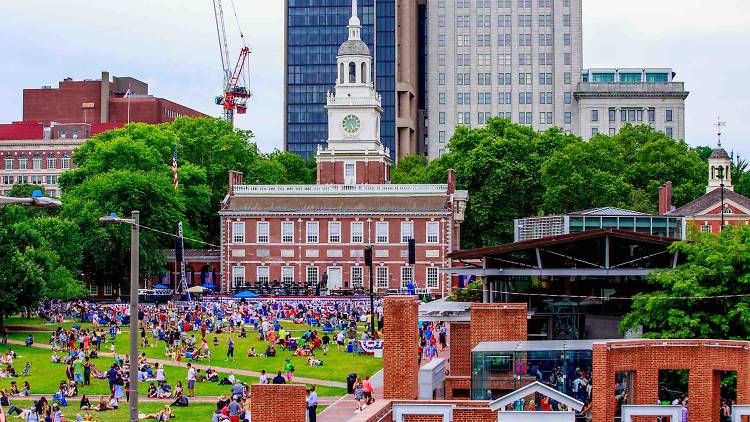
A federal judge has delivered a landmark ruling that accuses the United States government of attempting to rewrite history, ordering the immediate restoration of a removed exhibit about slavery at a Philadelphia historical site. The case centers on the President's House Site at Independence National Historical Park, where George Washington lived during his presidency in the 1790s. The exhibit, created through a city-federal partnership two decades ago, provided biographical details about nine individuals enslaved by the Washington household, including two who escaped to freedom.
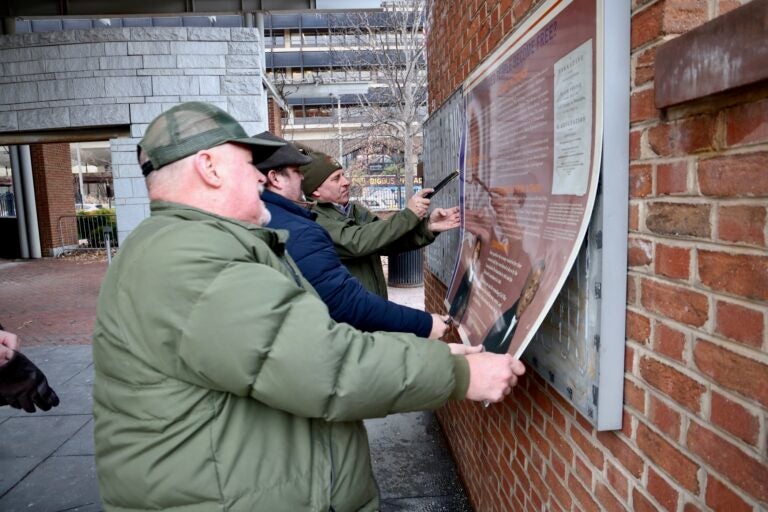
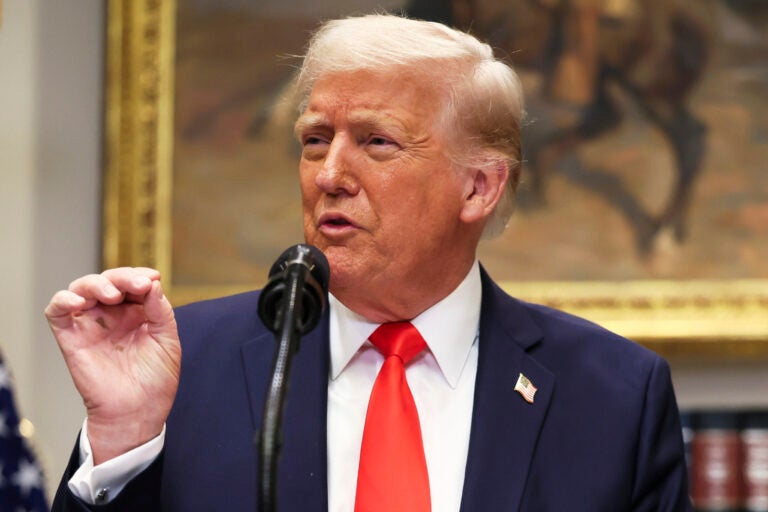
The legal battle began after Philadelphia officials filed a lawsuit against President Donald Trump's administration. The suit challenged the removal of several explanatory panels from the site, an action taken in response to a Trump executive order. The order directed federal agencies to ensure museums, parks, and landmarks under their purview do not display content that "inappropriately disparage[s] Americans past or living" and to restore "truth and sanity to American history."
A Judicial Rebuke and Orwellian Comparison
In a forceful 40-page decision, US District Judge Cynthia Rufe issued a temporary injunction, mandating that the National Park Service (NPS) restore all removed materials to their original condition while the underlying lawsuit proceeds. Crucially, the judge also prohibited Trump administration officials from installing alternative panels that would explain the history differently.
The core of Judge Rufe's ruling was a stark condemnation of the government's position. She framed the administration's actions as a dangerous overreach, accusing it of claiming the power to selectively present historical facts. In a passage that has drawn significant attention, Rufe invoked George Orwell's dystopian novel 1984, comparing the government's efforts to the work of the fictional "Ministry of Truth," whose motto was "Ignorance is Strength."
"As if the Ministry of Truth in George Orwell’s 1984 now existed... this Court is now asked to determine whether the federal government has the power it claims – to dissemble and disassemble historical truths when it has some domain over historical facts," Rufe wrote. "It does not."
This comparison underscores the judge's view that the removal constituted an act of historical revisionism, not curation. During a January hearing, Rufe had warned administration lawyers that their defense—arguing officials could choose which parts of history to display—was making "dangerous" and "horrifying" statements.

Broader Context of Content Removal
The Philadelphia case is not an isolated incident. According to the reporting by Al Jazeera, the Trump administration has quietly overseen the removal of content related to enslaved people and Native Americans at several National Park Service sites. One cited example is the Grand Canyon National Park, where signage explaining that settlers pushed Native American tribes "off their land" for the park's establishment and "exploited" the landscape was taken down.
Furthermore, Trump's executive orders have facilitated other controversial actions, such as the restoration of Confederate statues. Civil rights advocates argue these moves collectively risk reversing decades of social progress by undermining the public acknowledgment of difficult but critical chapters in American history, including slavery and the displacement of Indigenous peoples.
Local and Political Reaction
The ruling was met with celebration by local Philadelphia politicians and Black community leaders, many of whom had been rallying for the exhibit's return. State Representative Malcolm Kenyatta, a Philadelphia Democrat, characterized the Trump administration's action as an attempt to "whitewash our history" and hailed the community's successful pushback.
"Philadelphians fought back, and I could not be more proud of how we stood together," Kenyatta said. His sentiment was echoed by fellow Philadelphia State Representative Brendan Boyle, who stated, "I’m proud of our country and its founding ideals. That means we tell the full truth about our history, the good and the bad."
There was no immediate public comment from the Trump administration following the court's decision. The ruling represents a significant legal and symbolic check on the administration's approach to historical narrative at federally controlled sites, affirming that such narratives cannot be unilaterally altered for political purposes.
Conclusion: Truth, History, and Government Power
Judge Rufe's ruling transcends the specific case of a Philadelphia exhibit. It establishes a critical legal precedent regarding the limits of executive power over historical interpretation at public sites. By ordering the restoration and blocking alternative narratives, the court affirmed that the government's role is to preserve and present factual history, not to sanitize it according to contemporary political directives.
The decision reinforces the principle that a complete and honest reckoning with the past—including its injustices—is fundamental to the national identity. As the lawsuit continues, this ruling stands as a powerful reminder that attempts to erase uncomfortable history are often met with robust defense from the judiciary, local communities, and the enduring value of truth itself.