Read on France 24
Trump Launches 'Board of Peace' with $10 Billion US Pledge and Global Ambitions
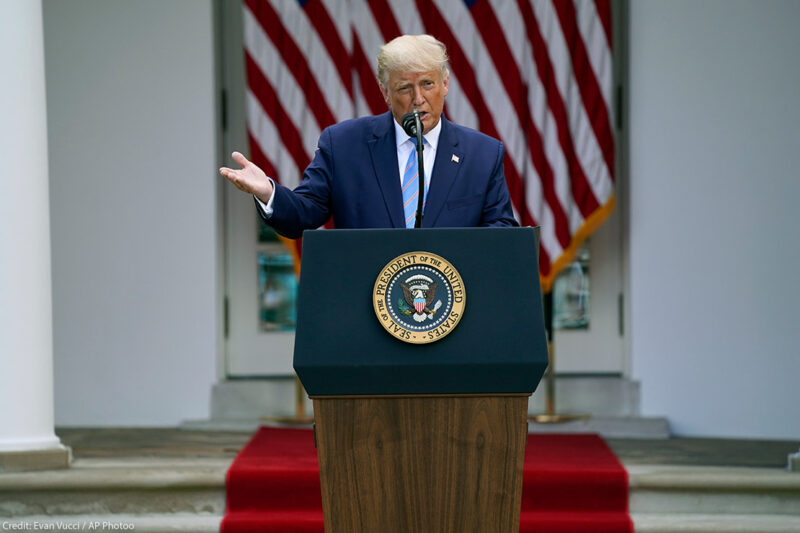
US President Donald Trump inaugurated his 'Board of Peace' in Washington on Thursday, announcing a $10 billion US pledge and securing $7 billion from nine member nations for Gaza relief. The new body, initially focused on rebuilding the war-torn Gaza Strip, signals broader ambitions to reshape international conflict management. The inaugural meeting saw participation from nearly 50 countries, though notable Western allies were absent, and featured commitments for an international security force and significant sports infrastructure projects.
US President Donald Trump presided over the inaugural meeting of his newly created "Board of Peace" in Washington on Thursday, marking a significant diplomatic initiative with immediate focus on Gaza reconstruction and broader, long-term ambitions for international conflict management. The event, attended by representatives from nearly 50 nations, was characterized by major financial pledges and security commitments, but also by questions regarding the board's structure, purpose, and the conspicuous absence of many traditional US allies.
Major Financial Commitments Announced
President Trump opened the proceedings by announcing a substantial $10 billion pledge from the United States to support the Board of Peace's initiatives. While the specific allocation of these funds remains unspecified, the announcement set the tone for the financial scale of the undertaking. More concretely, Trump revealed that nine member nations of the board had collectively pledged over $7 billion specifically towards a relief package for Gaza. These nations include Kazakhstan, Azerbaijan, the United Arab Emirates, Morocco, Bahrain, Qatar, Saudi Arabia, Uzbekistan, and Kuwait.
This financial injection is aimed at addressing the immense humanitarian and reconstruction needs in the Gaza Strip following the recent conflict. However, analysts like Yossi Mekelberg of Chatham House have noted that even this substantial sum represents "a drop in the ocean" compared to the estimated tens of billions required to fully rebuild the devastated enclave, where two million people remain displaced according to UN reports.
Security and Governance Framework for Gaza
A central pillar of the board's Gaza plan involves establishing new security and policing structures. Major General Jasper Jeffers, commander of the proposed International Stabilization Force (ISF), announced that five countries have committed troops to serve in this force: Indonesia, Morocco, Kazakhstan, Kosovo, and Albania. Furthermore, Egypt and Jordan have committed to training a new Palestinian police force.

Indonesia, the world's most populous Muslim-majority nation, has taken a leading role. President Prabowo Subianto confirmed Indonesia's commitment of up to 8,000 troops and accepted the position of deputy commander for the ISF. The long-term plan outlined by General Jeffers involves deploying 20,000 ISF troops and training 12,000 Palestinian police officers, beginning operations in southern Gaza's Rafah area. Separately, Nickolay Mladenov, the high representative for Gaza, reported that approximately 2,000 Palestinians have already applied to join the new transitional Palestinian police force.
Beyond Infrastructure: Sports and "Hope"
In a notable development, the international football governing body FIFA emerged as a key partner. FIFA President Gianni Infantino attended the meeting and announced a $75 million fund to rebuild soccer facilities destroyed in Gaza. A centerpiece of this initiative is a planned $50 million national football stadium with a capacity of 20,000-25,000 spectators. The project also includes a $15 million FIFA academy, 50 mini-pitches, and five full-sized fields.
Infantino framed the investment in emotional terms, stating, "We don’t have to just rebuild houses or schools or hospitals or roads. We also have to rebuild and build people, emotion, hope and trust. And this is what football, my sport, is about." He described football as "the world’s universal language" and a "bridge toward peace, dignity and hope."
Composition and Notable Absences
The board's membership and the attendees at the inaugural meeting revealed a distinct geopolitical alignment. Twenty-seven countries formally joined the Board of Peace, while others participated as observers. The list of participants included a mix of Middle Eastern nations (Bahrain, Qatar, Saudi Arabia, UAE), Asian countries (Indonesia, Pakistan, Vietnam), and several states with governments that lean authoritarian or have complex relations with the West (Hungary, Azerbaijan, Uzbekistan).
Significantly, major Western democracies that are traditional US allies—including France, Germany, and Italy—chose not to join the board at this stage and were conspicuous by their absence. The European Union attended only as an observer. Norway, which has led the Ad-Hoc Liaison Committee for Palestinian aid for decades, explicitly stated it would not join Trump's board but would continue its own separate aid coordination efforts.

Questions of Structure and Purpose
Despite the announcements, the fundamental nature and goals of the Board of Peace remain ambiguous. FRANCE 24's international affairs editor James Andre noted the difficulty in fathoming "what it is and how it's going to work." He pointed out that while its main task is rebuilding Gaza, the meeting revealed "no clear strategy aside from wishful thinking." Andre also highlighted the board's unusual structure, where President Trump has complete control over membership, with the power to choose and revoke members at any time.
This structure, along with the selective membership, has raised questions about whether the board is intended to function as an alternative to existing international bodies like the United Nations. The absence of a formal charter or transparent governance framework was a point of criticism. Belarus, a close Russian ally that had accepted an invitation to join, issued an angry statement after its delegation failed to receive US visas, questioning the "consistency" of a peace initiative where basic formalities for participation were not fulfilled.
A New Direction for Conflict Management?
President Trump framed the initiative as part of a US commitment to "a harmonious Middle East." The board's creation and its focus on Gaza suggest an attempt to bypass traditional multilateral diplomacy and create a more flexible, results-oriented coalition. However, with key details on fund disbursement, governance, and long-term strategy still unclear, the Board of Peace enters the global stage as an ambitious but unproven entity. Its success will ultimately depend on translating its substantial financial and security commitments into tangible, sustainable progress on the ground in Gaza and beyond.