Read on the Guardian
Mexico's Disappearance Crisis: Over 130,000 Missing as Cartels Expand
Mexico faces a devastating human rights crisis with over 130,000 people officially considered missing or disappeared. A new report reveals a staggering 200% increase in disappearances over the past decade, directly linked to the territorial and economic expansion of powerful drug cartels. This article examines the systemic causes, the government's inadequate response, and the profound impact on families forced to search for their loved ones amidst institutional neglect and overwhelming violence.
Mexico is grappling with a human rights catastrophe of staggering proportions. More than 130,000 individuals are officially registered as missing or disappeared, a number that represents not just a statistic but a nation fractured by systemic violence and institutional failure. This crisis, which has devastated tens of thousands of families, is intrinsically linked to the unchecked expansion and diversification of the country's powerful drug cartels. A recent analysis by the public policy firm México Evalúa found that disappearances have surged by more than 200% over the last ten years, signaling a problem that has become "uncontrollable at the national level," according to security analyst Armando Vargas.
The Anatomy of a Disappearance
The brutal reality of this crisis is captured in individual stories like that of Ángel Montenegro. In August 2022, the 31-year-old construction worker was waiting for a bus in Cuautla after a night out. A white van pulled up, several men emerged, and he was forcibly dragged inside. While a co-worker taken in the same incident was released moments later, Montenegro was driven away, leaving behind only his cap and a single tennis shoe. For his mother, Patricia García, this began over three years of torturous searching, a desperate quest shared by countless families across Mexico. These are not isolated incidents but part of a calculated strategy by criminal organizations.
Cartel Expansion and the Strategy of Invisibility
The dramatic increase in forced disappearances is a direct consequence of the cartels' growing power. As these groups seize control of vast territories and diversify into activities beyond drug smuggling—including human trafficking, migrant smuggling, and organ trafficking—their need for control intensifies. Forced recruitment and the annihilation of rival groups are standard tactics. However, outright murder draws law enforcement attention. Instead, cartels have perfected methods to "invisibilize" violence, as analyst Armando Vargas explains. By disposing of bodies in secret graves, incinerating them, or dissolving them in acid, criminal groups operate under the radar, making the scale of their violence difficult to quantify and prosecute.

Institutional Neglect and a Flawed Response
The Mexican government's response has been widely criticized as inadequate and, at times, obstructive. The creation of the National Search Commission in 2018 was a positive step, establishing a public platform to register cases. However, chronic underfunding hampered its effectiveness. The platform's data became politically inconvenient, leading former President Andrés Manuel López Obrador to order an opaque "review" ahead of the 2024 elections. This process controversially reduced the official number of disappeared to just 12,377, a move activists decried as "disappearing the disappeared." Current President Claudia Sheinbaum has been dismissive of the independent report, promising a new government tally but offering little substantive action. This institutional neglect creates a vacuum where impunity reigns; the United Nations reported that in 2022, over 96% of crimes in Mexico went unsolved.
The Relentless Search by Families
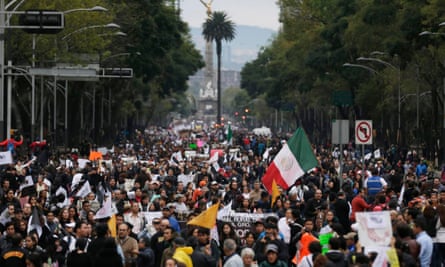
With the state failing in its duty, the burden of investigation falls on the families of the missing. Patricia García joined a collective of mothers who search weekly, probing fields with metal rods for clandestine graves. In a field where her son's phone last pinged, her group has uncovered multiple bodies—none of them Ángel. This gruesome, grassroots detective work is a testament to both profound love and a failed justice system. The psychological toll is immense. "You're left in broken pieces," García describes. "It's like when a vase shatters: you can glue it back together but the cracks are always there."

A Path Forward
Addressing Mexico's disappearance crisis requires a fundamental shift. Experts argue that meaningful progress is impossible without robust, well-funded institutions capable of investigating crimes, protecting witnesses, and dismantling the corruption that allows cartels to operate with impunity. International pressure and support for independent human rights organizations within Mexico are crucial. Ultimately, restoring justice for the more than 130,000 missing and their families demands a sustained political will that has so far been conspicuously absent, confronting the "lethal violence" that continues to tear at the nation's social fabric.