Read on nature.com
Gecko-Inspired Adhesive Technology Enables Four-Legged Robot to Climb Walls
Researchers have developed a four-legged robot capable of climbing vertical surfaces made of diverse materials, including steel, glass, aluminum, and rough wood. The breakthrough is powered by a novel, gecko-inspired adhesive system integrated into the robot's feet. By employing a controlled heating and cooling mechanism, the robot can repeatedly attach and detach its feet, enabling slow but steady ascension. This innovation represents a significant leap in bio-inspired robotics and materials science, with potential applications in inspection, maintenance, and search-and-rescue operations in complex environments.
In a remarkable fusion of biology and engineering, robotics has taken a literal step upward. A new four-legged robot has demonstrated the ability to scale vertical walls, a feat made possible not by suction or magnets, but by a sophisticated adhesive system directly inspired by nature's master climber: the gecko. This development, detailed in research published in Matter, marks a significant advancement in creating robots that can navigate complex, three-dimensional environments previously inaccessible to conventional machines.

The Science Behind Super-Sticky Feet
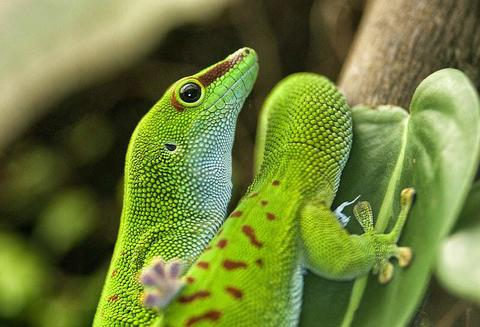
The core innovation lies in the robot's feet, which are coated with a dry adhesive material that mimics the microscopic hair-like structures, or setae, found on a gecko's toes. These structures exploit van der Waals forces—weak intermolecular attractions—to create a powerful yet easily reversible bond with a surface. Unlike sticky tapes or glues, this adhesive does not leave a residue and can be used repeatedly. The critical engineering challenge was not just creating the adhesive, but controlling its attachment and detachment with precision.
The Heating and Cooling Mechanism
The research team solved the control problem by integrating a thermal activation system into each footpad. As reported in the study accessible through Nature, the robot can actively heat and cool its adhesive feet. Heating the adhesive reduces its stickiness, allowing the foot to cleanly detach from the wall. Once the foot is repositioned, cooling restores the adhesive's full gripping power, securing it to the new spot. This cyclical process enables the robot to perform a slow, deliberate climbing gait, moving one limb at a time while the others remain securely anchored.
Versatile Climbing on Multiple Surfaces
A key strength of this technology is its material versatility. The robot has been successfully tested on a wide range of common construction and industrial materials. It can adhere to and climb smooth surfaces like glass and polished steel, as well as rougher textures like unfinished wood and aluminum. This broad compatibility is crucial for real-world deployment, where robots may encounter mixed-material environments, such as the exterior of a building or the interior of a pipeline.
Potential Applications and Future Directions
The ability to climb walls opens a new frontier for robotic applications. Inspection and maintenance robots could scale skyscrapers to clean windows or examine structural integrity, reducing risks for human workers. In search-and-rescue scenarios, such robots could navigate collapsed structures by moving across ceilings and walls to locate survivors. Furthermore, this technology could be miniaturized for use in space, where robots could perform external repairs on spacecraft or space stations. The current prototype moves slowly, focusing on stability and proof of concept. Future work will likely aim to increase speed, efficiency, and autonomy, potentially integrating sensors for real-time surface assessment and path planning.
The development of this wall-climbing robot is a compelling example of biomimicry driving technological progress. By decoding and replicating the gecko's natural adhesive system, engineers have created a robot with a unique form of mobility. While challenges remain in scaling and practical deployment, this research paves the way for a new generation of robots capable of operating where wheels, tracks, and rotors cannot—vertically on the diverse surfaces of our world. It underscores how solutions to complex engineering problems can often be found by looking to the natural world for inspiration.