Read on nature.com
Humanoid Robots Step Up: Assessing the Practical Utility of the Latest Droids
Humanoid robots are transitioning from science fiction to factory floors, with Chinese and US firms announcing mass production plans. While advancements in battery technology, actuators, and AI algorithms have significantly improved capabilities, questions remain about their true commercial utility. This article examines the current state of humanoid robotics, exploring their applications in automotive manufacturing, the technical challenges they face, and whether they represent a practical solution or a technological promise still in development.
The vision of humanoid robots working alongside humans has captivated imaginations for decades, but recent announcements from major robotics firms suggest this vision is inching closer to reality. Companies in China and the United States have declared plans to produce humanoid robots at scale, marking a potential turning point in commercial robotics. This shift is driven by tangible improvements in core technologies, yet the fundamental question persists: how useful are these latest droids in practical, real-world settings? This article explores the current capabilities, primary applications, and significant limitations of modern humanoid robots, separating technological achievement from genuine utility.

The Technological Leap Forward
Over the past five years, a confluence of technological advancements has propelled humanoid robots beyond research labs. Key innovations include more powerful and dense batteries that extend operational time from minutes to hours, cheaper and more precise actuators for smoother movement, and sophisticated artificial intelligence algorithms. These AI systems, particularly generative models, are granting robots improved perception of their environment and a degree of autonomous 'reasoning'. According to roboticist Oskar Palinko from the University of Southern Denmark, these improvements mean humanoids are significantly closer to functioning as a 'universal tool' that can operate in human-designed environments, a concept long championed by science fiction.
Primary Application: Automotive Manufacturing
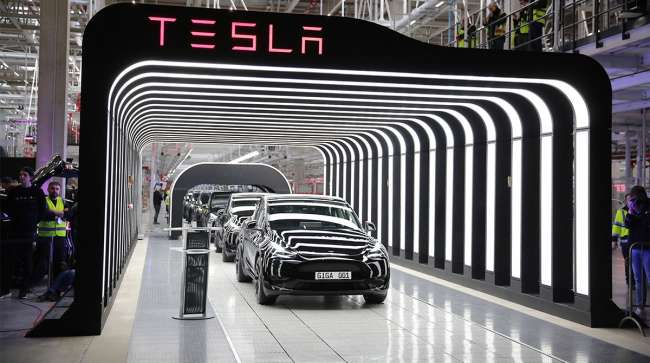
The initial proving ground for commercial humanoids appears to be the automotive industry. Firms like Boston Dynamics and Tesla are conducting pilot programs within their own manufacturing plants. This sector is considered an ideal testing environment because factories present diverse, complex tasks within a semi-structured setting that can be adapted for robotics. The partnership between Google DeepMind and Boston Dynamics underscores the serious investment in this application. As noted by Carolina Parada of Google DeepMind, these environments are 'built for robots,' providing a controlled yet challenging arena to develop and refine capabilities.
The Reality of Current Capabilities and Limitations
Despite the hype, current humanoid robots operate under considerable constraints. A major milestone was announced by Chinese firm UBTECH, which reported the 'world’s first mass delivery' of over 1,000 Walker S2 robots to factories in 2025. However, the company's vice-dean, Yu Zheng, acknowledges deployment is 'still at an early stage.' The robots can walk autonomously and handle objects, but their battery life remains limited, and many tasks still require human operators to remotely control them, a method known as teleoperation or 'puppeteering.'
This teleoperation serves a dual purpose: it completes the immediate task while gathering valuable data to train the AI for future autonomous operation. Both UBTECH and Boston Dynamics utilize vast data-collection centers where humans remotely operate robots to teach them a repertoire of skills. The commercial calculation, as explained by a UBTECH spokesperson, is that current customers accept that robot 'efficiency and productivity... may not match those of a human worker' but see early adoption as an investment in the technology's future.
Expert Caution and the Path Ahead
Roboticists urge caution regarding overestimating current abilities. Esyin Chew of Cardiff Metropolitan University, who oversees trials with over 80 robots in service and healthcare, states that while robots can perform one or two tasks autonomously, they 'cannot react to real-world problems like our human brains.' Furthermore, the humanoid form itself presents inherent challenges; as Palinko points out, a humanoid will fall over if it loses power, unlike more stable industrial robot forms.
The trajectory suggests a focused rather than general-purpose future in the near term. Technical and safety hurdles mean humanoids are far from ready for unstructured environments like homes and offices. Their utility will likely be proven in specific, repeatable industrial tasks where they can augment human labor, not replace it entirely. The race between China and the US is accelerating development, with China's manufacturing sector showing particular willingness to serve as a testing ground for iterative improvement.

Conclusion
The latest generation of humanoid robots represents a significant step forward in engineering and artificial intelligence, moving from prototypes to early commercial trials. Their utility today is niche, centered on data collection and specific tasks in structured environments like car factories. While they are not yet the versatile, general-purpose machines of fiction, the rapid pace of innovation in batteries, actuators, and AI learning algorithms suggests their capabilities will continue to expand. The true measure of their usefulness will be whether they can transition from costly novelties to reliable, economically viable tools that solve concrete problems in industry and beyond.