Interstellar Arc: Las Vegas's Immersive VR Experience Redefining Virtual Reality
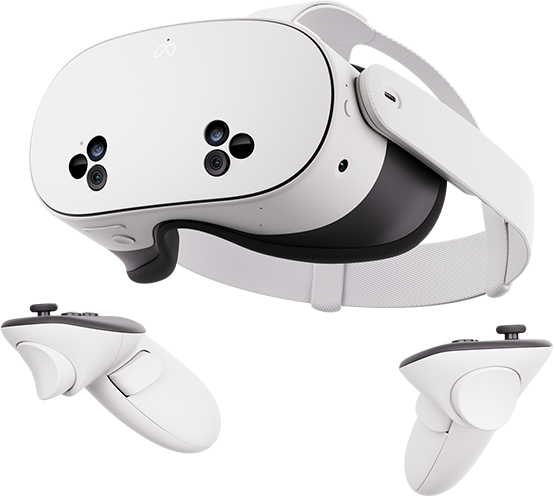
Interstellar Arc in Las Vegas represents a groundbreaking evolution in virtual reality experiences. Located in the city's Area15 entertainment district, this immersive sci-fi attraction combines advanced VR headset technology with physical space manipulation to create a shared virtual reality adventure. Developed by Felix & Paul Studios, the experience transports participants to the 25th century aboard humanity's first interstellar mission to the exoplanet Arcadia. Using wireless Meta Quest 3S headsets and innovative spatial redirection techniques, Interstellar Arc creates the illusion of walking on massive orbital structures while physically navigating a 20,000-square-foot facility. This forward-looking technological undertaking demonstrates how VR is moving beyond individual gaming experiences toward shared, large-scale entertainment that could help drive mainstream adoption of virtual reality technology.
In the heart of Las Vegas's Area15 entertainment district, a seemingly ordinary facility houses what may represent the next evolutionary leap in virtual reality experiences. Interstellar Arc, the city's latest immersive attraction, combines cutting-edge VR technology with physical space manipulation to create a shared virtual reality adventure that pushes the boundaries of what's possible in immersive entertainment. This forward-looking technological undertaking demonstrates how virtual reality is moving beyond individual gaming experiences toward shared, large-scale entertainment that could help drive mainstream adoption of VR technology.

The Interstellar Arc Experience
Interstellar Arc transports participants to the 25th century aboard humanity's first interstellar mission to explore the distant exoplanet Arcadia. The experience begins in a futuristic lobby designed as a "spaceport," where visitors are outfitted with wireless Meta Quest 3S headsets equipped with noise-canceling headphones. The initial voyage segment leverages footage from the International Space Station to create a realistic view of Earth and the galaxy as participants depart on their interstellar journey.
After 262 years of simulated cryogenic sleep aboard the virtual Arc, participants arrive at Cosmopolis, a man-made orbital centrifuge city above Arcadia. This is where the ambulatory portion of the experience begins, with visitors disembarking into a sprawling virtual landscape that feels vast despite the physical constraints of the 20,000-square-foot facility. The city appears to extend for miles in both horizontal and vertical directions, with outer space and the half-blue, half-red planet Arcadia visible through the city's translucent structure.
Navigating the Virtual World
Participants walk on pathways enclosed by real railings that are visible within the VR experience, serving both as orientation aids and directional guides. When railings are absent, visual cues keep participants on the virtual path, creating psychological tension despite the conscious knowledge that there's no actual danger of falling. A virtual alien fox with silver fur serves as a guide throughout the experience, prompting exploration of different areas and even allowing interaction through petting.
Technological Innovations
What makes Interstellar Arc particularly remarkable is its use of "redirection" technology that manipulates participants' perception of space and terrain. Despite walking on a flat surface, participants experience the sensation of walking uphill, downhill, and on curved pathways. This is achieved by subtly rotating the headset's cameras with each movement, creating visual "cheats" that make fellow participants appear above or below one another when they're actually on level ground.
The technical team at Felix & Paul Studios spent 18 months refining this redirection approach, discovering that shorter redirection windows prevented disorientation when participants changed direction. This innovation allows the physical space to feel much larger than its actual dimensions, with participants completing circuits around the room multiple times during the experience without realizing they're retracing their steps.
Spatial Tracking Solutions
Another significant technical challenge addressed by Interstellar Arc is maintaining precise headset positioning with up to 170 participants moving simultaneously in the same space. Traditional VR headsets rely on cameras and sensors that lock onto fixed surfaces, which becomes problematic with large crowds. The solution involves an additional camera built into the top of each headset that points upward at an infrared light grid spread across the ceiling, functioning like a "giant QR code" that helps each headset maintain its precise location.

The Future of VR Entertainment
Interstellar Arc represents more than just an impressive technological demonstration; it signals a potential direction for the future of virtual reality entertainment. By creating experiences that cannot be easily replicated at home, attractions like Interstellar Arc may help drive wider VR adoption by introducing people to the technology in compelling, social settings. As VR headset technology continues to advance, becoming lighter, faster, and more capable, experiences like these could become more common and accessible.
The team behind Interstellar Arc recognizes that their current technological implementation will need to evolve as new headset models emerge. They've already pushed the Quest 3S "as far as we possibly could," according to cofounder Paul Raphaël, and plan to adapt the experience as better technology becomes available. This forward-looking approach positions Interstellar Arc not as a static attraction but as an evolving platform that will incorporate technological advancements as they emerge.
Interstellar Arc stands as a testament to how far virtual reality technology has come and where it might be headed. By combining advanced headset technology with innovative spatial manipulation techniques, this Las Vegas attraction creates a shared virtual reality experience that feels both expansive and immersive. As VR continues to evolve beyond individual gaming applications toward larger-scale entertainment experiences, Interstellar Arc offers a glimpse into a future where virtual reality becomes a mainstream form of shared entertainment, potentially helping to drive the wider adoption that has eluded the technology for over a decade.