The Detachable Robot Hand: A New Frontier in Dexterous Robotics
A groundbreaking robotic hand design challenges the fundamental limitations of human anatomy and traditional robotics. Featuring a symmetrical, six-fingered design, this innovative claw can detach from its arm to crawl independently into hazardous or confined spaces. This article explores the engineering principles behind this detachable hand, its potential applications in search and rescue, industrial maintenance, and space exploration, and what this advancement signals for the future of autonomous, dexterous machines.
Human hands are marvels of biological engineering, but their design imposes inherent constraints: asymmetry, a single thumb, and an unbreakable tether to the arm. A new robotic hand, detailed in a recent Nature publication, shatters these conventions. Its symmetrical, six-fingered design and, most remarkably, its ability to detach and crawl autonomously, represent a significant leap in robotic dexterity and operational flexibility. This innovation opens doors to applications where traditional robots—or humans—cannot safely or effectively go.
Engineering a Hand Without Limits
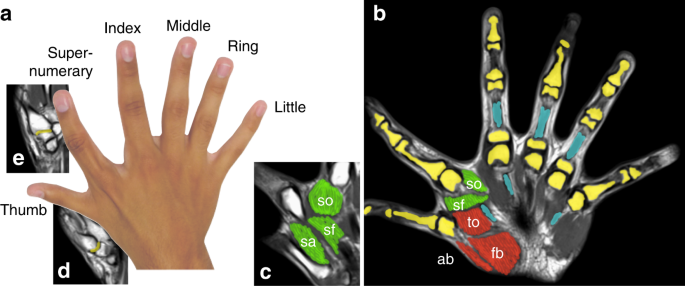
The core innovation lies in overcoming the three primary limitations of the human hand. First, the robot's symmetrical design eliminates the need for complex wrist rotations to approach objects from different angles; it can seamlessly engage from multiple orientations. Second, the six-fingered configuration provides enhanced multi-object manipulation capabilities, allowing it to juggle items more effectively than a five-fingered counterpart. The most radical departure, however, is the third feature: detachability.
The Power of Detachment
By designing the hand to operate independently from its robotic arm, engineers have created a tool with unprecedented versatility. Once detached, the hand can navigate on its own, crawling into environments that are dangerous, confined, or otherwise inaccessible to a full robotic system. This transforms the hand from a fixed-end effector into a mobile, self-contained agent capable of performing tasks at a distance from its power and control base.
Potential Applications and Future Impact
The implications of this technology are vast. In disaster response and search-and-rescue operations, a detachable hand could be deployed into collapsed structures to assess stability, clear debris, or deliver supplies without risking a larger robot or human responder. Within industrial settings, such as complex machinery or pipeline inspection, the hand could crawl into tight spaces for maintenance or diagnostics. The technology also holds promise for space exploration, where sending a small, dexterous robot into hazardous extraterrestrial environments could be far more efficient than deploying a full rover.
This development is part of a broader trend in robotics toward greater autonomy and morphological adaptability, as seen in other Nature-covered innovations like smart fabrics for robotic touch and shapeshifting polymers inspired by octopus skin. The detachable hand represents a convergence of mechanical design, machine learning for control, and a rethinking of the robot's fundamental form factor.
Conclusion
The detachable, crawling robotic hand is more than a novel gadget; it is a conceptual breakthrough that decouples dexterity from a fixed physical form. By challenging the anatomical blueprint we have long taken for granted, it paves the way for a new generation of robots that are not merely imitations of life but optimized tools for specific, challenging tasks. As research in this field advances, as highlighted by publications like Nature, we can expect to see increasingly sophisticated and autonomous robotic systems capable of operating in the environments we cannot.