Read on bbc.com
US and Iran Signal Progress in Nuclear Talks Amid Military Tensions
Recent indirect talks between the United States and Iran in Geneva have yielded what both sides describe as progress on the 'guiding principles' for resolving the nuclear dispute. While President Trump suggests Iran is motivated to make a deal, Tehran maintains its stance against negotiating under threat. This diplomatic engagement unfolds against a backdrop of significant US military build-up in the Middle East and Iranian shows of force, highlighting the fragile balance between negotiation and escalation.
Diplomatic efforts to resolve the longstanding nuclear dispute between the United States and Iran have entered a new, cautiously optimistic phase. Following indirect talks mediated by Oman in Geneva, both nations have acknowledged progress in identifying common ground, even as military posturing in the region continues to underscore the high stakes involved. This article analyzes the outcomes of the recent negotiations, the divergent public statements from Washington and Tehran, and the complex geopolitical context shaping this critical dialogue.
Breakthrough on Guiding Principles
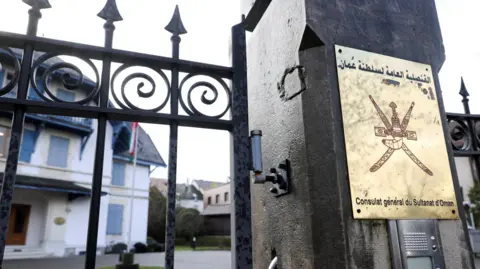
The talks in Geneva, held at the residence of Oman's ambassador, concluded with a significant announcement from the Iranian side. Foreign Minister Abbas Araghchi stated that an understanding had been reached with the United States on the main "guiding principles" for resolving the nuclear issue. This framing suggests a foundational agreement on the broad objectives and framework for future, more detailed negotiations. Mediator Oman's Foreign Minister, Badr Albusaidi, corroborated this sentiment, noting the discussions "concluded with good progress towards identifying common goals and relevant technical issues." A US official, speaking to the BBC, similarly confirmed that "progress was made," while cautioning that "there are still a lot of details to discuss."
Divergent Motivations and Public Posturing
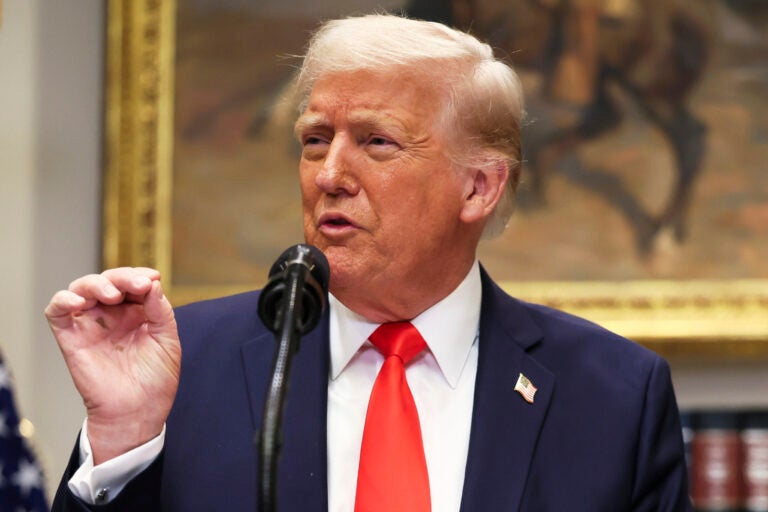
The public rhetoric from both capitals reveals differing perceptions of leverage and intent. US President Donald Trump expressed a belief that Iran is now motivated to negotiate, suggesting in comments aboard Air Force One that "I think they want to make a deal" and "I don't think they want the consequences of not making a deal." He referenced previous US military actions, such as the bombing of Iranian nuclear sites, as demonstrations of American resolve. Conversely, Iranian leadership has framed the talks as a pursuit of a "fair and equitable deal" while firmly rejecting negotiation under duress. Foreign Minister Araghchi explicitly stated on social media platform X that "What is not on the table: submission before threats." This dichotomy between perceived American pressure and Iranian insistence on sovereign dignity forms the core tension of the diplomatic process.
The Shadow of Military Escalation
These diplomatic overtures are occurring alongside a tangible military build-up, creating an environment of coercive diplomacy. BBC Verify analysis has tracked a significant increase in US naval and air power near Iran. This includes confirming the location of the USS Abraham Lincoln aircraft carrier strike group in the Arabian Sea and reports of the world's largest warship, the USS Gerald R. Ford, being dispatched to the region. In response, Iran's Islamic Revolutionary Guard Corps (IRGC) conducted maritime drills in the strategically vital Strait of Hormuz, a key global oil transit route. Iran's Supreme Leader, Ayatollah Ali Khamenei, responded to the US carrier deployment with a stark warning, stating, "More dangerous than an aircraft carrier is the weapon that can send it to the bottom of the sea."
Core Issues and Negotiating Positions
The primary focus for Iran remains its nuclear programme and the lifting of crippling US economic sanctions, which were re-imposed after Washington's withdrawal from the 2015 nuclear deal (JCPOA). The United States, while engaged on the nuclear issue, has historically sought to broaden the agenda to include concerns such as Iran's ballistic missile development and regional activities. The scope of discussions in Geneva remains partially unclear, but the US official indicated the Iranians promised to return "in the next two weeks with detailed proposals to address some of the open gaps in our positions." US Vice-President JD Vance hinted at remaining obstacles, noting that President Trump had set "some red lines that the Iranians are not yet willing to actually acknowledge and work through."

Path Forward and Regional Implications
The agreement to continue talks represents a fragile diplomatic opening. The commitment to develop detailed proposals suggests a technical negotiating track is being established. However, the path forward is fraught with challenges. US Secretary of State Marco Rubio tempered expectations during a visit to Hungary, stating that reaching a deal would be "very difficult." The success of this initiative will depend on the ability of both sides to translate agreed-upon principles into concrete, verifiable compromises, all while managing domestic political pressures and regional rivalries. A failure to sustain momentum could risk a rapid return to escalation, given the substantial military assets now deployed in proximity.
In conclusion, the Geneva talks have provided a glimmer of hope for a diplomatic resolution to the US-Iran nuclear standoff. The establishment of "guiding principles" is a necessary first step, but it remains a preliminary one. The concurrent military mobilizations by both nations serve as a powerful reminder that diplomacy is operating within a narrow window, heavily influenced by the threat of force. The coming weeks, as Iran prepares its detailed proposals, will be critical in determining whether this dialogue can evolve into a sustainable agreement or become another chapter in a cycle of confrontation and stalled negotiations.