Read on France 24
Iran-US Tensions: Diplomacy on the Table Amid Military Buildup
Iran has expressed openness to dialogue with the United States to resolve escalating tensions, even as a significant U.S. military deployment moves toward the region. Despite this diplomatic overture, no concrete plans for talks are currently in place. The situation is complicated by what analysts describe as an unclear strategic goal from the Trump administration. Former NATO commander General Richard Shirreff warns that President Trump is on "very thin ice," citing a historical pattern where U.S. military interventions in the Middle East frequently fail to achieve their intended outcomes, raising the stakes for any potential confrontation.
The geopolitical landscape between Iran and the United States remains tense and unpredictable. While Tehran has signaled a willingness to engage in dialogue to de-escalate the situation, the absence of any scheduled talks coincides with a substantial American military buildup in the region. This juxtaposition of diplomatic rhetoric and military posturing creates a volatile environment where miscalculation could have severe consequences.

A Call for Dialogue Without a Plan
Iran's recent statement of readiness for talks with Washington represents a potential diplomatic opening. However, officials have been clear that this openness is not backed by any concrete plans or scheduled negotiations. This ambiguity leaves a significant gap between stated intent and actionable diplomacy. The lack of a formal channel for communication increases the risk of misunderstandings, especially during periods of heightened military activity. The situation underscores the complex and often contradictory nature of international relations, where public positions and private maneuvers may not align.
The Unclear Strategic Goal
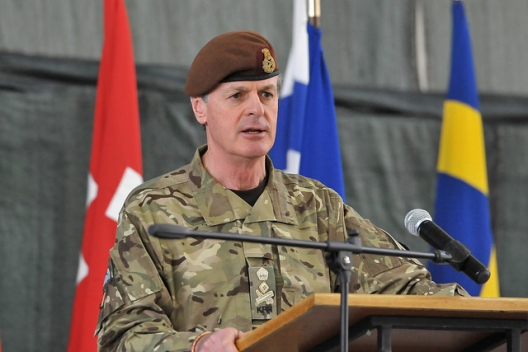
Compounding the uncertainty is the perceived lack of a clear objective from the United States. As reported by FRANCE 24, General Richard Shirreff, the former NATO Deputy Supreme Allied Commander Europe, has publicly questioned the Trump administration's endgame. "It's unclear," Shirreff stated regarding President Trump's goal. This strategic ambiguity makes it difficult to assess whether the military deployment is primarily a negotiating tactic, a preparation for limited strikes, or a posture for a broader conflict. Without a defined and communicated objective, predicting the administration's next move becomes nearly impossible for both allies and adversaries.
Walking on "Thin Ice": The Weight of History
General Shirreff's analysis carries a sobering historical warning. He emphasized that President Trump is on "very thin ice," pointing to the troubled legacy of U.S. military interventions in the Middle East. History has repeatedly shown that such interventions often do not proceed "as planned," leading to prolonged conflicts, unintended consequences, and regional destabilization. From Iraq to Afghanistan, initial military successes have frequently given way to complex insurgencies, nation-building challenges, and strategic quagmires. This historical context serves as a crucial cautionary tale for any administration considering military action, suggesting that the path to war is far easier than the path to a satisfactory conclusion.
Navigating a Precarious Path Forward
The current standoff presents a classic security dilemma, where actions taken by one side to increase its security (like a military deployment) are perceived as threats by the other, potentially triggering a dangerous escalation cycle. The key to avoiding conflict lies in credible, off-ramp diplomacy. While Iran's offer to talk is a positive signal, it must be met with reciprocal, good-faith gestures to build trust. Establishing back-channel communications or agreeing to third-party mediation could help clarify intentions and reduce the risk of a miscalculation based on the movement of ships and troops. The international community often plays a critical role in such moments, advocating for restraint and facilitating dialogue.
In conclusion, the Iran-U.S. relationship is at a critical juncture, balanced between the possibility of dialogue and the threat of military confrontation. The openness from Tehran, however tentative, provides a fragile opportunity that should not be ignored. However, the historical precedent of unsuccessful interventions in the region, coupled with the current lack of a clear strategic objective from Washington, creates a highly risky environment. The coming weeks will require careful statecraft, clear communication, and a respect for the difficult lessons of history to navigate away from the "thin ice" and toward a more stable footing.