Breakthrough in Superconductor Research: Measuring the Hidden State of Hydrogen Sulfide
A landmark experiment has successfully measured the superconducting state of hydrogen sulfide (H3S) for the first time, using a novel tunneling technique that operates under extreme pressure. This achievement reveals the precise mechanism of electron pairing in hydrogen-rich superconductors, confirming long-standing theoretical predictions. The discovery, led by researchers at the Max Planck Institute, represents a critical step toward understanding and ultimately developing practical room-temperature superconductors, which promise to revolutionize energy transmission, computing, and transportation.
The quest for a room-temperature superconductor—a material that can conduct electricity with perfect efficiency under everyday conditions—has been one of the most tantalizing challenges in modern physics. While hydrogen-rich materials like hydrogen sulfide (H3S) have shown remarkable superconducting abilities at relatively high temperatures, a fundamental mystery has persisted: scientists could not directly observe the quantum state responsible for this phenomenon. Now, a groundbreaking experiment has shattered that barrier, offering an unprecedented look inside one of the most promising superconductors known to science.
The Superconducting Gap: A Crucial Missing Piece
At the core of superconductivity lies a quantum feature known as the superconducting gap. This energy gap is the definitive signature of a superconductor, distinguishing it from an ordinary metal. It represents the minimum energy required to break apart the paired electrons, known as Cooper pairs, that flow without resistance. Understanding the size and nature of this gap is essential because it reveals the specific interactions—such as those between electrons and atomic vibrations (phonons)—that enable superconductivity. For hydrogen-rich materials, this gap had remained unmeasured, creating a significant blind spot in our understanding of their exceptional performance.
Overcoming Extreme Conditions with a Novel Technique
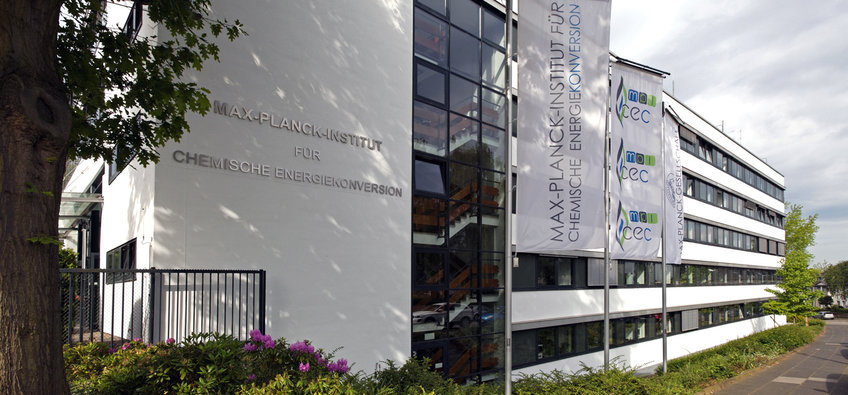
The primary obstacle to studying materials like H3S has been the extreme environment required for their existence. These compounds only form and exhibit superconductivity under pressures exceeding one million times Earth's atmospheric pressure. Conventional laboratory tools, such as scanning tunneling microscopes, cannot function under these crushing conditions. To solve this, a team at the Max Planck Institute for Chemistry in Mainz developed a specialized method called planar electron tunneling spectroscopy. This innovative approach was specifically engineered to operate at megabar pressures, allowing researchers to directly probe the electronic structure of H3S for the first time.

Key Findings and Their Significance
Applying their new technique, the researchers made two critical measurements. First, they determined that H3S possesses a fully developed superconducting gap of approximately 60 millielectronvolts (meV). Second, they studied deuterium sulfide (D3S), a heavier isotope where hydrogen is replaced by deuterium. D3S showed a smaller gap of about 44 meV. This isotopic difference is a telltale sign that the superconductivity is mediated by electron-phonon interactions, precisely as predicted by theory. The results, published in the journal Nature, provide the first direct experimental confirmation of the mechanism behind high-temperature superconductivity in hydrogen-rich compounds.
Paving the Way for the Future
This breakthrough is more than a technical triumph; it is a foundational advance for the entire field. Dr. Feng Du, the study's first author, emphasized that this tunneling method can now be extended to other hydride superconductors, such as lanthanum decahydride (LaH10). By comparing gaps across different materials, scientists can pinpoint the specific atomic structures and interactions that push critical temperatures even higher. The late Dr. Mikhail Eremets, a pioneer in high-pressure superconductivity, hailed this work as the most important in the field since his team's 2015 discovery of superconductivity in H3S. It brings his vision of room-temperature superconductors operating at more practical pressures a significant step closer to reality.

The direct measurement of the superconducting gap in hydrogen sulfide marks a pivotal moment in materials science. By finally revealing the inner workings of these high-pressure superconductors, researchers have gained a powerful new tool to guide the design of next-generation materials. The path to a superconductor that works efficiently at ambient temperature and pressure remains challenging, but this discovery illuminates a clear way forward, turning a long-standing mystery into a roadmap for revolutionary technological progress.