Read on France 24
Clashes Erupt in Northern Syria as Withdrawal Deal Breaks Down
Recent clashes between Syrian government forces and the Kurdish-led Syrian Democratic Forces (SDF) have shattered a fragile withdrawal agreement, resulting in casualties on both sides. The violence erupted as the Syrian army advanced into the city of Tabqa, a move the SDF claims violated the agreed terms. This breakdown highlights the deepening fault lines in northern Syria and the complex challenges facing diplomatic efforts to resolve the long-running conflict.
A fragile agreement for the withdrawal of Kurdish fighters in northern Syria has collapsed into violent clashes, leaving at least four Syrian soldiers and an unknown number of Kurdish-led troops dead. The fighting erupted on Saturday, January 17, 2026, as the Syrian Arab Army advanced beyond the initially agreed-upon lines, seizing the strategic city of Tabqa on the west bank of the Euphrates River. This escalation underscores the volatile and unresolved nature of Syria's internal divisions more than a decade after the war began, threatening to reignite broader conflict in the region.

The Breakdown of the Withdrawal Agreement
The agreement, brokered to de-escalate tensions, stipulated that the Kurdish-led Syrian Democratic Forces (SDF) would redeploy their fighters eastward across the Euphrates River, establishing the waterway as a new front line. SDF commander Mazloum Abdi announced the withdrawal as a "gesture of goodwill," aiming to pull back from a cluster of villages west of the river where Syrian troops had amassed. Initially, the Syrian army moved into predominantly Arab towns like Deir Hafer without major incident, with some remaining residents reportedly celebrating the troops' arrival.
Dispute Over Tabqa
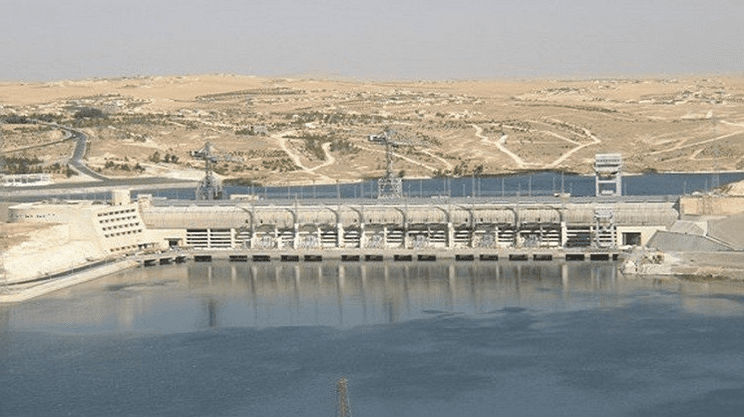
The situation deteriorated when the Syrian military declared its intention to capture the city of Tabqa and designated surrounding areas in Raqqa province as a "closed military zone." The SDF immediately contested this move, stating that Tabqa was not included in the original withdrawal deal. A spokesperson for the Kurdish forces asserted they would fight to retain control of the city and nearby oil fields, leading to direct clashes. The Syrian army's operations unit announced it had "begun entering the city of Tabqa via various axes" and was encircling Kurdish forces at a military airport in the area.
International Reactions and Diplomatic Efforts
The escalation prompted urgent international calls for de-escalation. The United States Central Command (CENTCOM) publicly urged Syrian government forces to "cease any offensive actions" in the region between Aleppo and al-Tabqa, emphasizing that the fight against the Islamic State (ISIS) required "teamwork among Syrian partners." Meanwhile, U.S. envoy Tom Barrack traveled to Erbil, Iraq, for meetings with SDF commander Abdi and Iraqi Kurdish leader Masoud Barzani in an attempt to mediate. French President Emmanuel Macron and the president of Iraqi Kurdistan, Nechirvan Barzani, also held telephone talks, jointly calling for "an immediate de-escalation and a permanent ceasefire."
Underlying Tensions and Broader Context
This military confrontation is rooted in deeper political deadlock. For months, talks between the Damascus government and Kurdish authorities aimed at integrating Kurdish-run institutions into the Syrian state by the end of 2025 failed to yield significant progress. The passing of that deadline without a resolution has led to renewed military pressure. President Ahmed al-Sharaa's government has vowed to reunify the country, a goal viewed with deep suspicion by Kurdish authorities wary of the administration's Islamist leadership. Furthermore, the SDF's control over key Arab-majority areas and vital oil and gas fields in eastern Syria remains a major point of contention, with Arab tribal leaders in those regions reportedly ready to oppose Kurdish rule if mobilized by Damascus.
The clashes near Tabqa represent a dangerous setback for stability in northern Syria. They demonstrate how quickly localized agreements can unravel when built upon a foundation of mutual distrust and competing strategic objectives. The involvement of international actors highlights the continued geopolitical significance of the Syrian conflict, but their influence appears limited in the face of determined local military agendas. The immediate future hinges on whether diplomatic channels can re-establish a ceasefire or if the conflict will continue to escalate, risking further displacement and humanitarian crisis in a region already scarred by years of war.