Read on bbc.com
Trump's Gaza 'Board of Peace': The Only Plan in Town Faces Complex Challenges
The White House has unveiled the initial members of its Gaza 'Board of Peace,' a complex administrative structure designed to oversee reconstruction and governance in the war-torn territory. Led by President Trump as chairman, the plan includes high-profile figures like former UK Prime Minister Sir Tony Blair and US Secretary of State Marco Rubio, but notably lacks Palestinian representation on its senior boards. While many world leaders have pledged support, the initiative faces significant hurdles: the monumental task of clearing 60 million tonnes of rubble, ensuring a lasting ceasefire, and resolving the fundamental impasse between Hamas's demand for statehood and Israel's condition of disarmament. This article examines the plan's architecture, its controversial appointments, and the immense challenges ahead.
The announcement of the first members of President Trump's Gaza 'Board of Peace' marks a pivotal, if controversial, step in the international effort to address the aftermath of the devastating conflict. While many world leaders have pledged to support this US-led initiative, acknowledging it as the only comprehensive plan currently on the table, its structure and composition have immediately drawn criticism. The plan envisions a multi-layered administration to oversee Gaza's reconstruction and future governance, but its success hinges on navigating a minefield of political sensitivities, logistical nightmares, and a deeply entrenched conflict that has resisted resolution for decades.

The Architecture of the Board of Peace
The plan establishes a complicated administrative hierarchy. At the apex sits the 'Board of Peace' itself, with President Trump as chairman. The names for this supreme body have not yet been released, but invitations have reportedly been extended to leaders including UK Prime Minister Sir Keir Starmer, Turkish President Recep Tayyip Erdogan, and Egypt's President Abdel Fattah El-Sisi. Beneath this are two senior executive boards unveiled by the White House.
The Founding Executive Board
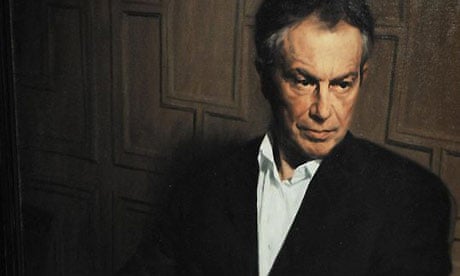
This high-level board focuses on investment and diplomacy. Its initial composition is dominated by American figures, including US Secretary of State Marco Rubio, Trump's son-in-law Jared Kushner, and Steve Witkoff, the US Special Envoy to the Middle East. The inclusion of World Bank President Ajay Banga and former UK Prime Minister Sir Tony Blair adds an international dimension, though Blair's role has proven particularly contentious due to his association with the Iraq war and Britain's colonial history in the region.
The Gaza Executive Board
Responsible for on-the-ground oversight, this board will manage the work of the National Committee for the Administration of Gaza (NCAG)—a technocratic Palestinian body led by civil engineer Dr. Ali Shaath. The Gaza Executive Board includes some regional voices, with senior figures from Turkey, Qatar, and the United Arab Emirates. It will be headed by former Bulgarian politician Nickolay Mladenov, appointed as High Representative for Gaza. Notably, businessman Yakir Gabay, an Israeli-born Cypriot, is the only Israeli member.
Immediate Controversies and Criticisms
The plan's rollout has been met with significant skepticism. A primary criticism is the lack of Palestinian representation on the two senior executive boards, leading some to decry the initiative as a colonial solution imposed externally. Figures like Mustafa Barghouti, general secretary of the Palestinian National Initiative, have voiced strong opposition, particularly to Sir Tony Blair's involvement. United Nations special rapporteur Francesca Albanese encapsulated this sentiment on social media last year, stating bluntly: "Tony Blair? Hell no. Hands off Palestine." Even President Trump acknowledged the sensitivity, stating he wanted to ensure Blair was "an acceptable choice to everybody."
Israel has also expressed discontent, stating it was unhappy it was not consulted on the board's composition. This highlights the delicate balancing act the plan must perform to gain legitimacy from all key stakeholders.
The Colossal Challenges Ahead
Beyond the political controversies, the Board of Peace faces practical obstacles of staggering scale. The United Nations estimates that approximately 80% of buildings in Gaza have been destroyed or damaged. The immediate humanitarian crisis is severe, with families enduring winter conditions without adequate food, water, or shelter. Aid groups report that while there have been some improvements, Israel continues to impose restrictions on relief work, which Israel argues are necessary to prevent Hamas from infiltrating aid efforts.
Rebuilding from Rubble
The physical reconstruction is a Herculean task. It involves clearing an estimated 60 million tonnes of rubble—a process that must first address the grim reality of recovering dead bodies and disposing of unexploded ordnance hidden within the ruins. Simply managing this logistical nightmare will require unprecedented international coordination and resources.

The Fundamental Impasse: Security and Statehood
Perhaps the most intractable challenge is maintaining the fragile ceasefire and resolving the core security dilemma. The White House has named Major General Jasper Jeffers as Commander of the International Stabilization Force (ISF), a UN-mandated force tasked with ensuring the demilitarization of Gaza. However, there is no clear roadmap for achieving this. Hamas has stated it will only disarm as part of a wider deal that establishes a Palestinian state. Conversely, Israel, whose troops still control over half of the Gaza Strip, insists it will only withdraw if Hamas disarms first. This catch-22 represents the plan's biggest test.
Conclusion: A Plan with No Alternative
Despite the concerns, complexities, and vocal critics, President Trump's Board of Peace plan currently stands as the only game in town for Gaza's future. Its success is far from guaranteed. It must rapidly demonstrate an ability to improve daily life for Palestinians, navigate fierce political headwinds, and broker a solution to the fundamental disarmament-statehood deadlock. The world is watching to see if this intricate, American-led architecture can foster the stability and prosperity it promises, or if it will become another chapter in the long history of failed peace initiatives for the region. The commitment of many world leaders provides a foundation, but the path forward remains fraught with difficulty.