Read on FashionNetwork.com
Dolce & Gabbana's Fall-Winter 2026 Menswear: A Collection of Many Portraits
Dolce & Gabbana's Fall-Winter 2026 menswear collection, presented during Milan Fashion Week, was ambitiously titled "The Portrait of Man." However, the show's execution revealed a sprawling, unfocused narrative that felt more like portraits of many men. While showcasing the designers' undeniable tailoring prowess with standout pieces in Donegal tweed and dramatic outerwear, the collection lacked a cohesive vision, shifting abruptly between gentlemanly chic, patrician dandy, and sporting aesthetics. This analysis explores the highlights and thematic inconsistencies of a presentation that prioritized commercial appeal over a singular artistic statement.
Presented on a rainy Saturday in Milan, Dolce & Gabbana's Fall-Winter 2026 menswear show offered a sartorial spectacle rich in individual pieces but ultimately lacking a unified direction. The collection, as reviewed by FashionNetwork.com, lived up to its critical description: a "wide-ranging and rambling" exploration that felt like "portraits of many, many men." From the disjointed runway order to the jarring set design, the presentation struggled to coalesce into a singular narrative, despite featuring several exceptional garments that reaffirmed Domenico Dolce and Stefano Gabbana's status as master tailors.
Sartorial Highlights and Tailoring Excellence
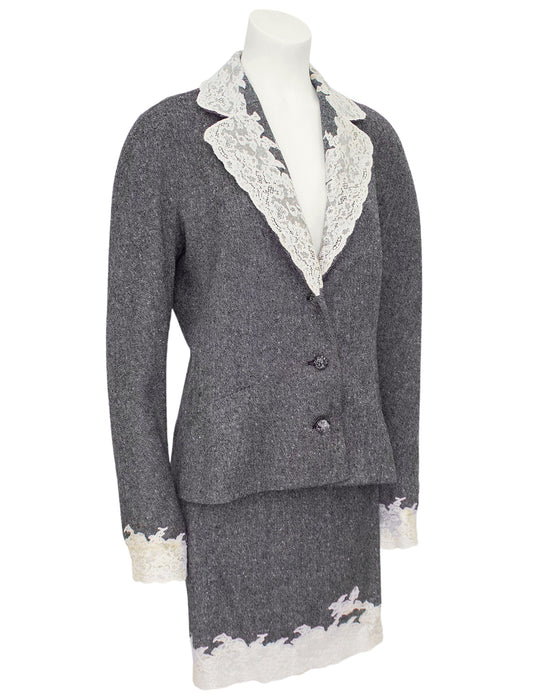
Where the collection succeeded was in its demonstration of impeccable craftsmanship and fabric selection. The opening segment set a strong tone with sophisticated daywear centered on the fabric of the moment: speckled Donegal tweed. A standout pale gray suit, crafted from a wool and cashmere blend, featured a "gangster silhouette" jacket with exaggerated lapels paired with wide-leg trousers, presenting a perfect balance of classic tailoring and contemporary attitude. This was complemented by a three-piece variation where a black mohair sweater replaced the traditional jacket, showcasing the designers' ability to innovate within formal codes.
Thematic Inconsistencies and Shifting Narratives
The collection's fundamental weakness emerged in its lack of focus and abrupt thematic shifts. Just as the presentation settled into a rhythm of gentlemanly chic, it was disrupted by models leaping from the audience onto the runway in entirely different aesthetics. One notable moment featured a model in a matelassé black smoking jacket paired with pajama pants and slippers, abruptly pivoting the mood from refined elegance to "patrician dandy." This inconsistency extended throughout the show, which jumped from dramatic shearling coats for "posh hippie dudes" to military greatcoats, piped velvet jackets, and even football jerseys emblazoned with "Soccer Club" or "84"—the year the brand was founded.
Presentation and Conceptual Execution
The show's production elements further contributed to its disjointed feel. The runway, constructed from mock marble Formica, was described as visually jarring. A pre-show video narrated by a British-accented voiceover attempted to frame the collection as "a contemporary gallery of living portraits," where each look functioned as a "psychological and sartorial self-portrait." However, this lofty concept failed to materialize cohesively on the catwalk. The critical review drew a parallel to Luigi Pirandello's play "Six Characters in Search of an Author," suggesting the presentation felt like "scores of models in search of a common" thread.
Conclusion: Commercial Appeal Versus Artistic Cohesion
Dolce & Gabbana's Fall-Winter 2026 menswear collection ultimately presented a dichotomy. On one hand, it contained numerous commercially viable and expertly crafted pieces—from luxurious outerwear to elegant tailoring—that will undoubtedly resonate with the brand's clientele. On the other hand, as a curated fashion show and artistic statement, it lacked the focused narrative and editorial precision that defines landmark collections. The designers proved they can dress many men in many ways, but the "Portrait of Man" remained a collection of intriguing sketches rather than a definitive masterpiece.