Cody Campbell: The Texas Tech Billionaire Trying to Fix College Sports
Cody Campbell, a Texas Tech alumnus and billionaire oil executive, has transformed his alma mater's football program into a national contender through massive NIL investments. Now, he's leveraging his influence, wealth, and political connections to propose sweeping reforms for all of college athletics. Campbell advocates for allowing colleges to negotiate television contracts as a single entity, similar to professional leagues, which he claims could generate billions in additional revenue. His unorthodox approach has drawn both admiration from supporters and skepticism from established college sports leaders who question his motives and proposals.
In the rapidly evolving landscape of college athletics, where name, image, and likeness (NIL) deals have reshaped recruiting and conference realignment has created seismic shifts, a new power broker has emerged from West Texas. Cody Campbell, a billionaire Texas Tech alumnus and former NFL offensive lineman, has not only bankrolled his alma mater's football renaissance but has now set his sights on fixing what he sees as a broken system for all of college sports. His journey from passionate booster to national reform advocate represents a fascinating case study in how private wealth and political influence are reshaping amateur athletics.

The Architect of Texas Tech's Football Renaissance
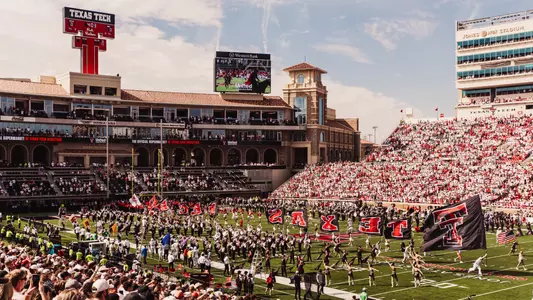
Cody Campbell's transformation of Texas Tech football serves as both his credential and his motivation for broader college sports reform. As chairman of Texas Tech's board of regents and chief architect of The Matador Club NIL collective, Campbell has directed more than $60 million to athletes at the university since 2022. This aggressive approach to the NCAA's new rules has rebuilt a program that historically struggled to make bowl games into a legitimate national contender, culminating in the Red Raiders' recent College Football Playoff appearance.
Campbell's involvement extends far beyond writing checks. He served on the committee that hired coach Joey McGuire in 2021, donated $25 million to help rebuild the football stadium, and even participated in evaluating transfer portal prospects. His deep family ties to the university—with ancestors attending since the school's first class in 1925—fuel his passion. "It's generational for me," Campbell explains, noting how football scholarships allowed his father to become the first in his family to attend college.
From Outsider Critic to Insider Influencer
Campbell's path to influence wasn't always smooth. In early 2021, he was known more as a disruptive critic than a constructive partner. Publicly railing against then-head coach Matt Wells on fan message boards and social media, several members of Texas Tech's board initially resisted his appointment as a regent. Former chancellor Kent Hance, a legendary Texas political power broker, recognized Campbell's potential and advocated for his inclusion, borrowing a phrase from Lyndon B. Johnson: "I'd rather have him inside the tent and pissin' out than outside the tent pissin' in."
Once appointed, Campbell transformed from critic to collaborator. Fellow board member Dusty Womble observed that joining the board "required him to maybe be a little more politically correct and not as disruptive. He became part of the system, part of the solution." This transition proved crucial, as Campbell leveraged his new position to implement the changes he had previously only advocated from the sidelines.
The Campbell Reform Proposal
At the heart of Campbell's national campaign is a specific legislative proposal: amending the Sports Broadcasting Act of 1961 to allow college sports to negotiate television contracts as a single entity, similar to professional leagues like the NFL and NBA. Currently, colleges negotiate TV deals by conference, which Campbell argues gives media executives more bargaining power and disproportionately benefits conferences with higher ratings like the Big Ten and SEC.
Campbell claims his commissioned research shows that if colleges could band together, their TV rights would be worth roughly $7 billion—almost double what they make currently. This change would direct more revenue to schools like Texas Tech, making them less dependent on billionaire boosters to compete. In television ads that ran during college football games, Campbell warned that athletic departments are bleeding money and women's sports are in "immediate danger" of vanishing without such reforms.
Establishment Pushback and Skepticism
Campbell's proposals have met significant resistance from college sports' traditional power brokers. SEC commissioner Greg Sankey told The Associated Press that Campbell has a "fundamental misunderstanding of the realities of college athletics," while other commissioners have questioned both his motives and his math. Critics point out that current TV deals won't expire for years, making immediate change impractical, and that Campbell's $7 billion projection may be overly optimistic.
Some of Campbell's statistics have also drawn scrutiny. His frequent claim that FBS athletic departments lost an average of $20 million per school last year doesn't account for money athletic departments receive from student fees and university support. Similarly, his assertion that "more than 180 teams have been cut" since NIL began includes many teams from junior colleges and NAIA schools not impacted by NCAA rule changes, with only three coming from FBS conferences. When asked if this was misleading, Campbell responded simply, "Probably," with a shrug.
Political Connections and White House Access
Campbell's influence extends beyond college sports into national politics. A longtime Republican fundraiser, he donated seven figures to help found the America First Policy Institute, a conservative think tank so closely connected to the Trump administration it was dubbed the "White House in Waiting." After the 2024 election, Campbell leveraged these connections to focus on college sports reform, turning down an ambassadorship to instead join the President's Council on Sports, Fitness and Nutrition.
According to sources familiar with his work, Campbell has become the administration's primary voice on college sports, visiting Washington monthly and presenting detailed proposals to White House officials. "If he's going to sit down and talk to you about something, he's going to be more prepared than you are," says John Sellers, Campbell's business partner since their high school football days in Canyon, Texas.
The Personal Motivation Behind the Public Campaign
Understanding Campbell requires looking beyond the billionaire oil executive persona to his roots in West Texas. He and Sellers built their fortune through Double Eagle Energy, selling four iterations of their oil and gas company for roughly $13 billion total. Campbell credits their success to values learned growing up in Canyon, where "people out there are just tough. They understand that there are good years and bad years. It's a boom-and-bust area."
Despite his wealth and influence, Campbell maintains a surprisingly low-key personal style. At his son's high school football games, he doesn't holler at coaches or referees, offering only a small grin when his 14-year-old son—a 290-pound offensive lineman—flattens an opponent. "I'm not what they expect me to be, I guess," he says. "I'm not J.R. Ewing or whatever."

The Future of College Sports Reform
As Campbell continues his campaign, the fundamental question remains: What does he really want? He insists he has no financial stake in any proposed future college sports league, no interest in running for office, and no desire to become a commissioner. "I know a lot of people have a hard time believing my intentions are pure," he told attendees at the Intercollegiate Athletics Forum in Las Vegas. "We need to preserve this national treasure that we have. It belongs to all of us."
NCAA president Charlie Baker, while critical of some of Campbell's specific proposals, acknowledges common ground on ensuring money generated by power conferences continues to help fund smaller schools. "When he talks about that, he's kind of singing my song," Baker told ESPN. "One thing I appreciate about Cody is he's got opinions and he's willing to share them. He's willing to put them out there. That's not a bad thing."
Conclusion: A New Voice in an Old Debate
Cody Campbell represents a new type of influencer in college sports—one who combines billionaire resources, political connections, and firsthand experience as both a student-athlete and university regent. Whether his specific proposals gain traction or not, his emergence signals a shift in how college sports reform is discussed and pursued. As the industry grapples with fundamental questions about amateurism, compensation, and structure, voices like Campbell's—coming from outside traditional power structures but with significant resources to back their vision—are likely to play an increasingly important role.
The ultimate test will be whether Campbell's ideas can bridge the gap between his West Texas practicality and the established interests of conference commissioners, university presidents, and NCAA leadership. What's clear is that, like the oil booms that built his fortune, Campbell has struck a vein of discontent with the status quo in college sports, and he's determined to see where it leads.