Read on bbc.com
Vetevendosje Secures Landslide Victory, Paving Way for Kurti's Third Term in Kosovo
The Albanian nationalist Vetevendosje party has achieved a decisive victory in Kosovo's parliamentary elections, securing a third term for leader Albin Kurti. Preliminary results show the party winning over 50% of the vote, a clear mandate from the electorate after months of political deadlock. This outcome ends a prolonged period without a functioning government and positions Kurti to pursue his agenda, though challenges remain in forming a stable coalition and repairing international relations with key allies like the EU and US.
Kosovo's political landscape has been decisively reshaped following a landslide victory for the Albanian nationalist Vetevendosje party in parliamentary elections. Preliminary results indicate a clear mandate for a third term for its leader, Albin Kurti, ending nearly a year of governmental paralysis. This electoral outcome not only resolves the immediate political impasse but also sets the stage for significant domestic and international challenges in the coming term.

Election Results and Political Mandate
With approximately 90% of votes counted, Vetevendosje—whose name translates to "self-determination"—secured 50.8% of the vote. This represents a commanding lead over the main opposition parties: the centre-right Democratic Party of Kosovo (PDK) at 20.98% and the Democratic League of Kosovo (LDK) at 13.89%. This marks the party's fourth consecutive victory in parliamentary elections and is being hailed by Kurti as "the greatest victory in the history of the country." The result delivers a resounding answer to the central question posed by this second parliamentary election of the year: whether voters would punish Kurti for the prolonged political deadlock or the opposition parties that refused to form a coalition with his left-wing movement.
Ending the Political Deadlock
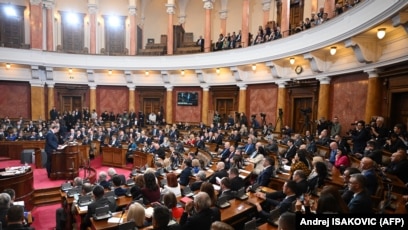
Kosovo has been without a fully functioning government since February, when Vetevendosje won elections but failed to secure a majority. The opposition's refusal to enter a coalition created a stalemate in the National Assembly that lasted for months. This new victory, while still not delivering an outright parliamentary majority, provides Kurti with a significantly stronger position to form a government. He should find it easier to secure support from MPs representing ethnic minority parties, who are guaranteed 20 of the 120 seats in the National Assembly. Arben Gashi of the LDK indicated a potential shift in opposition strategy, stating on social media that "when voters speak, the result cannot be ignored" and that "reflection and responsible action are required."
Immediate Challenges and Stakes
The formation of a stable government carries urgent financial and diplomatic implications. Kosovo has missed out on hundreds of millions of euros in European Union funds due to the lack of a functioning government. Kurti has cited potential agreements with the World Bank that could bring the total sum of missed opportunities to over €1 billion. Beyond finances, repairing relations with Kosovo's strongest international supporters—the EU and the United States—is a critical priority. These relations were strained during Kurti's previous term when his government repeatedly targeted institutions serving Kosovo's Serb minority, increasing tensions in the majority-Serb north of the country.
International Relations and the Serbia Dialogue
A major test for the new government will be its approach to the long-stalled normalization dialogue with Serbia. The EU has recently agreed to remove punitive measures imposed in 2023 but will be looking for Kurti to adopt a more pragmatic approach rather than his typical dogmatic line. Given his historically frosty relations with Serbian President Aleksandar Vucic, achieving progress may prove difficult. The international community will be watching closely to see if the clear electoral mandate translates into more flexible diplomacy.
Voter Sentiment and Political Alternatives
The resounding endorsement of such a polarizing figure reflects a deeply jaundiced view among Kosovo's electorate toward the political alternatives. Parties connected to the Kosovo Liberation Army dominated government in the decade following Kosovo's 2008 unilateral declaration of independence but failed to deliver promised prosperity. As analyst Artan Muhaxhiri noted, despite Vetevendosje's "countless violations of the constitution, the lack of economic development and the breakdown of relations with allies" during its years in power, citizens ultimately considered the opposition to be "more harmful." This sentiment underscores a political landscape where voters chose the perceived lesser of two unsatisfactory options.

Conclusion: A Mandate with Conditions
Albin Kurti and Vetevendosje enter their third term with the strongest electoral mandate in the country's history, but one that comes with immediate and substantial challenges. The priority must be swiftly forming a functional government to unlock vital international funding and begin repairing diplomatic relationships. The electorate has granted power but will expect tangible results—particularly economic development and stable governance—that have eluded previous administrations. How Kurti navigates coalition building, engages with the opposition, and approaches dialogue with Serbia will determine whether this decisive victory translates into effective and lasting governance for Kosovo.