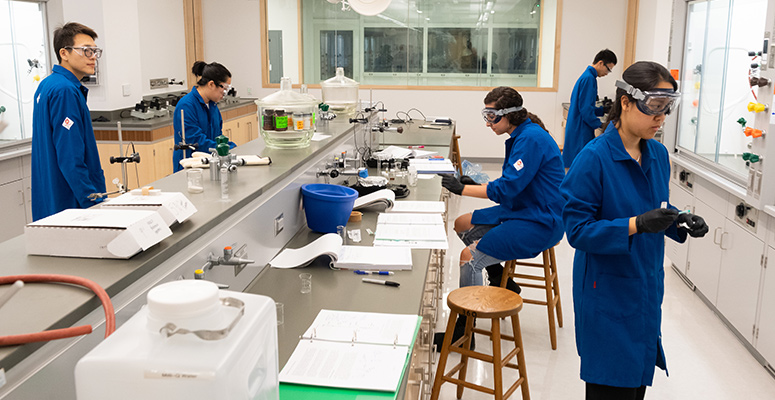
Breakthrough Eco-Friendly Technology Destroys PFAS 'Forever Chemicals' with Unprecedented Speed
A groundbreaking new technology developed by an international research team offers a powerful solution to one of the world's most persistent pollution problems. Using a specially engineered material, this system captures and destroys toxic PFAS 'forever chemicals' hundreds to thousands of times faster than current methods. The technology works effectively in various water sources, including river water, tap water, and wastewater, and features a unique self-regeneration capability that allows for repeated use, making it both efficient and sustainable.
The global challenge of per- and polyfluoroalkyl substances (PFAS) contamination has long been considered one of the most difficult environmental problems to solve. These 'forever chemicals' persist in water, soil, and air, posing significant health risks and resisting conventional cleanup methods. However, a revolutionary breakthrough from Rice University and international collaborators promises to change this narrative dramatically. Researchers have developed the first environmentally friendly technology that not only captures PFAS with record-breaking speed but also safely destroys them, offering a sustainable, closed-loop solution to a problem that has plagued communities worldwide.
The PFAS Problem: Why 'Forever Chemicals' Are So Dangerous
PFAS are synthetic chemicals that have been in use since the 1940s, valued for their resistance to heat, water, and grease. These properties made them ideal for applications ranging from non-stick cookware and waterproof clothing to food packaging and firefighting foams. However, this same durability that made them useful also makes them environmentally persistent. PFAS do not break down naturally, earning them the nickname 'forever chemicals.' Their widespread use has led to global contamination, with these substances now detectable in water sources, soil, and even human blood samples worldwide.
The health implications of PFAS exposure are significant and well-documented. Scientific research has linked these chemicals to liver damage, reproductive disorders, immune system disruption, and increased risk of certain cancers. The environmental persistence combined with these health risks has created an urgent need for effective remediation technologies. As Michael S. Wong, professor at Rice University, explains, "Current methods for PFAS removal are too slow, inefficient and create secondary waste." This statement highlights the limitations of existing approaches and underscores the need for the innovative solution his team has developed.
The Breakthrough: Layered Double Hydroxide Technology
The core of this technological advancement is a specially engineered material called a layered double hydroxide (LDH). This compound, made from copper and aluminum, represents a significant departure from traditional PFAS removal methods. The material was first identified by researcher Keon-Ham Kim during his graduate studies at the Korea Advanced Institute of Science and Technology (KAIST) in 2021. Further exploration by the research team, particularly by postdoctoral fellow Youngkun Chung, revealed that a specific nitrate-containing version of this LDH exhibited extraordinary PFAS adsorption capabilities.
What makes this material so effective is its internal architecture. The ordered copper-aluminum layers create a surface with small charge imbalances that attract and bind PFAS molecules with exceptional strength and speed. As Chung reported, "To my astonishment, this LDH compound captured PFAS more than 1,000 times better than other materials. It also worked incredibly fast, removing large amounts of PFAS within minutes, about 100 times faster than commercial carbon filters." This performance represents a quantum leap in PFAS remediation technology, addressing both the speed and efficiency limitations that have hampered previous approaches.
Real-World Performance and Sustainable Design
The true test of any environmental technology comes in real-world conditions, not just controlled laboratory settings. The research team rigorously tested their LDH material in three different water types: river water, tap water, and wastewater. Across all these environments, the material maintained its high performance, demonstrating its practical applicability for municipal water treatment systems, industrial cleanup operations, and environmental remediation projects. The technology proved effective in both static tests and continuous-flow setups, suggesting versatility for different implementation scenarios.
Perhaps the most innovative aspect of this technology is its closed-loop, sustainable design. Capturing PFAS is only half the battle—the chemicals still need to be destroyed safely to prevent secondary contamination. Working with Rice professors Pedro Alvarez and James Tour, the team developed a thermal decomposition process that destroys more than half of the captured PFAS without releasing toxic by-products. Crucially, this same process regenerates the LDH material, allowing it to be reused. Early testing indicates the material can complete at least six full cycles of capture, destruction, and renewal, making it the first known eco-friendly, sustainable system for PFAS remediation that combines rapid cleanup with repeated reuse.

Implications and Future Applications
This breakthrough has far-reaching implications for environmental protection and public health. The technology's ability to work effectively in diverse water sources means it could be deployed in numerous settings, from municipal water treatment plants addressing community-wide contamination to industrial sites managing process wastewater. The system's speed and efficiency could significantly reduce the time and cost associated with PFAS cleanup, while its sustainable, reusable design addresses the waste generation problem associated with traditional adsorption methods.
The development of this technology also represents a successful model of international scientific collaboration. As Wong notes, "It's the result of an extraordinary international collaboration and the creativity of young researchers." The project brought together expertise from Rice University in the United States, the Korea Advanced Institute of Science and Technology, and Pukyung National University in South Korea, supported by funding from multiple national and international sources. This collaborative approach accelerated the research and development process, demonstrating how global scientific cooperation can address complex environmental challenges.
Looking forward, this LDH-based technology could transform how PFAS-contaminated water sources are treated. Its combination of speed, efficiency, and sustainability addresses the core limitations of existing methods while offering a practical, scalable solution. As communities worldwide grapple with the legacy of PFAS contamination and regulators implement stricter standards for these chemicals, technologies like this will be essential for protecting water resources and public health. The research, published in Advanced Materials, marks a significant step forward in the ongoing battle against persistent environmental pollutants and offers hope for more effective environmental remediation strategies in the future.