U.S. Launches Military Strikes Against ISIS in Nigeria, Citing Christian Persecution
President Trump announced that the United States conducted a series of military strikes against ISIS targets in northwest Nigeria. The action, described as a response to the group's alleged targeting and killing of Christians, marks a significant escalation of U.S. military involvement in the region. This article analyzes the context of the strikes, the administration's prior warnings to the Nigerian government, and the complex backdrop of religious violence and U.S. foreign policy designations in Nigeria.
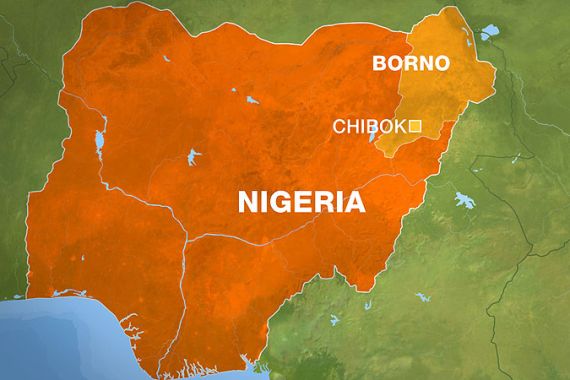
In a significant escalation of U.S. military involvement in West Africa, President Donald Trump announced that American forces launched a series of strikes against ISIS-affiliated targets in northwest Nigeria. The action, framed as a direct response to the persecution of Christian communities, underscores a more aggressive foreign policy stance and raises critical questions about sovereignty, counterterrorism strategy, and the complex realities of violence in Nigeria.

The Announcement and Rationale for the Strikes
President Trump made the announcement on his social media platform, Truth Social, stating, "Tonight, at my direction as Commander in Chief, the United States launched a powerful and deadly strike against ISIS Terrorist Scum in Northwest Nigeria." He explicitly linked the military action to the defense of religious minorities, claiming the targeted groups "have been targeting and viciously killing, primarily, innocent Christians, at levels not seen for many years, and even Centuries!" The President characterized the strikes as the fulfillment of a prior warning, declaring, "I have previously warned these Terrorists that if they did not stop the slaughtering of Christians, there would be hell to pay, and tonight, there was." While he described the operations as "numerous perfect strikes," specific details regarding casualties, targets, and the scale of the engagement were not provided in the initial statement.
Context and Escalating Tensions
The recent strikes did not occur in a vacuum. They follow a pattern of escalating rhetoric and military posturing by the Trump administration concerning Nigeria. In early November, President Trump stated he had instructed the Pentagon to "prepare for possible action," directly criticizing the Nigerian government for not doing enough to combat violence against Christians. His warning at the time was stark: "If we attack, it will be fast, vicious and sweet, just like the terrorist thugs attack our CHERISHED Christians! WARNING: THE NIGERIAN GOVERNMENT BETTER MOVE FAST!" Defense Secretary Pete Hegseth subsequently confirmed on social media that the "Department of War"—the administration's preferred term for the Defense Department—was "preparing for action." This sequence of events positions the latest strikes as the execution of a threatened policy, shifting from preparation to direct military intervention.
The "Country of Particular Concern" Designation
Concurrent with the military threat, President Trump indicated in November his intention to designate Nigeria as a "country of particular concern" under the 1998 International Religious Freedom Act. This executive designation, which authorizes potential U.S. penalties, is a significant diplomatic tool. It is noteworthy that Nigeria was previously placed on this list in 2020 by the State Department, citing "systematic violations of religious freedom." However, that designation was lifted in 2023, a move widely interpreted as an effort to improve bilateral relations ahead of a visit by then-Secretary of State Antony Blinken. The Trump administration's move to reinstate this label frames the Nigerian government's actions—or perceived inactions—regarding religious violence as a core justification for unilateral U.S. military steps.
Nigerian Government Response and Complex Realities
The Nigerian government has firmly rejected the characterization presented by the Trump administration. President Bola Ahmed Tinubu has asserted that the claim of religious intolerance "does not reflect the national reality," emphasizing that "religious freedom and tolerance have been a core tenet of our collective identity." Furthermore, analysts and reports complicate the narrative of sectarian violence. While Christian communities have undoubtedly suffered attacks, data suggests that the majority of victims from armed groups in Nigeria's Muslim-majority north are actually Muslims. This reality points to a multifaceted conflict driven by factors including governance failures, economic disparity, and regional insurgencies, rather than a purely religious war.
Broader Implications and Conclusion
The U.S. strikes in Nigeria represent a bold and controversial application of military power driven by a specific human rights and religious freedom agenda. They signal a willingness to act unilaterally within the territory of a sovereign ally, based on a disputed assessment of the internal situation. The action also aligns with a broader pattern of recent U.S. military engagements, coming approximately a week after strikes on ISIS targets in Syria following the killing of American personnel. The long-term consequences remain uncertain, potentially affecting U.S.-Nigeria relations, the dynamics of counterterrorism cooperation in the Sahel, and the precedent for future interventions justified on similar grounds. Ultimately, this event highlights the intersection of high-stakes foreign policy, complex local conflicts, and the powerful rhetoric of religious persecution.