Read on Global News
Rubio Outlines U.S. Foreign Policy Priorities: Venezuela, Ukraine, and NATO Commitment
In a year-end press conference, U.S. Secretary of State Marco Rubio addressed critical foreign policy challenges, emphasizing a strategy of partnership in the Western Hemisphere, a cautious approach to Ukraine negotiations, and a reaffirmed commitment to NATO. Rubio detailed U.S. military operations in Venezuela aimed at countering narco-terrorism, outlined the U.S. role as a mediator in the Ukraine conflict, and stressed the enduring importance of the NATO alliance for European security, while calling for increased defense spending by allies.
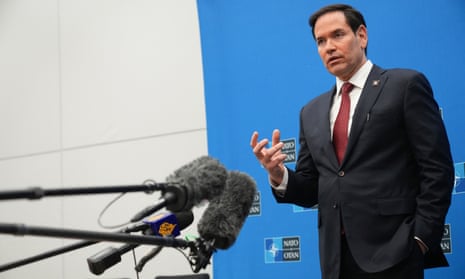
U.S. Secretary of State Marco Rubio concluded his first year as America's top diplomat with a comprehensive press conference, laying out the Trump administration's stance on several pressing international issues. The briefing provided clarity on U.S. military activities in Venezuela, the diplomatic path forward in Ukraine, and the nation's unwavering commitment to the NATO alliance. These topics underscore a foreign policy approach focused on protecting American national interests while navigating complex global partnerships and conflicts.
The Western Hemisphere Strategy: Partnership and Security
Central to Rubio's remarks was the administration's new national security strategy for the Western Hemisphere. He framed the U.S. objective as one of seeking to "partner" with countries in the region, including Canada and Mexico, to collectively address shared threats. Rubio specifically highlighted the dangers of narco-terrorism and transnational drug cartels, pointing to violence in parts of Mexico as a primary example. He argued that these criminal networks pose a direct threat to the safety and security of all nations in the hemisphere, justifying a cooperative approach.
Venezuela and Military Operations
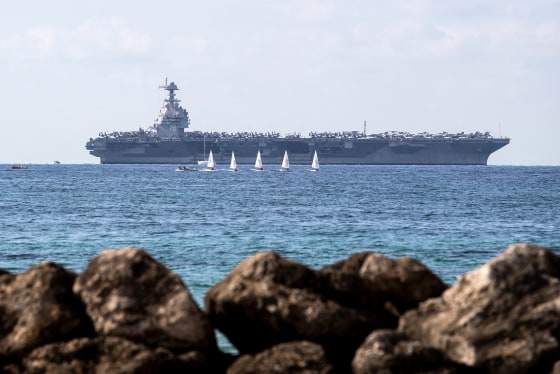
A significant portion of the questioning focused on recent U.S. military operations in Venezuela. Rubio was adamant that the goal of these actions is to disrupt drug trafficking activities linked to the regime of Nicolás Maduro, not to orchestrate a change in government. He described the current situation with Venezuela as "intolerable" for the United States, citing the regime's alleged cooperation with activities that threaten U.S. national interests. While President Trump has not ruled out further escalation, Rubio stated that current operations have not crossed the legal threshold requiring congressional approval for war.

Navigating the War in Ukraine
On the ongoing conflict in Ukraine, Rubio outlined a cautious and mediating role for the United States. With peace talks involving U.S., Ukrainian, and Middle Eastern mediators underway, Rubio emphasized that Washington cannot force a settlement. Instead, he described the U.S. role as attempting to "nudge both sides to a common place." This stance acknowledges the complex realities on the ground, where Russian President Vladimir Putin has insisted on territorial gains, making a negotiated peace exceptionally challenging. The U.S. position seeks to balance support for Ukraine with pragmatic diplomacy.
Reaffirming the NATO Commitment
Amid growing European anxieties about Russian aggression, Rubio offered a strong reaffirmation of the U.S. commitment to the NATO alliance and its collective defense clause, Article 5. He called the alliance "the key defence agreement that has provided stability on the European continent" and asserted it is stronger today than ever. However, this commitment came with a clear expectation: Rubio called on NATO partners to improve their own military capabilities. This echoes ongoing calls, including those heeded by Canada, for allies to increase defense spending to meet and exceed established targets, thereby strengthening the alliance's collective deterrence.

Conclusion: A Strategy of Pragmatic Engagement
Secretary Rubio's year-end conference painted a picture of a U.S. foreign policy anchored in pragmatic engagement. The approach in the Western Hemisphere is framed as cooperative partnership against common threats, while actions in Venezuela demonstrate a willingness to use military force within specific, legally-justified parameters. In Europe, the strategy blends steadfast alliance commitment with calls for greater burden-sharing. Together, these positions illustrate an administration focused on advancing U.S. interests through a mix of diplomacy, deterrence, and direct action, while managing relationships with both allies and adversaries in an unstable global landscape.