Read on Global News
Jimmy Lai's Conviction: A Landmark Case for Hong Kong's National Security Law
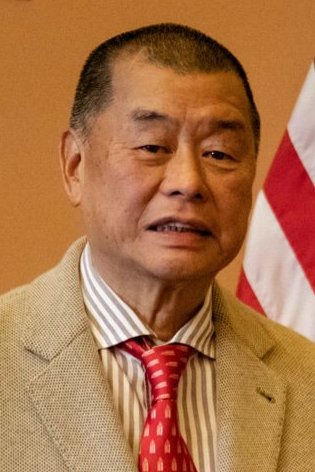
Hong Kong pro-democracy media mogul Jimmy Lai has been convicted under China's national security law, marking a pivotal moment for the territory's legal and political landscape. The 78-year-old founder of Apple Daily was found guilty of conspiring to collude with foreign forces and publishing seditious articles after a trial closely watched by international observers. Canada, the UK, and the US have condemned the verdict as politically motivated and called for Lai's immediate release, highlighting growing tensions between Western nations and Beijing over Hong Kong's autonomy and human rights.
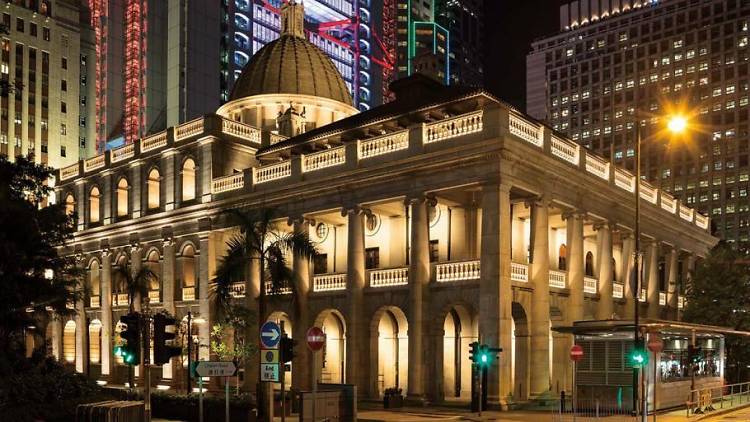
The conviction of Jimmy Lai, the former Hong Kong media mogul and prominent critic of Beijing, represents a watershed moment in the application of China's national security law in the semi-autonomous territory. Found guilty on December 15, 2025, of conspiring to collude with foreign forces to endanger national security and conspiracy to publish seditious articles, Lai's case has drawn international condemnation and raised serious questions about judicial independence and media freedom in Hong Kong. This article examines the details of the conviction, the international response, and its implications for Hong Kong's future.
The Trial and Verdict
The trial, which lasted 152 days, was conducted without a jury before three government-vetted judges—a departure from Hong Kong's common law traditions. Lai, who pleaded not guilty to all charges, testified for 52 days in his own defense. The judges ruled that he had extended a "constant invitation" to the United States to help undermine the Chinese government under the guise of assisting Hong Kongers. While Lai's lawyers acknowledged he had called for foreign sanctions before the national security law took effect in 2020, they argued he ceased these calls to comply with the new legislation. The court, however, determined Lai "never wavered" in his intention to destabilize the Chinese Communist Party, continuing his efforts "though in a less explicit way."
International Condemnation and Calls for Release
The verdict prompted immediate and strong reactions from Western governments. Canada's Foreign Affairs Minister Anita Anand condemned what she called the "politically motivated prosecution" of Jimmy Lai and called for his "immediate release." In a statement provided to Global News, Anand expressed ongoing concerns about "deteriorating rights, freedoms and autonomy which are enshrined in Hong Kong’s Basic Law."
U.S. Secretary of State Marco Rubio called for Lai's release "on humanitarian grounds," stating the verdict "reflects the enforcement of Beijing’s laws to silence those who seek to protect freedom of speech and other fundamental rights." He emphasized these were rights "that China pledged to uphold in the 1984 Sino-British Joint Declaration." U.K. Prime Minister Keir Starmer has made securing the release of Lai, a British citizen, a government priority. Former U.S. President Donald Trump revealed he had personally raised the case with Chinese President Xi Jinping, telling reporters he asked Xi "to consider his release" because "he’s not well, he’s an older man."
Context: The National Security Law and Lai's Arrest
Jimmy Lai was arrested in August 2020 under the national security law imposed by Beijing following the massive anti-government protests that swept Hong Kong in 2019. The law criminalizes secession, subversion, terrorism, and collusion with foreign forces, with penalties up to life imprisonment. Lai had already spent five years in custody awaiting trial, much of it in solitary confinement. His family reports his health has declined rapidly, with significant weight loss and heart problems. Prior to this conviction, Lai had been found guilty of several lesser offences related to fraud and his actions during the 2019 protests.
The Canadian Response and Activist Pressure
Canadian activists within the Hong Kong pro-democracy movement are urging Ottawa to take stronger action. Edmund Leung, chair of the Vancouver Society in Support of Democratic Movement, called on the federal government to "move beyond expressions of concern and take concrete action." He argued that "Jimmy Lai’s case must be raised directly at the highest political levels, in close coordination with international partners" and that "meaningful pressure must be applied collectively to demonstrate that there are real consequences for continued injustice."
Andy Wong, president of Canada-Hong Kong Link, stated that Canada "has long claimed a commitment to human rights, press freedom, and the rule of law. Now is the moment to act." He warned that "the world must not look away while an elderly prisoner of conscience is slowly destroyed behind bars." These calls come as Prime Minister Mark Carney's government seeks to restore economic and diplomatic cooperation with China, marking a shift from the strained relations under former prime minister Justin Trudeau.
Broader Implications for Hong Kong
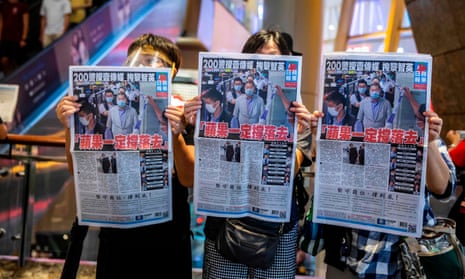
Lai's conviction signals the rigorous enforcement of the national security law against high-profile dissidents. His newspaper, Apple Daily, was forced to shut down in 2021 after police raided its newsroom, arrested senior journalists, and froze its assets. The case is viewed as a test of how far Beijing will go to suppress dissent in Hong Kong. In response to international criticism, Chinese Foreign Ministry spokesperson Guo Jiakun expressed "firm opposition to the vilification of the city’s judiciary by 'certain countries,'" urging them to respect Hong Kong's legal system. Hong Kong police official Steve Li stated outside the court that "Lai’s conviction is justice served."
Conclusion
The conviction of Jimmy Lai under Hong Kong's national security law represents a critical juncture for the territory's political and legal autonomy. It highlights the growing chasm between Beijing's vision for Hong Kong and the expectations of Western democracies regarding human rights and judicial independence. As international calls for his release mount, the case continues to serve as a focal point for global concerns about China's influence over Hong Kong and the future of fundamental freedoms in the region. The outcome will likely influence not only Lai's fate but also the trajectory of Hong Kong's relationship with both China and the international community.