Solar Neutrinos Trigger Rare Atomic Transformation in Groundbreaking Underground Detection
In a landmark achievement for particle physics, scientists have directly observed solar neutrinos performing a rare atomic transformation deep underground. Using the SNO+ detector in Canada, researchers captured the moment 'ghost particles' from the Sun converted carbon-13 into nitrogen-13, marking one of the lowest-energy neutrino interactions ever detected. This discovery, achieved by tracking two faint flashes of light separated by several minutes, opens new possibilities for studying fundamental particle interactions and provides fresh insights into solar processes and nuclear physics.
In the silent depths of a Canadian mine, a monumental detection has occurred. Scientists have captured solar neutrinos—the elusive 'ghost particles' that stream from our Sun—in the act of performing a rare atomic transformation. This groundbreaking observation, made by the SNO+ experiment, represents a significant leap in our ability to study one of the universe's most mysterious particles and their interactions with matter.

The Elusive Ghost Particle
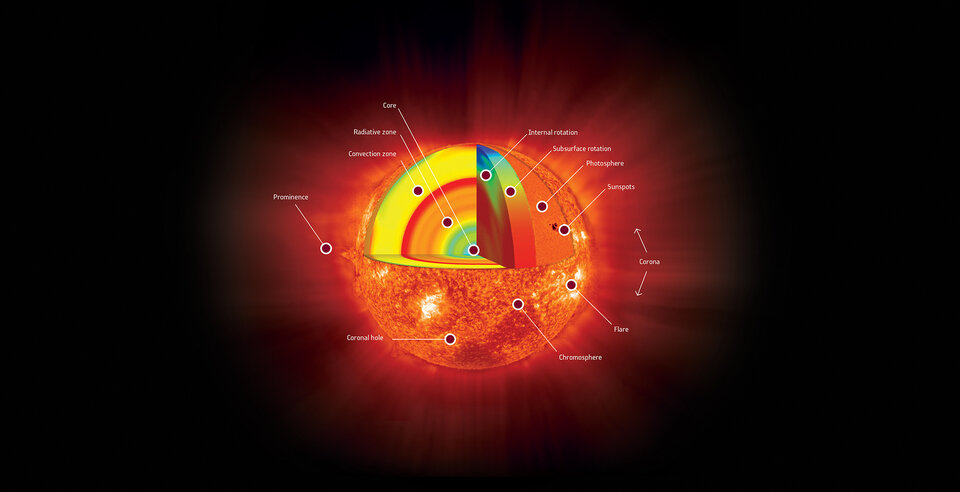
Neutrinos rank among the most enigmatic particles in physics. Trillions pass through every person on Earth each second without leaving a trace, earning them the nickname 'ghost particles.' These particles are produced in vast quantities by nuclear reactions, particularly within the Sun's core, yet their extremely weak interaction with matter makes them exceptionally difficult to study. As noted by researchers from the University of Oxford, only a handful of materials have ever been shown to respond to solar neutrinos, making each new detection method a significant scientific achievement.
The SNO+ Experiment: A Shielded Laboratory
The detection occurred at the SNO+ detector, located two kilometers underground at SNOLAB in Sudbury, Canada. This deep underground location provides critical shielding from cosmic rays and background radiation that would otherwise overwhelm the delicate measurements required to detect neutrino interactions. The experiment's core features a 12-meter-diameter acrylic vessel surrounded by 9,000 photomultiplier tubes, currently filled with approximately 800 tonnes of liquid scintillator designed to capture the faintest flashes of light from particle interactions.

Capturing a Two-Part Atomic Transformation
The research team achieved their breakthrough by focusing on a specific nuclear reaction: the conversion of carbon-13 into nitrogen-13 by solar neutrinos. They employed a sophisticated 'delayed coincidence' technique to identify these rare events. This method searches for two related bursts of light: the initial flash when a neutrino strikes a carbon-13 nucleus, followed by a second flash approximately ten minutes later when the resulting radioactive nitrogen-13 decays. This paired signal pattern allows scientists to distinguish genuine neutrino interactions from random background noise with high confidence.
Over 231 days of observation from May 2022 to June 2023, the detector recorded 5.6 such events. This result closely matches theoretical predictions of 4.7 events from solar neutrinos during the same period, providing strong validation of both the detection method and our understanding of solar neutrino flux.
Scientific Significance and Future Implications
This discovery represents more than just another neutrino detection—it opens new avenues for fundamental physics research. According to lead author Gulliver Milton, a PhD student at the University of Oxford, "Capturing this interaction is an extraordinary achievement. Despite the rarity of the carbon isotope, we were able to observe its interaction with neutrinos, which were born in the Sun's core and traveled vast distances to reach our detector."
The research builds directly on the legacy of the original SNO experiment, whose findings about neutrino oscillations contributed to the 2015 Nobel Prize in Physics. Professor Steven Biller of Oxford's Department of Physics highlighted the progress: "It is remarkable that our understanding of neutrinos from the Sun has advanced so much that we can now use them for the first time as a 'test beam' to study other kinds of rare atomic reactions!"

A New Tool for Nuclear Physics
Dr. Christine Kraus, a SNOLAB staff scientist, emphasized the technical achievement: "To our knowledge, these results represent the lowest energy observation of neutrino interactions on carbon-13 nuclei to date and provides the first direct cross-section measurement for this specific nuclear reaction to the ground state of the resulting nitrogen-13 nucleus." This measurement provides physicists with a new tool for studying low-energy neutrino interactions and testing nuclear models with unprecedented precision.
The ability to use naturally occurring solar neutrinos as a probe for studying atomic nuclei represents a significant methodological advancement. Rather than relying on artificial neutrino beams produced by particle accelerators, scientists can now utilize the constant stream of particles from our Sun to investigate fundamental nuclear processes, potentially leading to discoveries about stellar evolution, nuclear fusion, and the behavior of matter under extreme conditions.
This breakthrough at SNO+ demonstrates how decades of neutrino research continue to yield new discoveries. By pushing detection technology to its limits and developing innovative analysis techniques, physicists are gradually unraveling the mysteries of these ghostly particles that hold keys to understanding everything from the Sun's inner workings to the fundamental forces governing our universe.