Read on Global News
Sarwagya Singh Kushwaha: The Three-Year-Old Prodigy Redefining Chess
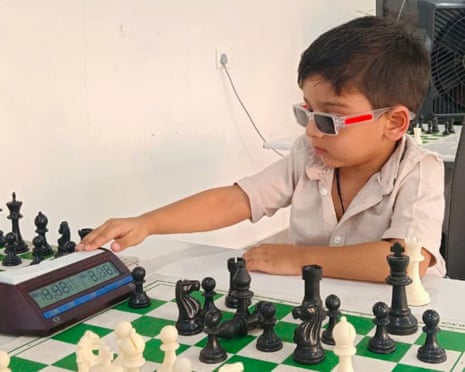
In a historic achievement for the world of chess, three-year-old Sarwagya Singh Kushwaha from India has become the youngest player ever to earn an official rating from the International Chess Federation (FIDE). Debuting with a rapid rating of 1572, Sarwagya defeated multiple adult opponents in his 20s to secure his place on the global list. This remarkable feat highlights not only an extraordinary individual talent but also signals a new era of young prodigies emerging from India's chess landscape, particularly from the state of Madhya Pradesh.
In the competitive arena of international chess, where strategic depth and mental endurance are paramount, a new record has been set that defies conventional understanding of age and expertise. Sarwagya Singh Kushwaha, a three-year-old boy from Madhya Pradesh, India, has officially become the world's youngest rated chess player, earning a place on the December 2025 FIDE rating list. This achievement is not merely a novelty; it represents a significant milestone in the sport, demonstrating that prodigious talent can manifest at an almost unprecedented early age. By securing a rapid rating of 1572, Sarwagya has outperformed numerous adult competitors, challenging long-held assumptions about the developmental timeline required for competitive mastery.
The Path to a Historic Rating
To earn an official rating from FIDE, a player must score points against at least five rated opponents in official tournaments. Sarwagya accomplished this by competing in events where grandmasters were present, showcasing his composure and skill on a significant stage. His journey to the rating list involved defeating several older, rated players. According to reports, his victories included wins against 22-year-old Abhijeet Awasthi (rated 1542), 29-year-old Shubham Chourasiya (rated 1559), and 20-year-old Yogesh Namdev (rated 1696). These results are particularly impressive given that the base rating in chess is 1400; any score below this is considered unrated. Sarwagya's debut rating of 1572 places him well above this threshold, indicating a recognized level of competitive skill from his very first assessment.
Understanding the FIDE Rating System
The Elo rating system used by FIDE is a mathematical method for calculating the relative skill levels of players. Ratings fluctuate based on game outcomes against rated opponents. A larger rating shift occurs when a player defeats someone ranked higher or loses to someone ranked lower. Sarwagya's rapid rating of 1572 specifically measures his skill in longer time-control games. This achievement required not just winning games, but doing so against opponents who already had established ratings, making his entry onto the list a validated and credible accomplishment within the global chess community.

A Prodigy's Background and Training
Sarwagya's journey began remarkably early. His father, Siddharth Singh, told The Indian Express that they introduced him to chess when he was about two-and-a-half years old, noticing his mind was "a sponge" that could pick up concepts quickly. Within a week of being taught, he could accurately name all the chess pieces. His dedication is extraordinary for his age; he reportedly plays chess for four to five hours daily, including one hour at a training centre. His coach, Nitin Chaurasiya, noted that initial training sessions were challenging and often ended in tears, but a system of rewarding correct moves with candy helped. Chaurasiya praised Sarwagya's lack of hesitation and his ability to hold his own against older children on the board, highlighting his innate composure and strategic guts.
Context Within Indian Chess and Madhya Pradesh
Sarwagya's success is part of a broader, promising trend in Indian chess, especially from the central state of Madhya Pradesh. The region has recently produced notable champions like Madhvendra Pratap Sharma, who won gold at both the Asian Chess Championship and the Commonwealth Chess Championship within a three-week span. Akshat Khamparia, an International Master and convenor of the Madhya Pradesh Chess Ad-Hoc Committee, stated, "These are great signs for MP chess," indicating a hopeful new era of dominance for the province. This environment of growing chess culture likely provides a supportive ecosystem for young talents like Sarwagya to flourish.

Historical Perspective on Young Chess Talents
While Sarwagya's age sets a new record, history is filled with chess prodigies who started remarkably young. Former world champion Magnus Carlsen began playing at age five. More recently, Gukesh D made headlines by becoming the youngest world chess champion in history at 18 years old; he first took up the sport at age seven. Sarwagya's achievement pushes the boundary of what is considered possible even further, entering the rated competitive sphere years earlier than these illustrious predecessors. His story raises fascinating questions about cognitive development, early specialization, and the future trajectory of such young talents in highly demanding intellectual sports.
Conclusion: A New Benchmark in Intellectual Sport
The story of Sarwagya Singh Kushwaha is more than a heartwarming tale of a gifted child. It is a landmark event that redefines the potential age of competitive entry in a globally respected mind sport. By defeating adult opponents and earning a FIDE rating at just three years old, he has set a new benchmark. His achievement shines a spotlight on the burgeoning chess scene in India and serves as an inspiration, demonstrating that with passion, supportive training, and innate talent, age is merely a number. The chess world will undoubtedly watch with great interest as Sarwagya continues his journey, potentially paving the way for future generations of ever-younger masters of the game.