Read on Global News
Netanyahu Seeks Presidential Pardon Amid Corruption Trial, Citing National Unity
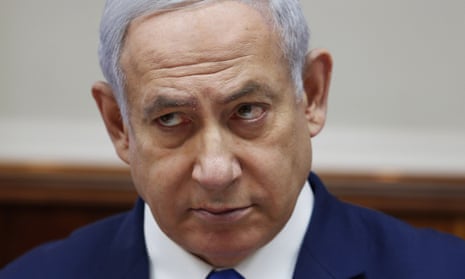
Israeli Prime Minister Benjamin Netanyahu has formally requested a pardon from President Isaac Herzog to end his ongoing corruption trial, arguing the proceedings are dividing the nation and hindering his governance. This unprecedented move by a sitting prime minister has sparked immediate backlash from opponents who warn it threatens the rule of law and democratic institutions. The request follows public encouragement from former U.S. President Donald Trump and comes at a time of significant regional instability, placing immense pressure on Israel's presidential office to navigate a decision with profound constitutional implications.
In a dramatic and unprecedented political maneuver, Israeli Prime Minister Benjamin Netanyahu has formally requested a pardon from the country's president, seeking to terminate the long-running corruption trial that has cast a shadow over his leadership and polarized Israeli society. The request, submitted to the legal department of the Office of the President, represents a direct appeal to executive authority to circumvent the judicial process, a move the president's office itself labeled as "extraordinary" with "significant implications." Netanyahu contends that ending the trial is essential for national unity and effective governance, especially during a period of profound regional change. However, critics argue that granting such a request would severely undermine democratic norms and the principle that no citizen, including the prime minister, is above the law.
The Legal and Political Context of the Pardon Request
Benjamin Netanyahu is the first sitting prime minister in Israel's history to stand trial while in office. He faces charges of fraud, breach of trust, and accepting bribes across three separate cases, all of which allege he traded regulatory favors for favorable media coverage and gifts from wealthy associates. Throughout the proceedings, Netanyahu has maintained his innocence, framing the trial as a politically motivated "witch hunt" orchestrated by a hostile media, police, and judiciary. The trial has progressed slowly, with numerous delays attributed to the prime minister's duties during the wars and unrest following the Hamas-led attacks of October 7, 2023.
The pardon mechanism in Israel rests with the president, who holds broad discretionary power. However, established precedent and guidelines from bodies like the Israel Democracy Institute strongly indicate that pardons are typically considered only after all legal proceedings have concluded. A pre-conviction pardon, while technically legal, is considered extremely rare. Legal expert and former Justice Ministry director-general Emi Palmor emphasized the irregularity of the request, stating, "You cannot claim that you're innocent while the trial is going on and come to the president and ask him to intervene." She noted that the proper legal avenue to halt the trial would be a request to the attorney general, not a presidential pardon.

Netanyahu's Rationale: Governance and National Unity
In his public justification for the pardon request, Netanyahu focused on the practical burdens of the trial and its corrosive effect on national cohesion. He argued that the requirement to appear in court three times a week is a significant distraction that impairs his ability to lead the country effectively during a time of war and strategic uncertainty. More profoundly, he claimed the ongoing legal battle "tears us apart from within" and deepens societal rifts. Netanyahu expressed confidence that an immediate conclusion to the trial would "lower the flames and promote the broad reconciliation that our country so desperately needs." This framing positions the pardon not as an escape from justice, but as a necessary sacrifice for the greater good of national stability.
This stance marks a stark contrast to Netanyahu's previous position on executive accountability. In 2008, as opposition leader, he called on then-Prime Minister Ehud Olmert to resign amid a corruption scandal, arguing a leader "up to his neck" in allegations lacked the moral mandate to govern. Olmert ultimately resigned before indictment and later served a prison sentence. Since his own legal troubles began, Netanyahu has adopted a defiant posture, portraying himself as the victim of a "deep state" conspiracy. This shift underscores the highly personal and political nature of the legal conflict, which has been intertwined with his government's controversial—and protest-sparking—plan to overhaul Israel's judiciary, a move critics saw as an attempt to weaken the system judging him.
Domestic and International Reactions
The pardon request triggered immediate and fierce backlash from political opponents and civil society groups. Opposition leader Yair Lapid set a high bar for any potential pardon, stating it could not be granted "without an admission of guilt, an expression of remorse and an immediate retirement from political life." The Movement for Quality Government in Israel warned that pardoning a prime minister accused of serious crimes would send a dangerous message that some citizens are above the law. These reactions highlight the deep fear that such an act would permanently damage Israel's democratic institutions and the principle of equality before the law.
Internationally, the request did not emerge in a vacuum. It came weeks after former U.S. President Donald Trump publicly urged Israel to pardon Netanyahu and sent a letter to President Herzog denouncing the case as "political, unjustified prosecution." Trump's intervention adds a layer of external pressure to an already volatile domestic situation. Despite the controversy, Netanyahu retains a base of support. Some citizens, like Jerusalem resident Lior Gal, publicly backed the move, arguing "this chapter should be over" to allow the nation to remain united and move forward. The request now undergoes a formal review process, being sent to the Justice Ministry for opinions before reaching the president's legal adviser, who will then counsel President Herzog on a decision with historic consequences.