Lane Kiffin's LSU Move: A Strategic Decision, Not a Victim Narrative
Lane Kiffin's departure from Ole Miss to LSU has sparked debate about coaching ethics and loyalty in college football. While Kiffin has attempted to frame his decision through spiritual guidance and mentor advice, the reality is a straightforward career calculation: leaving an 11-1 playoff-bound team for a program with greater championship potential. This analysis examines why Kiffin's victim narrative doesn't hold up, the implications for both programs, and what his move reveals about modern coaching priorities in an era of high-stakes college athletics.
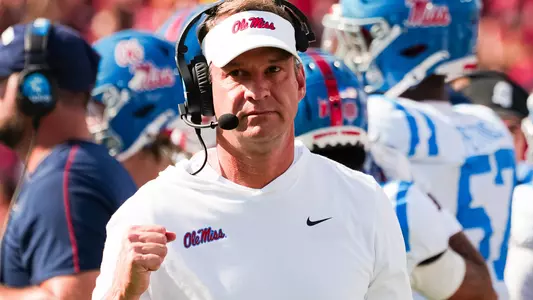
The coaching carousel in college football rarely produces straightforward narratives, but Lane Kiffin's departure from Ole Miss to LSU has generated particularly polarized reactions. At the center of the controversy is Kiffin's attempt to frame his decision as a spiritually-guided, difficult choice rather than what it transparently is: a strategic career move from one championship contender to another with potentially greater resources and historical success. The 50-year-old coach leaves behind an 11-1 Ole Miss team poised for a College Football Playoff appearance to take over an LSU program that has won three national titles this century, both positions offering compensation exceeding $10 million annually.
The Victim Narrative Versus Reality
Kiffin's public statements have attempted to paint his departure as something forced upon him by circumstances rather than a deliberate choice. In his resignation statement and subsequent interviews, he emphasized prayer, family consultation, and mentor guidance—specifically citing conversations with Pete Carroll and Nick Saban—as driving factors. "After a lot of prayer and time spent with family, I made the difficult decision to accept the head coaching position at LSU," he wrote on social media. He further noted in an ESPN interview that "my heart was [at Ole Miss] but I talked to some mentors... Especially when Coach Carroll said, 'Your dad would tell you to go. Take the shot.'"
This framing attempts to externalize the decision-making process, suggesting Kiffin was following guidance rather than making a calculated professional choice. The reality, as analysis by Dan Wetzel notes, is far simpler: Kiffin chose what he believes are greener pastures at LSU despite having built Ole Miss into a legitimate championship contender. The attempt to portray Ole Miss athletic director Keith Carter as unreasonable for denying Kiffin's request to coach the Rebels through the playoff while simultaneously leading LSU reveals the fundamental contradiction in Kiffin's position. As Wetzel observes, "You are either in or you are out."

Strategic Calculation Behind the Move
Beneath the spiritual and mentor-guided rhetoric lies a straightforward professional calculation. LSU represents a program with superior historical success, deeper recruiting pipelines (particularly in talent-rich Louisiana), and greater resources. While Ole Miss under Kiffin had reached unprecedented heights—his six-season run transforming the program into a consistent winner—LSU offers the potential for national championships on a more regular basis. This isn't about victimhood; it's about ambition.
Kiffin's career trajectory reveals a pattern of seeking the next opportunity, often before completely fulfilling his current commitments. From his abrupt departure from Tennessee after one season to his mid-season firing at USC's airport, Kiffin has consistently prioritized advancement over continuity. What makes this situation unique is that he's leaving a team at its peak—an 11-1 squad with playoff aspirations—rather than a struggling program. As the analysis suggests, "Maybe that mindset is what got him here, got him all these incredible opportunities, including his new one at LSU, where he must believe he is going to win national title after national title."
Implications for Ole Miss and College Football
Ole Miss's decision to deny Kiffin's request to coach through the playoff represents a significant shift in how programs handle coaching transitions. Rather than allowing a departing coach to maintain control over a team he's abandoning—particularly to a conference rival—the Rebels chose to promote defensive coordinator Pete Golding and maintain program integrity. This decision, while potentially disruptive to the team's playoff preparation, preserves institutional self-respect and sends a clear message about priorities.
The situation also highlights the tension between coaching mobility and player commitment in modern college football. Players who committed to Kiffin's vision at Ole Miss now face uncertainty, while the coach moves to a rival program with minimal professional consequence. This dynamic raises questions about the ethical responsibilities coaches have toward their current players versus their career ambitions. As noted in the analysis, "To Kiffin, the idea of winning is seemingly all that matters. Not necessarily winning, but the idea of winning. Potential playoff teams count for more than current ones."

Embracing the Reality of Modern Coaching
Kiffin's move, stripped of its victim narrative framing, represents a rational if controversial decision within the context of modern college football economics. Coaches operate in a high-stakes environment where opportunities must be seized when they arise, regardless of timing or current commitments. The calendar—often blamed for these awkward transitions—is itself a creation of the coaching profession's mobility patterns.
What's ultimately most problematic isn't Kiffin's decision to pursue what he perceives as a better opportunity, but his attempt to avoid ownership of that decision's consequences. As the analysis concludes, "So go do that, unapologetically. Own it. Own the decision. Own the quitting. Own the fallout. Everything is possible in Baton Rouge, just not the Victim Lane act." LSU will benefit from Kiffin's offensive brilliance and recruiting prowess, while accepting the circus that accompanies his tenure. Ole Miss moves forward with coaches committed to the program, potentially maintaining the success Kiffin helped build.
The broader lesson for college football is the need for transparency in coaching transitions. When framed honestly as career advancement decisions rather than spiritual journeys, these moves become more understandable—if not necessarily more palatable—to players, fans, and institutions. Kiffin's legacy will now include being "the coach who bailed on a title contender," a reputation he earned through his actions rather than any unfair treatment by Ole Miss or the calendar.