Read on PBS News
Hong Kong Apartment Fire Death Toll Rises to 146 in City's Worst Tragedy in Decades
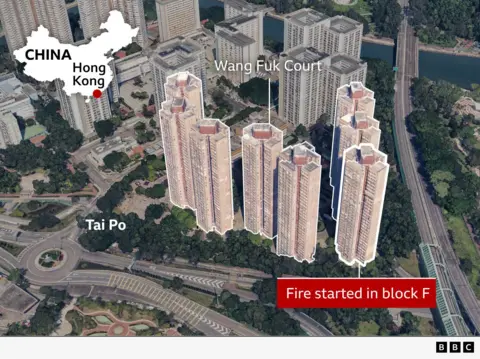
The death toll from Hong Kong's devastating apartment complex fire has climbed to 146, marking one of the deadliest incidents in the city's modern history. As investigators continue searching the burned-out Wang Fuk Court complex in Tai Po, a growing memorial at the scene reflects the community's grief. The tragedy has prompted nationwide safety inspections and raised serious questions about construction safety protocols, with authorities investigating potential fire code violations and gross negligence.
The death toll from Hong Kong's devastating apartment complex fire has reached 146, making it one of the worst tragedies in the city's recent history. As investigators continue their painstaking search through the burned-out buildings of the Wang Fuk Court complex, the community has responded with an outpouring of grief and support for the victims and their families.
Investigation and Recovery Efforts
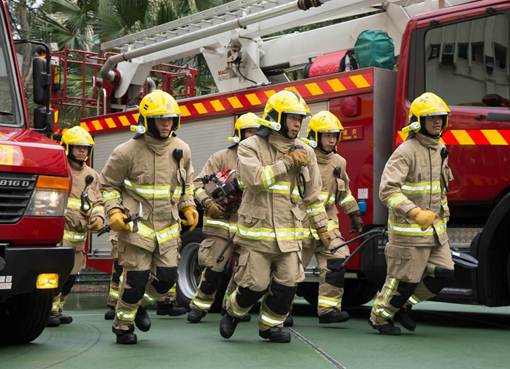
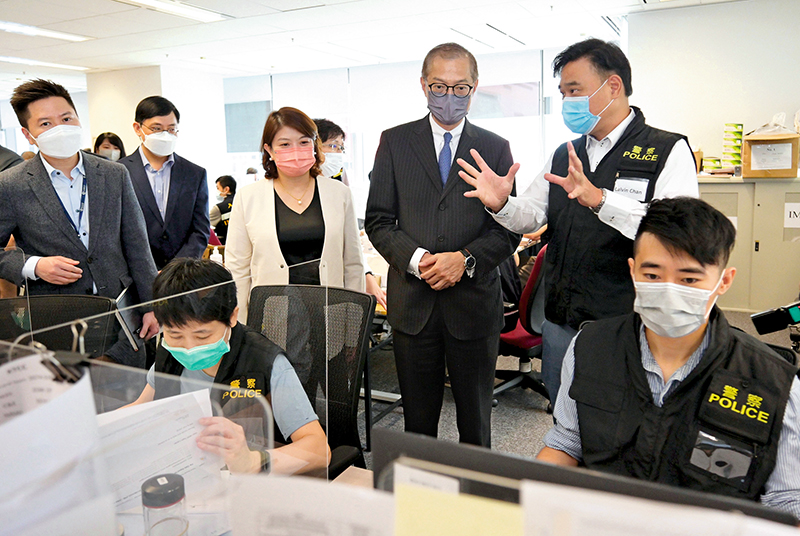
The Hong Kong police Disaster Victim Identification Unit has been conducting meticulous searches through the Wang Fuk Court complex, discovering bodies both in apartment units and on building roofs. According to officer in charge Cheng Ka-chun, the search has been challenging due to extremely dark conditions inside the buildings, particularly in areas away from windows. The team has so far examined four of the seven affected blocks, with the buildings remaining structurally sound despite the extensive damage.
Recent searches uncovered an additional 30 bodies, including 12 that firefighters had previously located but couldn't recover. The scale of the tragedy continues to grow, with approximately 100 people still unaccounted for and 79 individuals injured. The fire, which started on Wednesday, took until Friday to be fully extinguished, leaving a path of destruction through the suburban Tai Po complex.
Community Response and Memorial
A steady stream of mourners has been visiting the scene to pay their respects, creating an ever-growing makeshift memorial with flowers, handwritten notes, and prayers. Residents like Lian Shuzheng have expressed that the tragedy serves as a wake-up call regarding safety in high-rise buildings. The community has also mobilized to donate supplies to those who lost everything in the blaze, demonstrating remarkable solidarity in the face of disaster.
Jeffery Chan, a civil servant who visited the memorial, described the situation as heartbreaking, emphasizing the need for encouragement and support from the broader Hong Kong community. Many displaced residents are currently housed in emergency shelters or city hotels while authorities work on longer-term housing solutions.
Safety Concerns and Government Response
The Wang Fuk Court complex, built in the 1980s, consists of eight 31-story buildings housing nearly 2,000 apartments and more than 4,600 residents. At the time of the fire, all buildings were covered in bamboo scaffolding draped with nylon netting for renovations, with windows covered by polystyrene panels. Preliminary investigations suggest the fire started on lower-level scaffolding and spread rapidly as foam panels caught fire and windows blew out, with winds helping flames jump between buildings.
Hong Kong officials have responded by ordering the immediate suspension of work on 28 building projects undertaken by the same contractor, Prestige Construction & Engineering Company, for comprehensive safety audits. The government statement cited serious deficiencies in site safety management, particularly the extensive use of foam boards to block windows during building repairs.

Legal Developments and National Impact
Authorities have made multiple arrests in connection with the tragedy, including three men initially arrested on suspicion of manslaughter the day after the fire broke out. These individuals, identified as directors and an engineering consultant of a construction company, were released on bail but later rearrested by Hong Kong's anti-corruption authorities. Additional arrests include scaffolding subcontractors, directors of an engineering consulting company, and renovation project managers.
The tragedy has prompted China's Ministry of Emergency Management to announce nationwide inspections of high-rise buildings to identify and remove fire hazards. The inspections will focus on bamboo scaffolding, non-flame-retardant safety nets, and firefighting equipment including fire hydrant systems and automatic sprinkler systems.
This fire represents the worst tragedy of its kind in Hong Kong since a 1948 warehouse blaze that killed 176 people, underscoring the urgent need for improved safety protocols and enforcement in high-density urban environments.