Europe's HiPOVor Initiative: Advancing High-Power Optical Vortex Technology
Europe is launching a major initiative to develop high-power optical vortex technologies through the HiPOVor Doctoral Network. With €4.4 million in EU funding, this program will train 15 doctoral researchers to advance applications in material processing, data transmission, and environmentally friendly photonic systems. The network unites leading academic institutions and industrial partners across Europe to establish optical vortices as essential technology for future innovations in light-matter interaction.
Europe is embarking on a groundbreaking initiative to harness the power of optical vortex technologies through the newly established HiPOVor Doctoral Network. This coordinated effort represents a significant investment in photonics research and development, bringing together academia and industry to advance applications that could transform multiple sectors from manufacturing to communications.
Understanding Optical Vortex Technology
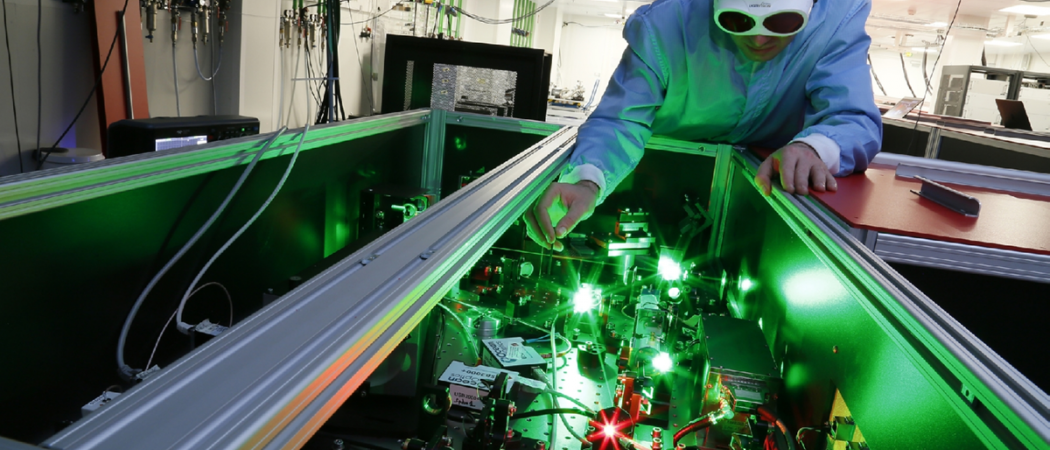
Optical vortices are specialized light beams that carry orbital angular momentum, creating unique twisting patterns that offer remarkable opportunities for scientific and industrial applications. These beams enable ultra-precise material processing, accelerate particles, expand data transmission capacity, and support next-generation photonic systems. The technology's broader implementation has been limited by challenges in generating these beams reliably and maintaining their unique characteristics during travel and material interactions.
The HiPOVor Doctoral Network Initiative
The High-Power Optical Vortices (HiPOVor) initiative has received substantial backing through the European Union's Marie Skłodowska-Curie Actions program, with €4.4 million in funding allocated to train 15 doctoral researchers. As detailed in the ScienceDaily report, this network aims to establish optical vortex beams as essential technology for future advances in light-matter interaction.

According to Dr. Regina Gumenyuk, Project Coordinator at Tampere University, "Our Doctoral Network is about shaping the next generation of scientists and innovators in photonics." The program will support researchers in developing skills across the entire development pipeline, from component design and light-matter interaction studies to high-power amplification and practical application development.
Environmental and Industrial Benefits
The HiPOVor initiative anticipates significant environmental benefits through its circular economy approach. The technology development aims to decrease the use of hazardous chemicals and reduce hardware size and energy demands by applying advanced predictive technologies for high-power vortices. Professor Goëry Genty from Tampere University emphasizes that "High-power optical vortices are not only fascinating from a fundamental perspective but also hold the potential to transform applications from precision manufacturing to high-resolution imaging."
European Collaboration and Implementation
The HiPOVor network represents a Europe-wide partnership featuring eight leading academic institutions specializing in structured light and high-power laser technology. The consortium includes the Extreme Light Infrastructure – Nuclear Physics (ELI-NP), recognized as the world's most powerful laser facility, along with nine industrial partners. Scheduled to begin on January 1, 2026, this collaborative effort will foster innovation and knowledge exchange throughout the European photonics sector.
This initiative demonstrates Europe's commitment to maintaining leadership in photonics research and development. By training the next generation of specialists and advancing high-power optical vortex technologies, the HiPOVor network positions Europe at the forefront of photonic innovation with potential applications spanning multiple industries and contributing to more sustainable technological development.