Read on Global News
Ethiopian Volcano Eruption Sends Smoke Plume Towards China
The Hayli Gubbi volcano in Ethiopia's Afar region has erupted for the first time in nearly 12,000 years, sending massive ash clouds 14 kilometers into the atmosphere. Satellite imagery shows the volcanic plume extending over the Red Sea, with recent reports indicating the smoke is now heading towards China. While no casualties have been reported, local farming communities face significant agricultural impacts as villages become blanketed in ash.
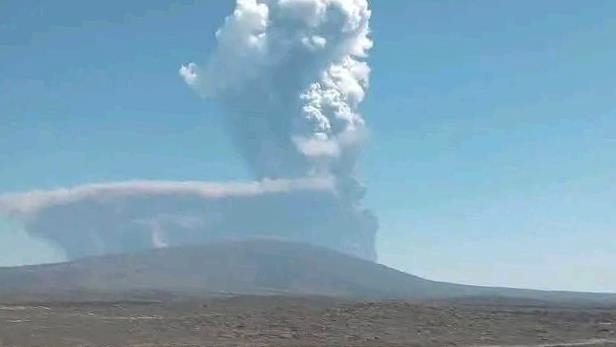
A significant geological event is unfolding in East Africa as the long-dormant Hayli Gubbi volcano in Ethiopia has erupted for the first time in approximately 12,000 years. The eruption, which occurred over several hours on Sunday, has sent towering ash plumes 14 kilometers into the sky, creating a massive smoke cloud that is now drifting toward China according to the latest reports from the Toulouse Volcanic Ash Advisory Center.
Eruption Details and Immediate Impact
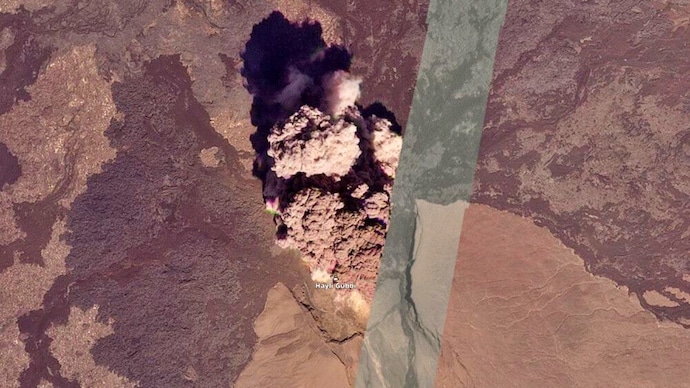
The volcanic activity originated in Ethiopia's Afar region, an area known for its seismic activity and proximity to the Danakil Desert. Satellite imagery captured by NASA clearly shows the extensive brownish plume of volcanic smoke hanging over the region following the eruption. Local authorities have documented the event through photographs and videos showing the dramatic ash column rising from the previously dormant volcano.
Mohammed Seid, a local official, confirmed that while no human lives or livestock have been lost to date, the eruption has created substantial challenges for agricultural communities in the affected areas. Many villages have been completely covered in volcanic ash, creating immediate food shortages for livestock as grazing lands become inaccessible.

Regional and Global Implications
The movement of the volcanic smoke toward China represents a significant development in the eruption's global impact. Volcanic ash clouds can affect air quality, aviation routes, and even climate patterns when they reach sufficient altitude and volume. The Toulouse Volcanic Ash Advisory Center, which monitors such events worldwide, has confirmed the eastward trajectory of the plume across the Red Sea and toward Asian airspace.
Local residents described the eruption as sudden and dramatic. Ahmed Abdela, a resident of the Afar region, reported hearing a loud explosive sound accompanied by what he characterized as a shock wave. "It felt like a sudden bomb had been thrown with smoke and ash," he told The Associated Press. The region's vulnerability to earthquakes likely contributed to the intensity of the seismic activity associated with the eruption.
Economic and Tourism Consequences
The economic implications for local communities are already becoming apparent. Farming communities face immediate challenges as ash coverage destroys crops and grazing lands. Additionally, the popular tourist destination of the Danakil Desert has been affected, with reports indicating that tourists and guides heading to the desert have become stranded in nearby villages due to the ash fall and reduced visibility.
The Afar region's unique geological characteristics make it both prone to seismic events and attractive to tourists interested in volcanic landscapes. This eruption, while creating immediate disruptions, also highlights the dynamic nature of the region's geology and the importance of monitoring such activity for both safety and scientific purposes.
The eruption of the Hayli Gubbi volcano serves as a reminder of the dynamic nature of our planet's geology and the interconnectedness of global environmental systems. As monitoring continues, scientists and authorities will be closely watching the movement of the volcanic plume and its potential impacts on air quality and aviation across multiple regions. The event also underscores the importance of continued volcanic monitoring in geologically active regions, particularly those with long-dormant volcanoes that may reactivate with little warning.