Unveiling Theia: The Ancient Planet That Formed Our Moon
New research from the Max Planck Institute for Solar System Research reveals groundbreaking insights into Theia, the mysterious planetary body that collided with Earth 4.5 billion years ago, leading to the Moon's formation. By analyzing iron isotope ratios in lunar and Earth samples with unprecedented precision, scientists have reconstructed Theia's composition and determined it likely formed closer to the Sun than Earth. This study, published in Science, provides the most detailed picture yet of the impactor that fundamentally reshaped our planet and created our lunar companion.
Approximately 4.5 billion years ago, a cataclysmic event forever altered the course of Earth's history when a massive protoplanet named Theia collided with our young planet. This monumental impact not only reshaped Earth's structure and orbit but also gave birth to the Moon, creating the celestial partnership that has influenced our planet's development ever since. Recent groundbreaking research has finally begun to unravel the mysteries surrounding this ancient impactor, providing unprecedented insights into its composition and origins.

The Isotopic Fingerprint Method
Scientists from the Max Planck Institute for Solar System Research and the University of Chicago have employed sophisticated isotopic analysis to reconstruct Theia's characteristics. Isotopes—different versions of the same element that vary only in neutron count—serve as chemical fingerprints that preserve information about a celestial body's formation history. As Thorsten Kleine, Director at MPS and study co-author, explains, "The composition of a body archives its entire history of formation, including its place of origin."
Precision Analysis of Earth and Moon Samples
The research team achieved remarkable precision in measuring iron isotope ratios, analyzing 15 Earth samples and six lunar samples returned by the Apollo missions. Their findings revealed no measurable differences in iron isotope ratios between Earth and Moon, consistent with previous studies of chromium, calcium, titanium, and zirconium isotopes. This isotopic similarity presented a scientific puzzle, as multiple collision scenarios could produce such identical signatures.

Reconstructing Theia Through Computational Modeling
To solve this cosmic mystery, researchers treated the Earth-Moon system as a complex puzzle that could be solved backward. They tested various combinations of possible Theia compositions, sizes, and early Earth properties that could have produced the isotopic signatures observed today. The analysis incorporated multiple elements—iron, chromium, molybdenum, and zirconium—each providing information about different stages of planetary development.
The research revealed that Earth's current mantle composition suggests Theia delivered significant material after Earth's core had already formed. Elements like zirconium, which remained in the mantle throughout Earth's formation, provide a complete record of the planet's developmental history, including the Theia impact.
Theia's Inner Solar System Origins
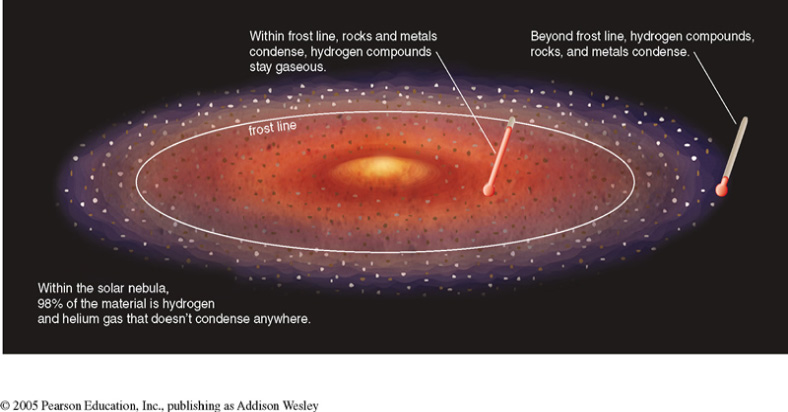
The most compelling finding from the study points to Theia's formation location. According to Timo Hopp, MPS scientist and lead author, "The most convincing scenario is that most of the building blocks of Earth and Theia originated in the inner Solar System. Earth and Theia are likely to have been neighbors." The research indicates that Theia's composition cannot be fully matched to known meteorite groups, suggesting it formed even closer to the Sun than Earth before their eventual collision.
Implications for Planetary Science
This research represents a significant advancement in understanding planetary formation and evolution in our Solar System. By demonstrating that Theia and Earth shared similar inner Solar System origins, the study provides crucial insights into the dynamics of early planetary migration and collision probabilities. The methodology developed for this research—combining precise isotopic measurements with sophisticated computational modeling—opens new avenues for investigating other planetary formation mysteries throughout the Solar System.
The study, published in the journal Science on November 20, 2025, marks a milestone in planetary science, bringing us closer than ever to understanding the precise circumstances that led to the formation of Earth's most prominent celestial feature—the Moon.