Read on nature.com
The Global Crisis of Sinking Cities: How Coastal Urban Centers Are Battling Rising Seas and Subsiding Ground
Coastal cities worldwide face a dual threat of rising sea levels and land subsidence that puts millions of residents at risk. Recent research reveals that nearly half of China's major urban areas are sinking at moderate rates, with coastal megacities like Shanghai, Tianjin, and Ningbo experiencing particularly rapid ground settlement. This global phenomenon affects eight of the world's ten largest cities, including New York, Mumbai, and Lagos, creating unprecedented challenges for urban planners and policymakers as they work to protect vulnerable populations from flooding and infrastructure damage.
Coastal cities around the world are confronting a perfect storm of environmental challenges as rising sea levels combine with sinking ground to threaten urban infrastructure and public safety. This dual crisis represents one of the most pressing urban planning challenges of our time, affecting millions of residents in coastal megacities from Shanghai to New York.

The Scale of the Subsidence Crisis
Recent studies reveal the alarming extent of land subsidence in coastal urban areas. A 2024 study found that nearly half of China's major cities are experiencing moderate sinking rates exceeding 3 millimeters annually, with 16% facing rapid subsidence of more than 10 millimeters per year. The situation is particularly dire in coastal cities like Tianjin, Fuzhou, and Ningbo, where projections indicate that one in ten residents could be living below sea level by 2120 if current trends continue.
Global Impact on Coastal Megacities
This crisis extends far beyond China's borders. Eight of the world's ten largest cities are coastal, including Shanghai, New York, Mumbai, and Lagos, and all are grappling with subsidence issues. Research shows that Asian megacities are among the fastest-sinking urban centers globally, with cities like Tianjin, Ho Chi Minh City, and Chittagong experiencing peak subsidence rates exceeding 50 millimeters annually.

Causes and Contributing Factors
Multiple factors drive urban subsidence, with human activities playing a significant role. Excessive groundwater extraction for urban expansion represents the primary cause in many Chinese cities, lowering underground water levels and causing soil compaction. The increasing weight of buildings and infrastructure development, including subway construction, further exacerbates the problem. Coastal cities face additional challenges due to their natural location on river deltas and coastal plains where sediments naturally compact over time.
The Compounding Effect of Climate Change
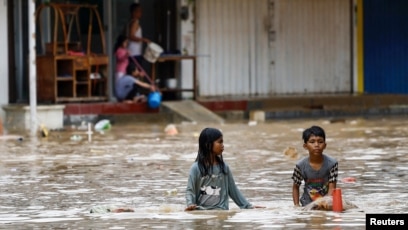
The subsidence crisis intersects dangerously with accelerating sea-level rise driven by climate change. Global sea levels are now rising at approximately 4.5 millimeters annually, more than double the rate observed in 1993. This combination creates a particularly threatening scenario for coastal cities, where sinking land and rising seas work together to dramatically increase flood risks. A 2022 assessment of 99 coastal cities found that most experienced land subsidence rates exceeding sea-level rise, meaning flooding threats arrive much sooner than sea-level models alone would predict.
International Response and Solutions
Cities worldwide are implementing innovative strategies to combat subsidence. Shanghai, which sank 1.69 meters between 1921 and 1965, has successfully reduced its subsidence rate to within 6 millimeters annually through groundwater management strategies. These include restricting groundwater usage and implementing artificial recharge systems using water from the Yangtze River. China's South-North Water Transfer Project has also played a crucial role in mitigating subsidence in water-stressed northern regions by reducing groundwater extraction.
International collaboration is essential for addressing this global challenge. Chinese researchers increasingly share data and participate in workshops with international colleagues through initiatives like UNESCO's Land Subsidence International Initiative. Cities are learning from each other's experiences, with Chinese cities modeling approaches based on Dutch water management strategies and sharing evacuation expertise with cities like Tripoli in Lebanon.
Looking Forward: The Path to Resilience
Addressing urban subsidence requires coordinated action across scientific, technical, and policy domains. Advanced monitoring technologies, including extensometers placed deep within aquifer systems, provide crucial data for understanding subsidence patterns. However, solutions must also address root causes, including sustainable water management, urban planning that considers geological constraints, and climate adaptation strategies that account for both rising seas and sinking ground.
As Pietro Teatini, chair of UNESCO's Land Subsidence International Initiative, notes, China's actions to reduce land subsidence have been "very, very effective," demonstrating that coordinated policy and technological solutions can make a significant difference. The global nature of this challenge underscores the importance of continued international cooperation and knowledge sharing to protect vulnerable coastal populations worldwide.