Hypersonic Flight Breakthrough: How New Turbulence Research Could Revolutionize Global Travel
Recent research from Stevens Institute of Technology reveals that turbulence at hypersonic speeds may behave more similarly to slower airflow than previously expected. Using innovative laser-based krypton experiments, scientists have validated aspects of Morkovin's hypothesis, suggesting that designing aircraft for Mach 6 speeds might not require completely new engineering approaches. This breakthrough could significantly simplify hypersonic vehicle design and accelerate progress toward one-hour global flights, potentially transforming international travel and space access.
The dream of traveling from Sydney to Los Angeles in just one hour has moved closer to reality thanks to groundbreaking research into hypersonic turbulence. Recent experiments conducted at Stevens Institute of Technology suggest that the fundamental nature of turbulence at extreme speeds may not differ dramatically from turbulence at lower velocities, potentially simplifying the design challenges for future hypersonic aircraft.
Understanding the Hypersonic Challenge
Hypersonic flight refers to speeds exceeding Mach 5, or five times the speed of sound. At these extreme velocities, aircraft face extraordinary turbulence and heat generation that have historically made design and engineering exceptionally challenging. The key difference lies in how air behaves around an aircraft—at lower speeds (below Mach 0.3), airflow is considered incompressible, meaning air density remains relatively constant. However, once an aircraft surpasses the speed of sound, airflow becomes compressible, with air density changing in response to pressure and temperature variations.
Professor Nicholaus Parziale, who recently received the Presidential Early Career Award for Scientists and Engineers, explains that "compressibility affects how the airflow goes around the body and that can change things like lift, drag, and thrust required to take off or stay airborne." These factors are critical for aircraft design and have represented significant barriers to developing practical hypersonic vehicles.

Morkovin's Hypothesis and Experimental Validation
The recent breakthrough centers around validating Morkovin's hypothesis, developed in the mid-20th century by Mark Morkovin. This hypothesis proposes that despite the significant temperature and density changes at hypersonic speeds, the fundamental patterns of turbulent motion remain surprisingly similar to those at lower speeds. As Professor Parziale notes, "Basically, Morkovin's hypothesis means that the way the turbulent air moves at low and high speeds isn't that different."
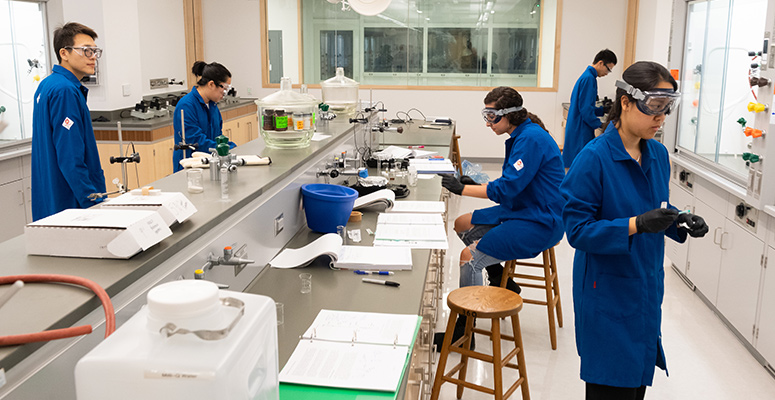
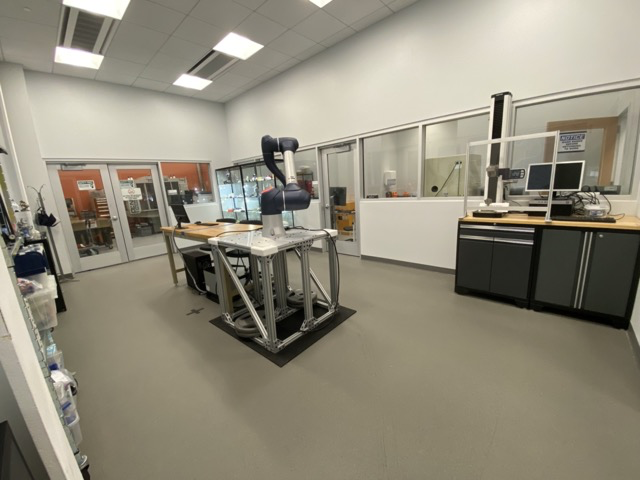
To test this hypothesis, researchers spent eleven years developing an experimental setup that used krypton gas and lasers in a wind tunnel. The team introduced krypton gas and used lasers to ionize it, creating a glowing line formed by krypton atoms. High-resolution cameras then captured how this illuminated line distorted as it moved through Mach 6 airflow, revealing detailed information about turbulence behavior.
Implications for Future Aircraft Design
The experimental results, published in Nature Communications, indicate that turbulence at Mach 6 behaves remarkably similarly to incompressible flow. This finding has profound implications for hypersonic vehicle design. If Morkovin's hypothesis holds true, engineers may not need to develop entirely new design methodologies for hypersonic aircraft, significantly reducing the computational and engineering challenges.
Professor Parziale emphasizes the practical benefits: "Today, we must use computers to design an airplane, and the computational resources to design a plane that will fly at Mach 6, simulating all the tiny, fine, little details would be impossible. Morkovin's hypothesis allows us to make simplifying assumptions so that the computational demands to design hypersonic vehicles can become more doable."

Broader Impact on Transportation and Space Access
The implications of this research extend beyond commercial air travel. Professor Parziale suggests that the same principles could revolutionize space access: "If we can build planes that fly at hypersonic speed, we can also fly them into space, rather than launching rockets, which would make transportation to and from low Earth orbit easier. It will be a game-changer for transportation not only on earth, but also in low orbit."
This research, supported by the Air Force Office of Scientific Research Young Investigator Research Program and the Office of Naval Research, represents a significant step toward making hypersonic travel practical. While challenges remain in thermal management and materials science, the validation of Morkovin's hypothesis provides a crucial foundation for future development.
As this research progresses, the vision of shrinking global travel times from hours to minutes moves closer to reality, potentially transforming international business, tourism, and space exploration in ways previously confined to science fiction.