Read on Global News
Canada Launches First Critical Minerals Projects Under G7 Partnership
Canada has announced the first 25 projects under the G7 critical minerals production alliance, marking a significant step in reducing global dependence on China's dominant position in the sector. The initiatives include purchase agreements for a Quebec graphite mine and investments to scale up a rare earth elements refinery in Ontario. Energy and Natural Resources Minister Tim Hodgson emphasized that these projects demonstrate the G7's serious commitment to safeguarding national security and economic interests while diversifying critical mineral supply chains.
Canada has taken a decisive step in the global critical minerals landscape with the announcement of the first 25 projects under the G7 critical minerals production alliance. This initiative represents a strategic countermeasure to China's overwhelming dominance in the sector, with the initial projects focusing on developing domestic capabilities in graphite mining and rare earth elements processing.

Strategic Response to Market Concentration
The newly announced projects come as a direct response to China's commanding position in the global critical minerals market. According to International Energy Agency data cited in the announcement, China maintains an average market share of 70 percent for 19 out of 20 key minerals. The situation is even more pronounced for rare earth elements, where China accounts for 91 percent of global refining production. This concentration has raised significant concerns about supply chain security and economic sovereignty among G7 nations.
Key Project Highlights
The 25 initiatives include several high-profile developments that signal Canada's commitment to building a robust domestic critical minerals industry. Among the most significant are purchase agreements for Nouveau Monde Graphite's Matawinie mine near Montreal, which secured offtake deals from the federal government, Panasonic, and Luxembourg mineral company Traxys. These agreements guarantee future production purchases, providing crucial market certainty for the developing mine.
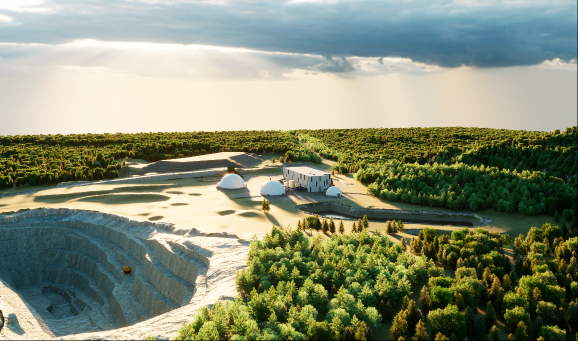
Another major development involves Canada's support for Norwegian company Vianode's plan to build a synthetic graphite plant in St. Thomas, Ontario. The project could receive up to $500 million in potential financing from Export Development Canada, representing a substantial investment in domestic processing capacity. Vianode had previously announced a multibillion-dollar supply deal with General Motors for its electric vehicles, highlighting the strategic importance of graphite in the evolving automotive industry.
Rare Earth Elements Development
The initiatives also include significant support for rare earth elements processing, with Ucore Rare Metals' facility in Kingston, Ontario receiving conditional approval for up to $36 million in federal funding. This investment will help scale up processing capabilities for two critical rare earth elements: samarium, used in heat-resistant magnets for nuclear reactors, and gadolinium, a component in both nuclear reactors and MRI machines.

Geopolitical Context and Timing
The announcement comes at a critical juncture in global minerals diplomacy. China has recently leveraged its dominant position by tightening export limits on critical minerals, though it agreed to pause some export controls for one year as part of a deal with the United States. U.S. Energy Secretary Chris Wright emphasized in Toronto that this temporary relief only underscores the need for G7 nations to establish their own mining and processing capabilities, stating that China used "non-market practices to squish the rest of the industry out of manufacturing those products with strategic leverage."
Future Outlook and Challenges
While the project announcements represent significant progress, experts note that substantial policy work remains. Wolfgang Alschner, a University of Ottawa professor who studies Canada's international critical minerals strategy, observed that the current initiatives appear "very much project focused, rather than policy focused." He emphasized that much work remains to be done, particularly on market standards and broader policy frameworks. The Canadian Climate Institute estimates that Canada will need capital investments of approximately $30 billion by 2040 to meet domestic demand alone, indicating the scale of the challenge ahead.
These initial projects under the G7 partnership mark an important first step in building resilient critical mineral supply chains and reducing dependence on concentrated markets. As global demand for minerals essential to decarbonizing the economy continues to grow, Canada's strategic positioning in this sector could prove crucial for both economic security and the transition to clean energy technologies.