Gold Flakes Reveal Nature's Invisible Glue: A Breakthrough in Nanoscale Force Measurement
Researchers at Chalmers University of Technology have developed an innovative light-based platform using gold flakes suspended in salt water to study the fundamental forces that bind materials at the nanoscale. This simple yet powerful technique allows scientists to observe the delicate balance between quantum Casimir forces and electrostatic interactions through vivid color changes visible under optical microscopes. The platform provides unprecedented insights into nature's 'invisible glue' that governs everything from material assembly to biological processes, potentially revolutionizing fields from biosensor design to understanding cosmic formation.
In the world of nanotechnology, understanding the fundamental forces that govern how materials interact at the smallest scales has remained one of science's greatest challenges. Researchers at Chalmers University of Technology have now developed a remarkably simple yet powerful platform that makes these invisible forces visible for the first time. By combining gold flakes, salt water, and light, scientists can now observe and measure the delicate interplay of quantum and electrostatic forces that act as nature's 'invisible glue' binding our world together.

The Science Behind the Platform
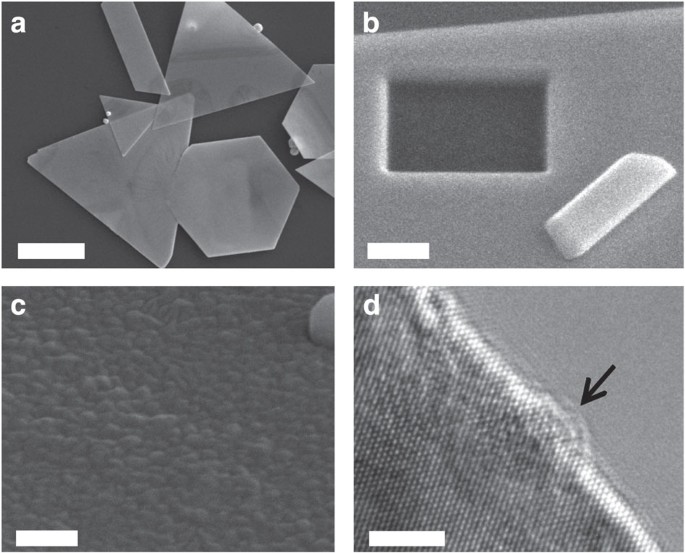
The innovative platform developed by Chalmers researchers represents a significant advancement in nanoscale measurement techniques. At its core, the system uses microscopic gold flakes approximately 10 micrometers in size suspended in a salt solution. When a drop of this solution is placed on a gold-coated glass substrate, the flakes are naturally drawn toward the surface but stop just short of making contact, creating nanometer-sized cavities between 100-200 nanometers thick.
These tiny cavities function as miniature light traps, capturing and reflecting light in ways that produce vivid color patterns. As doctoral student Michaela Hošková explains, "What we are seeing is how fundamental forces in nature interact with each other. Through these tiny cavities, we can now measure and study the forces we call 'nature's glue'—what binds objects together at the smallest scales."
Understanding the Force Balance
The platform reveals a delicate equilibrium between two competing fundamental forces. The attractive Casimir force, a quantum mechanical phenomenon, pulls the gold flakes toward the substrate surface. Simultaneously, electrostatic forces generated by charged particles in the salt solution push the flakes apart. When these opposing forces reach perfect balance, a process called self-assembly occurs, creating the stable cavities that make this phenomenon observable.
Research leader Timur Shegai emphasizes the platform's significance: "The method allows us to study the charge of individual particles and the forces acting between them. Other methods for studying these forces often require sophisticated instruments which cannot provide information down to the particle level."
Applications and Future Implications
The implications of this research extend across multiple scientific disciplines. In physics, the platform provides new ways to study fundamental force interactions at the nanoscale. For chemistry and materials science, it offers insights into how particles interact in liquids and either remain stable or tend to aggregate. This understanding could revolutionize the development of biosensors, water filtration systems, and pharmaceutical delivery mechanisms.
As Michaela Hošková notes, "If we fully understood them, we could learn to control self-assembly at the nanoscale. At the same time, we can gain insights into how the same principles govern nature on much larger scales, even how galaxies form." The platform's simplicity and effectiveness make it accessible for various research applications, potentially accelerating discoveries in multiple fields.

Methodology and Experimental Setup
The experimental procedure is remarkably straightforward. Researchers prepare gold flakes in a salt solution containing free ions, then place a single drop on a gold-coated glass substrate positioned under an optical microscope. The system is illuminated by a simple halogen lamp, and the resulting light patterns are analyzed using a spectrometer that separates wavelengths to identify different colors.
By varying the salinity of the solution and monitoring how the flakes change their distance to the substrate, researchers can study and measure the fundamental forces at play. The entire setup is sealed to prevent evaporation, creating a stable environment for observation. This method represents a significant improvement over previous techniques that required more complex instrumentation and couldn't provide particle-level information.
The development of this platform at Chalmers' Nanofabrication Laboratory and Chalmers Materials Analysis Laboratory demonstrates how simple components—gold, salt water, and light—can be combined to reveal profound scientific truths about the fundamental forces that shape our universe at the smallest scales.