Sodium Battery Breakthrough: Stable Solid-State Technology Nears Reality
Researchers from the University of Chicago have developed a groundbreaking sodium-based solid-state battery that overcomes long-standing performance limitations. By stabilizing a high-performance sodium compound using established materials science techniques, the new battery design conducts ions far more efficiently and supports thicker, energy-dense cathodes. This advancement brings sodium batteries closer to competing with lithium technology while offering significant cost and environmental benefits. The research represents a major step toward safer, cheaper, and more sustainable energy storage solutions for electric vehicles and renewable energy applications.
In a significant advancement for energy storage technology, researchers have developed a sodium-based solid-state battery that could revolutionize how we power everything from electric vehicles to renewable energy systems. This breakthrough addresses one of the most persistent challenges in battery technology: creating affordable, high-performance alternatives to lithium-based systems that don't sacrifice power or reliability.

The Sodium Advantage
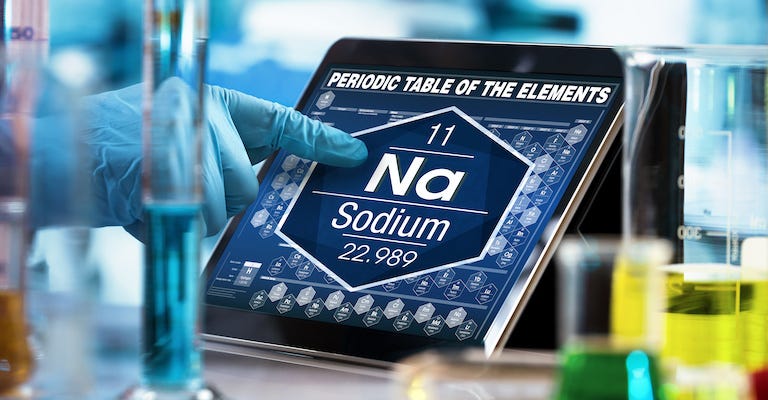
Sodium presents a compelling alternative to lithium for several critical reasons. As noted in the University of Chicago research, sodium is significantly more abundant and cheaper to extract than lithium, making it an economically attractive option for large-scale energy storage applications. More importantly, sodium mining causes far less environmental damage compared to lithium extraction, addressing growing concerns about the sustainability of current battery technologies.
The research team, led by Y. Shirley Meng, Liew Family Professor in Molecular Engineering at the UChicago Pritzker School of Molecular Engineering, emphasizes that this isn't about replacing lithium entirely. "It's not a matter of sodium versus lithium. We need both," Meng explained. "When we think about tomorrow's energy storage solutions, we should imagine the same gigafactory can produce products based on both lithium and sodium chemistries."
Technical Breakthrough
The key innovation lies in stabilizing a metastable structure of sodium hydridoborate that had not been previously reported. According to first author Sam Oh of the A*STAR Institute of Materials Research and Engineering, this metastable structure demonstrates ionic conductivity at least one order of magnitude higher than previously reported materials and three to four orders of magnitude higher than its precursor material.
The researchers achieved this breakthrough using a well-established materials science technique: heating the metastable form of sodium hydridoborate until it began to crystallize, then rapidly cooling it to lock the structure in place. This approach is particularly valuable because, as Oh noted, "Since this technique is established, we are better able to scale up in future. If you are proposing something new or if there's a need to change or establish processes, then industry will be more reluctant to accept it."
Performance and Applications
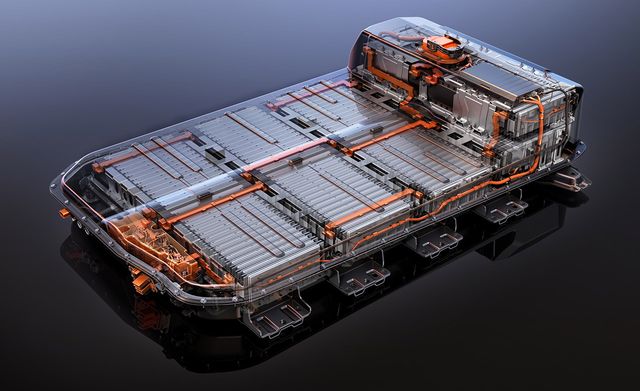
The new sodium battery design performs reliably across a wide temperature range, from room temperature to below freezing conditions. This temperature resilience is crucial for real-world applications where batteries must function in varying environmental conditions. The technology also supports thick, high-areal-loading cathodes that significantly improve energy density compared to previous sodium battery designs.
As Oh explained, "The thicker the cathode is, the theoretical energy density of the battery—the amount of energy being held within a specific area—improves." This advancement means that sodium batteries can now compete more effectively with lithium batteries in terms of both performance and energy storage capacity.
While this research represents a major step forward, the researchers acknowledge that there's still work to be done. "It's still a long journey, but what we have done with this research will help open up this opportunity," Oh stated. The findings, published in the journal Joule, provide a solid foundation for further development of sodium-based energy storage solutions that could eventually complement or even replace certain lithium battery applications.
This breakthrough comes at a critical time as the world seeks more sustainable and affordable energy storage options to support the transition to renewable energy and electric transportation. The combination of established manufacturing techniques, improved performance characteristics, and significant cost and environmental advantages positions sodium battery technology as a promising contender in the future energy storage landscape.