Polish Court Blocks Extradition of Ukrainian Suspected in Nord Stream Pipeline Attack
A Polish court has rejected Germany's extradition request for Volodymyr Zhuravlov, a Ukrainian man suspected of involvement in the 2022 Nord Stream pipeline explosions. The Warsaw District Court ordered Zhuravlov's immediate release, with the judge ruling the pipeline attack constituted military action in a 'just war' and therefore not subject to individual criminal responsibility. The decision was welcomed by Polish Prime Minister Donald Tusk, who has been critical of the Nord Stream projects and stated it would not be in Poland's interest to extradite the suspect.
The 2022 Nord Stream pipeline explosions continue to generate international legal and political controversy, with recent developments in Poland highlighting the complex jurisdictional and geopolitical dimensions of the case. A Polish court's decision to block the extradition of a Ukrainian suspect has brought renewed attention to one of the most significant energy infrastructure attacks in recent European history.
Court Ruling and Extradition Rejection
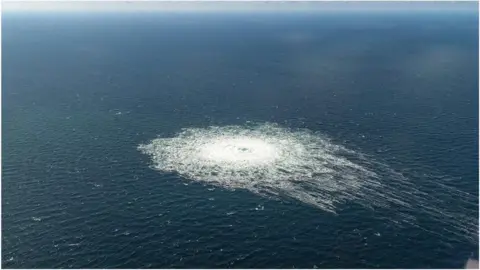
The Warsaw District Court made a significant ruling on October 17, 2025, rejecting Germany's extradition request for Volodymyr Zhuravlov, a 46-year-old Ukrainian man arrested near Warsaw on September 30, 2025. German prosecutors had described Zhuravlov as a trained diver and alleged he was part of a group that placed explosives on the Nord Stream pipelines near the Danish island of Bornholm in September 2022. The court not only blocked the extradition but ordered Zhuravlov's immediate release from custody.
Legal Reasoning and Jurisdictional Questions
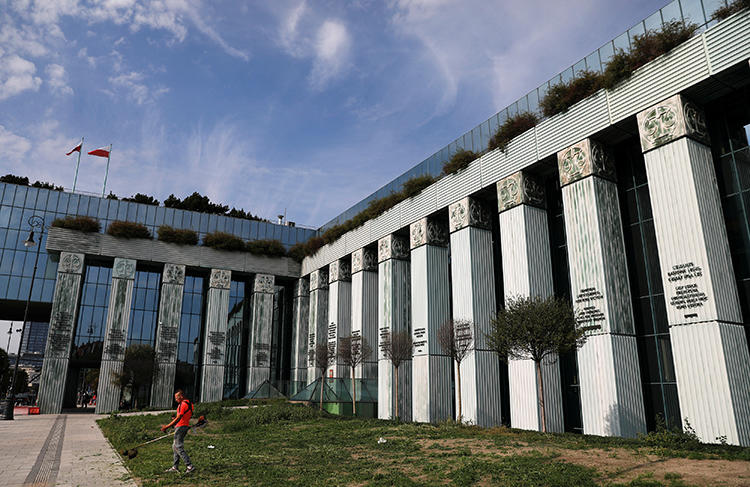
Judge Dariusz Lubowski delivered a ruling that framed the pipeline attack within the context of ongoing geopolitical conflict. The judge determined that the attack should be understood as military action in a "just war," and therefore not subject to criminal responsibility on the part of an individual. This legal interpretation represents a significant departure from conventional approaches to infrastructure sabotage cases.
The court also raised fundamental questions about German jurisdiction in the matter. Judge Lubowski noted that the explosions occurred in international waters, creating complex legal questions about which nation or nations have proper jurisdiction to prosecute such cases. These jurisdictional concerns reflect the broader international legal challenges surrounding cross-border energy infrastructure attacks.
Political Context and Regional Opposition
The court's decision aligns with Poland's longstanding opposition to the Nord Stream pipelines. Successive Polish governments have maintained staunchly anti-Russian positions and viewed the pipelines as increasing European dependence on Russian energy. Prime Minister Donald Tusk welcomed the court's ruling, stating on social media platform X that the court had rejected extradition "and rightly so," adding that "the case is closed."
Poland's position reflects broader regional concerns about energy security and geopolitical leverage. Central and eastern European countries, along with the United States, had opposed the Nord Stream 2 project from its inception, arguing it would give Russia potential to use gas supplies as a geopolitical weapon. Tusk has been particularly vocal in his criticism, stating earlier this month that "the problem of Europe, the problem of Ukraine, the problem of Lithuania and Poland is not that Nord Stream 2 was blown up, but that it was built."
Defense Arguments and Suspect's Position
Zhuravlov's legal defense, led by attorney Tymoteusz Paprocki, maintained the suspect's innocence throughout the proceedings. Paprocki stated ahead of the hearing that his client "doesn't admit guilt, he didn't commit any crime against Germany and he doesn't understand why these charges were made by the German side." The defense also argued that no Ukrainian should be charged with any action directed against Russia, given the ongoing conflict between Ukraine and Russia.
Zhuravlov had been living in Poland with his wife and children at the time of his arrest, according to Polish prosecutors. His wife told Polish media that her husband was innocent and that they were together in Poland when the pipelines were damaged in September 2022.

Broader International Implications
The Polish court's decision represents the latest development in a complex international legal pursuit. German prosecutors are seeking the extradition of two Ukrainian suspects in connection with the pipeline attacks. Another man suspected of coordinating the attack was arrested in Italy in August 2024, though Italy's top court recently annulled a lower court's decision to order his extradition and called for reassessment of the case.
The Nord Stream pipeline explosions on September 26, 2022, severely damaged both the Nord Stream 1 pipeline, which had carried Russian natural gas to Germany until Russia cut off supplies in August 2022, and the parallel Nord Stream 2 pipeline, which never entered service due to Germany suspending certification following Russia's invasion of Ukraine. The damage occurred as European countries were working to reduce dependence on Russian energy sources.
Conclusion
The Polish court's rejection of Germany's extradition request for Volodymyr Zhuravlov underscores the complex intersection of international law, energy politics, and ongoing geopolitical conflict. The ruling not only prevents Zhuravlov's transfer to German authorities but establishes a legal precedent regarding how acts against energy infrastructure during wartime may be interpreted under international law. As European nations continue to navigate energy security challenges amid ongoing conflict, this case highlights the difficult balance between legal accountability and geopolitical realities in addressing cross-border infrastructure attacks.